
What Is a Smoke Alarm?
A Smoke Alarm is a safety device that detects airborne particles from combustion and produces an audible warning. Most models use photoelectric sensing, ionization sensing, or both to identify smoke. Smoke alarms may receive power from household wiring, batteries, or both. They are installed in locations where occupants need early warning of a fire.
Quick Facts About Smoke Alarm
Category
Fire detection device
Used for
Early smoke warning
Common confusion
Not every smoke alarm detects carbon monoxide
Also called
Smoke Detector
Often discussed with
Smoke Detector Installation, Electrical Safety Inspection
Key Takeaways About Smoke Alarm
- A smoke alarm senses smoke, while a carbon monoxide alarm senses a different hazard.
- Power may come from wiring, batteries, or both.
- A smoke alarm is not automatically a carbon monoxide detector.
How Smoke Alarm Works
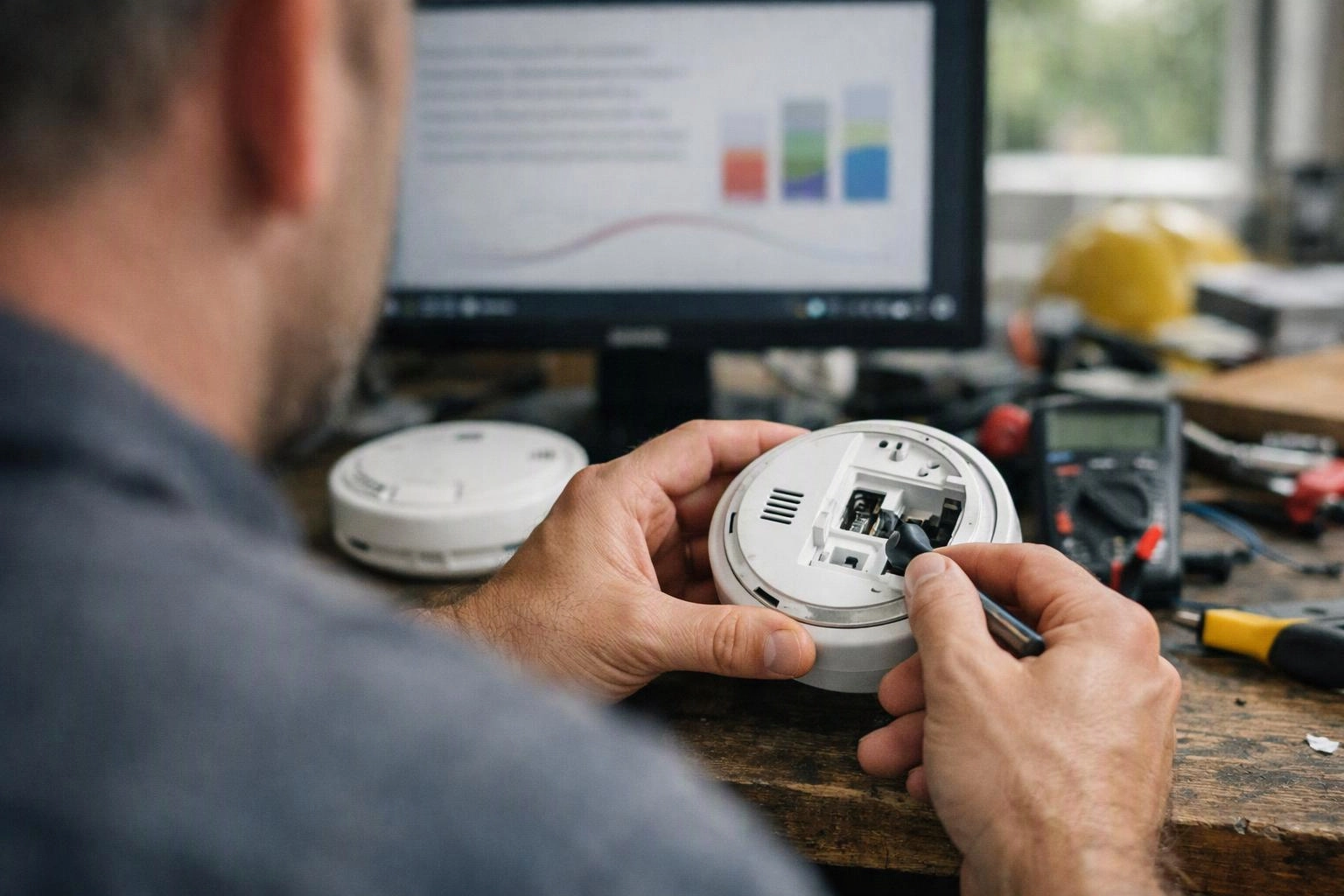
A Smoke Alarm monitors air inside a sensing chamber. When smoke particles enter the chamber, the sensing circuit detects a change and activates the alarm sound. Photoelectric models use a light beam and sensor, while ionization models monitor changes in an electrically charged chamber.
Related glossary terms: Photoelectric Smoke Alarm, Carbon Monoxide Alarm, Battery Backup.
Household wiring can supply continuous power, while a battery provides backup or serves as the main power source. Some interconnected alarms communicate with nearby units, so one detected event can sound multiple alarms. A Carbon Monoxide Alarm uses a different sensor because carbon monoxide is a gas that smoke sensing chambers do not detect.
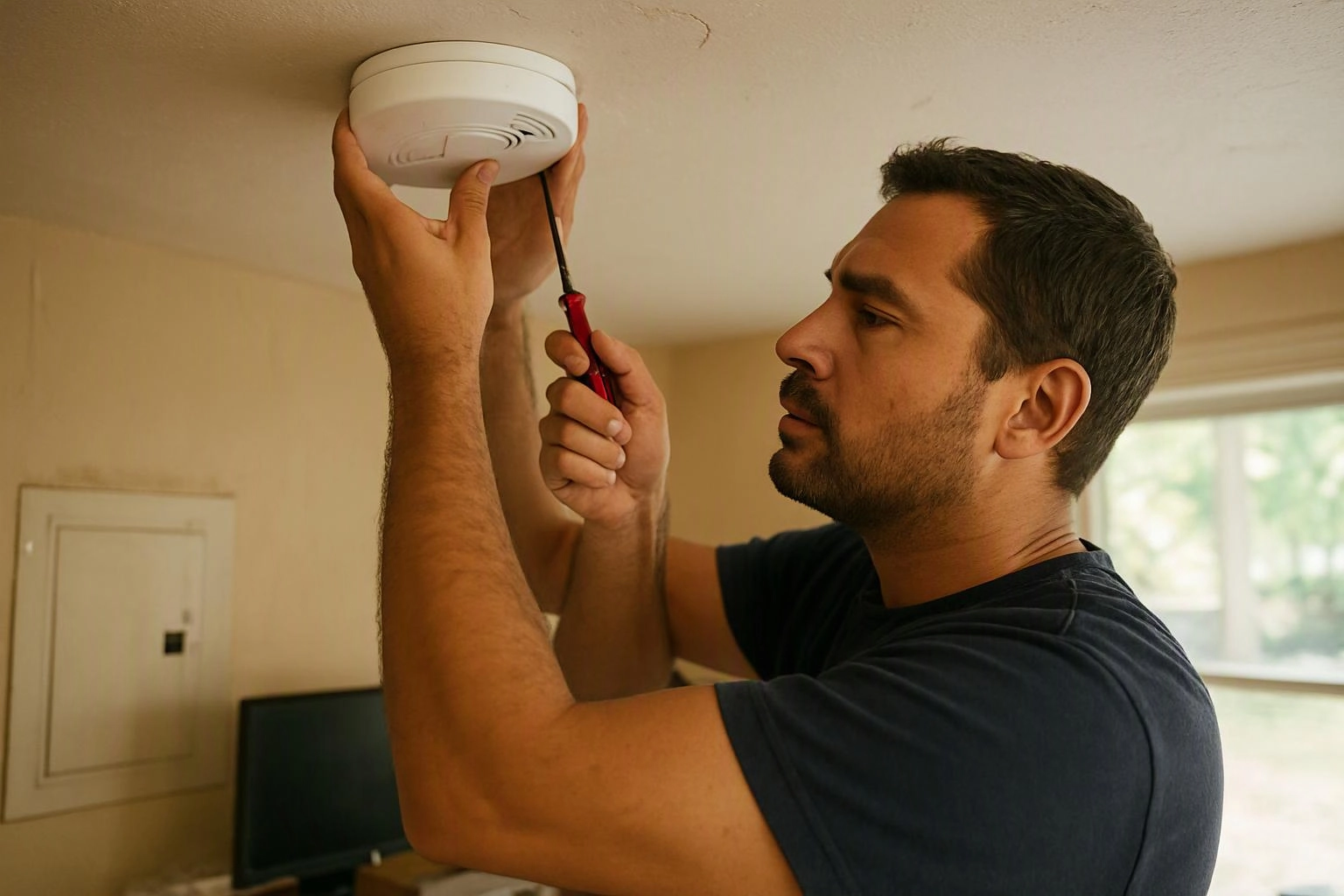
From the Cincelux Electric team
When we install a Smoke Alarm, we check the power source, wiring connections, mounting location, and alarm operation. We also verify that the device matches the existing system and explain whether the unit detects smoke only or includes carbon monoxide sensing.
Smoke Alarm in Practice: A Real-World Example
A homeowner requests smoke detector installation during an electrical update. We install a compatible Smoke Alarm, connect its power source, test the alarm, and confirm that nearby units communicate correctly when the system supports interconnection.
Related Terms
Photoelectric Smoke Alarm
A Photoelectric Smoke Alarm is a smoke-sensing device that uses a light source and sensor to…
Carbon Monoxide Alarm
A carbon monoxide alarm is a safety device that detects carbon monoxide gas in indoor air…
Battery Backup
Battery Backup is a stored-energy system that supplies electrical power when normal utility power stops. The…
Cincelux Electric
Have Questions About Smoke Alarm?
Contact Cincelux Electric for practical guidance on Smoke Alarm and related 24 hour electrician work in Cincinnati.