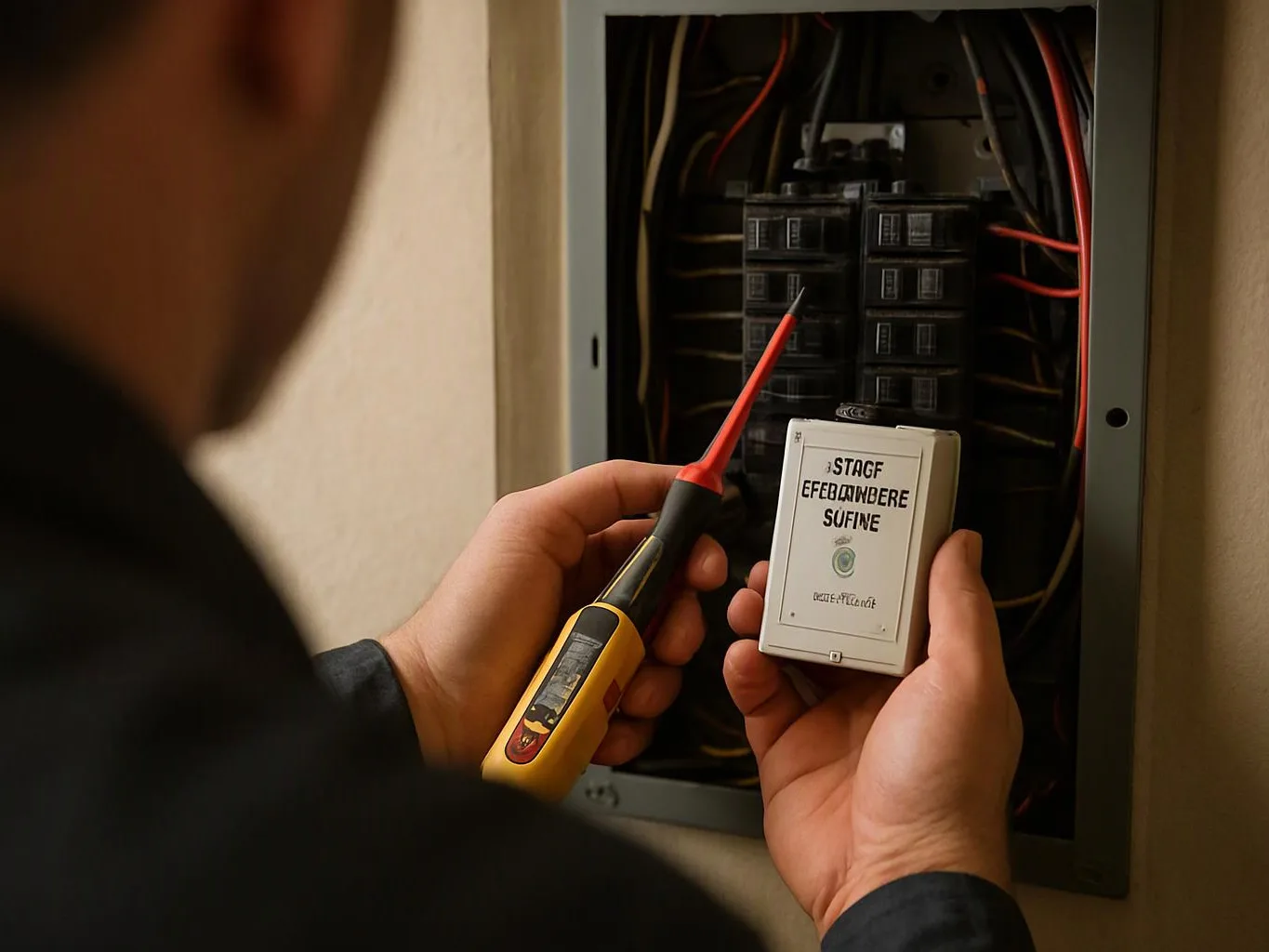
Circuit Breaker Replacement Mistakes: Wrong Size, Type, and Installation Errors
Circuit breaker replacement mistakes include choosing the wrong amperage or type, ignoring panel compatibility, and installing connections incorrectly. Cincelux Electric checks the panel, matches the breaker, corrects installation errors, and provides Free Estimates Available.
Get a Free EstimateWhat Makes Circuit Breaker Replacement Unsafe?
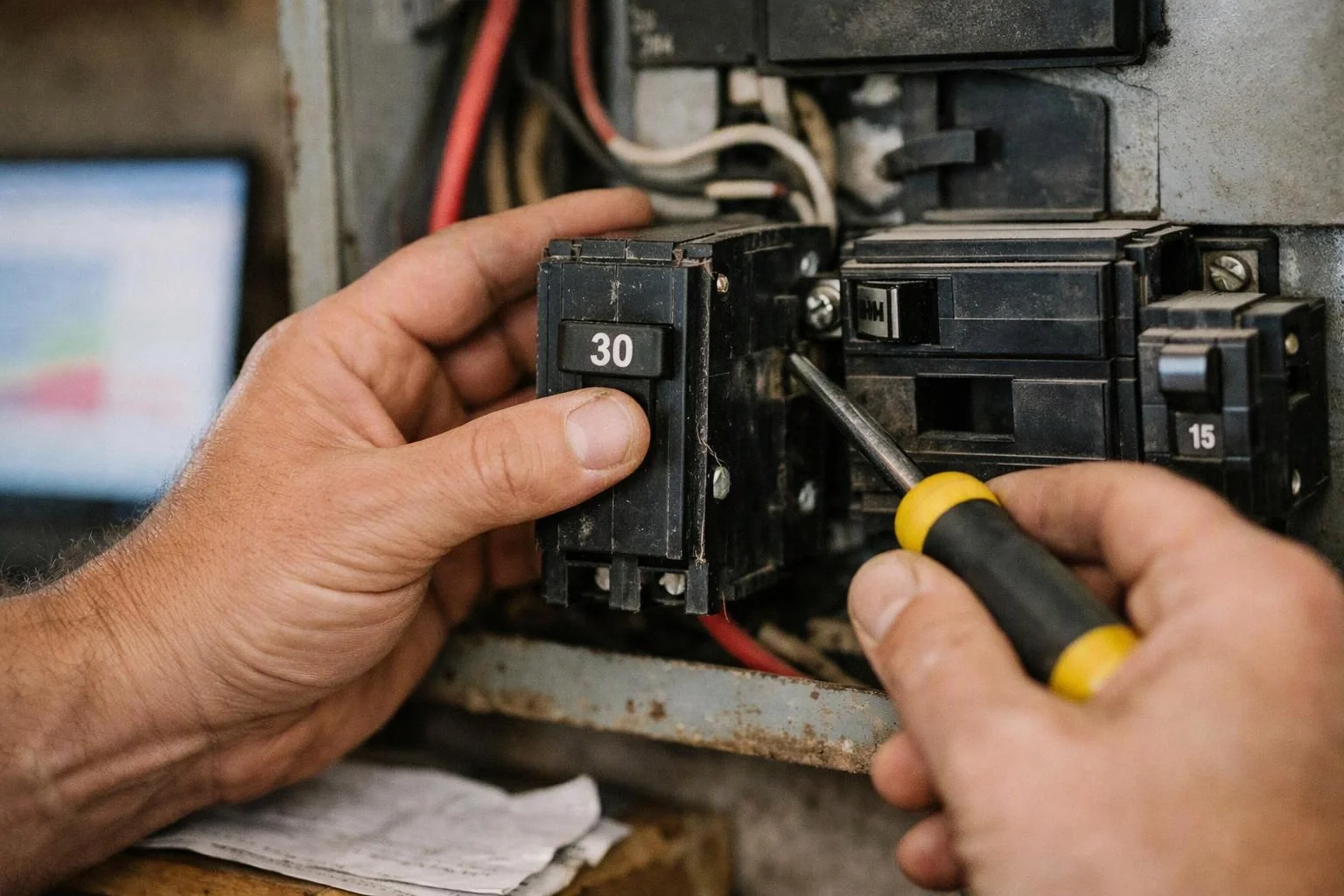
Circuit breaker replacement becomes unsafe when the replacement does not match the circuit, panel, or electrical protection requirements. Cincelux Electric checks those details before we install a replacement.
A circuit breaker is an overcurrent protection device that opens a circuit when current becomes unsafe. The electrical panel, branch circuit, conductor ampacity, and electrical code all affect which breaker belongs in that position.
Choosing the Wrong Breaker Amperage
A wrong size breaker can allow more current than the branch-circuit conductor can safely carry. An oversized breaker can reduce overload protection, while an undersized breaker can cause nuisance tripping during normal use.
We compare breaker amperage with conductor ampacity and the circuit design. Our team then installs a compatible replacement breaker or explains what wiring repair and code correction the circuit needs.
Installing the Wrong Breaker Type
A wrong type breaker can fail to provide the protection or pole arrangement that the circuit requires. A single-pole breaker, double-pole breaker, tandem breaker, AFCI breaker, and GFCI breaker serve different purposes.
We identify the circuit function and required protection before selecting the breaker type. Our crew also checks whether the panel accepts that style and whether the circuit wiring supports the installation.
Ignoring Panel and Breaker Compatibility
An incompatible breaker may not seat correctly on the busbar or meet the electrical panel manufacturer’s listing. A breaker that appears to fit can still create a poor connection or violate panelboard requirements.
We read the panel labeling, inspect the busbar, and match the replacement to the manufacturer compatibility information. We do not treat physical fit alone as proof of a safe installation.
Replacing a Breaker Without Diagnosing the Trip
A tripped breaker can indicate an overload, short circuit, ground fault, or another electrical fault. Replacing the breaker without finding the cause can leave the hazard active.
We test the circuit and inspect connected wiring before replacing the device. Our replacement diagnosis helps separate a failed breaker from a circuit overload, damaged equipment, or a concealed short circuit.
Failing to De-Energize the Panel Safely
A main disconnect may not remove power from every part of an electrical panel. Energized equipment can expose a person to arc flash and electric shock during breaker installation.
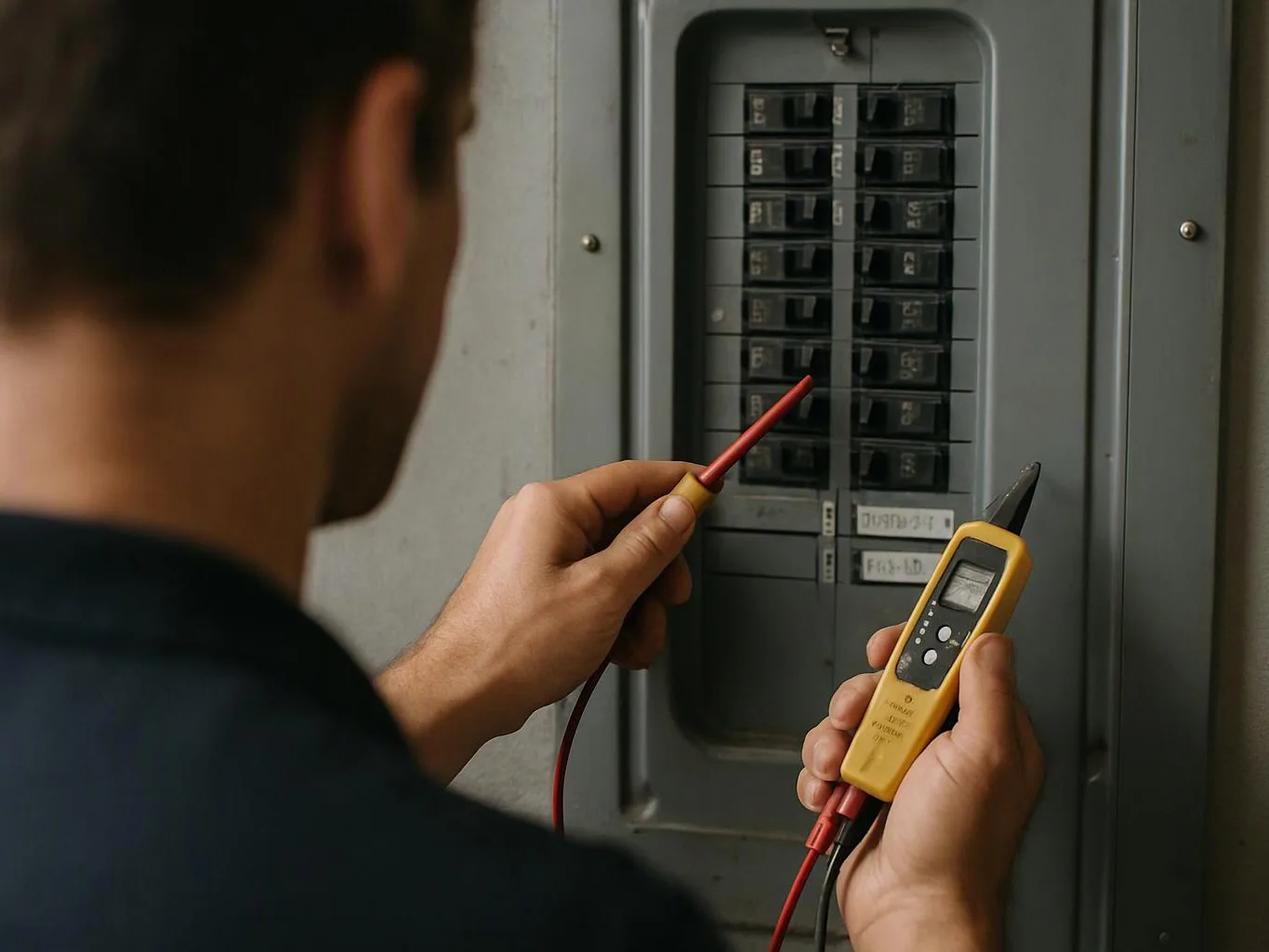
We identify energized parts, use voltage testing, and follow a controlled shutdown process before working inside the panel. If safe isolation cannot be confirmed, do not touch the panel or its wiring.
Leaving a Loose or Incorrectly Stripped Wire
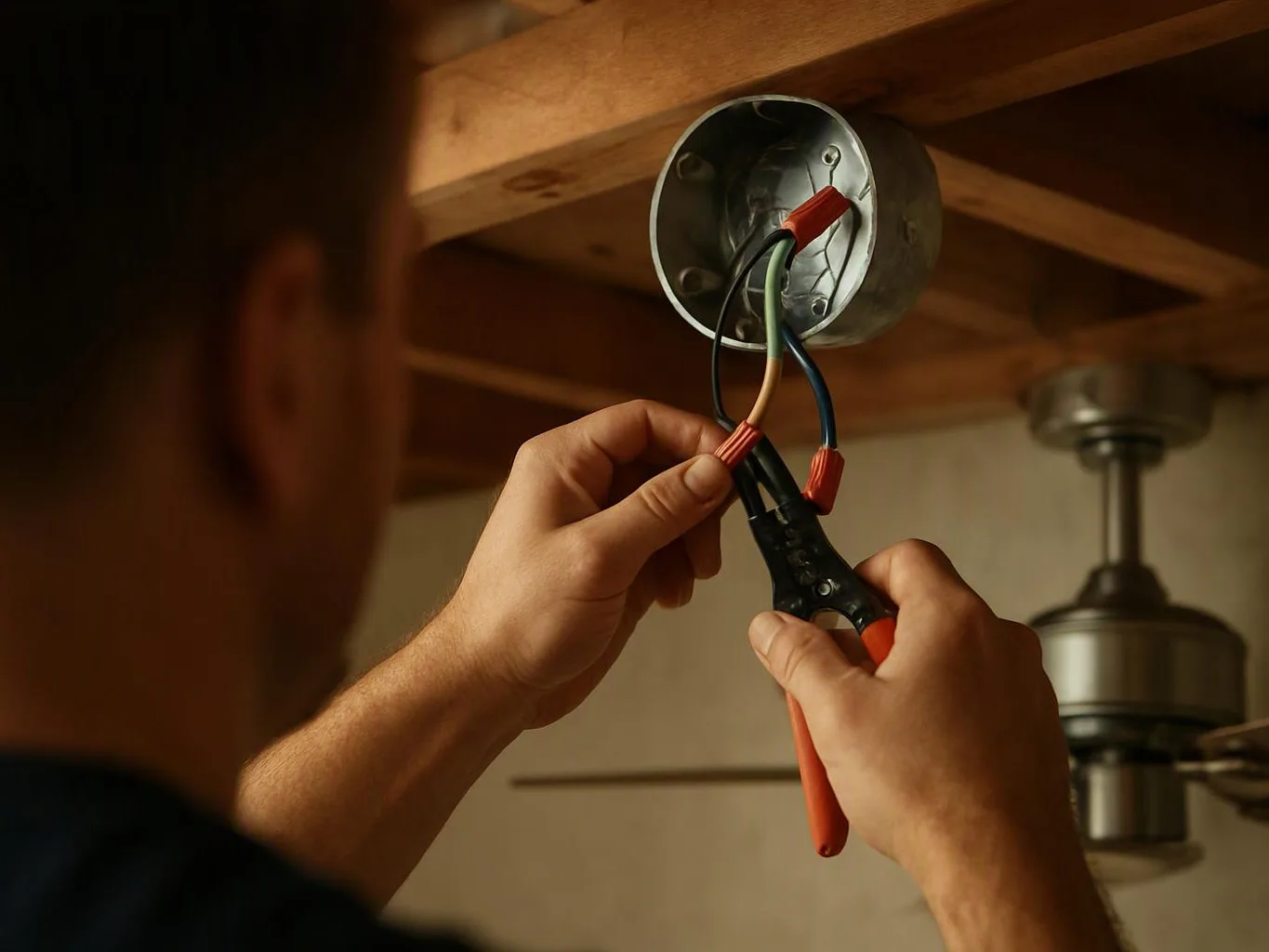
A loose connection or incorrectly stripped conductor can create resistance, heat, and electrical arcing at the terminal screw. Exposed conductor outside the terminal can also contact nearby metal parts.
We inspect the conductor, preserve the wire insulation, and secure the connection at the breaker terminal. If heat damage or a burned breaker is present, we assess the affected wiring before restoring service.
Connecting the Wire to the Wrong Terminal
A branch-circuit conductor connected to the wrong terminal can miswire the circuit and create a safety hazard. The breaker terminal, neutral bar, and ground bar have different functions.
We trace the panel wiring and place each conductor on the correct termination point. Our team checks neutral and grounding paths as part of the breaker installation.
Skipping the Final Panel and Circuit Check
A breaker replacement is incomplete without checking breaker operation, voltage, circuit load, and the panel cover. Missing a final check can leave a loose connection or code issue hidden.
We complete voltage testing and a load test when appropriate, confirm breaker operation, and reinstall the panel cover. We document any electrical code correction needed for safe completion.
How We Correct a Circuit Breaker Replacement Error
Our correction process starts with the electrical panel and ends with circuit verification. Each step helps us identify whether the problem is the breaker, the wiring, the connected load, or panel compatibility.
We explain the findings and the work included in the estimate before correction begins. Free Estimates Available applies to this assessment and quote process.
For broader panel damage or wiring problems, our Electrical Panel Repair service can address the related repair scope.
What Changes the Cost of Correcting a Breaker Replacement Mistake?
The cost of correcting a breaker replacement mistake depends on the breaker type, panel compatibility, wiring condition, fault location, and whether additional code corrections are needed.
A simple compatible replacement has a different labor scope from a repair involving a damaged busbar, loose wire, burned breaker, or undetected short circuit. Fault diagnosis can also expand the work when the original trip was caused by a connected load or circuit wiring.
We review the panel condition, replacement breaker, wiring repair needs, and electrical code correction before preparing an estimate. You can request an assessment so our team can explain the work included in the quote.
When Should You Call Cincelux Electric?
Call Cincelux Electric when the panel is energized, the breaker trips repeatedly, wiring shows heat or damage, or the correct replacement cannot be identified safely. These conditions can point to an electrical shock hazard, panel compatibility problem, or active circuit fault.
Do not handle a damaged or hot breaker when you see smoke, burning, melting, or unusual noise. Our team can inspect the breaker replacement and determine whether the circuit needs testing or a wider repair.
How to Request a Breaker Replacement Assessment
A breaker replacement assessment begins with the panel details, the tripping symptoms, and any visible wiring damage. Share what happened, which circuit is affected, and whether the breaker resets or trips again.
Our team can assess Circuit Breaker Replacement needs, Electrical Panel Repair concerns, and Electrical Code Corrections during the inspection. We then explain the replacement diagnosis, testing, repair scope, and estimate before work proceeds.
Contact Cincelux Electric to schedule a panel inspection and request an electrical estimate for the correction your circuit needs.
Questions About Circuit Breaker Replacement Mistakes
Can replacing a circuit breaker fix repeated tripping?
Replacing a circuit breaker can fix repeated tripping only when the breaker itself has failed and the circuit is otherwise safe. Cincelux Electric tests for overloads, short circuits, ground faults, and wiring problems before installing a replacement.
How can I identify a compatible replacement circuit breaker?
A compatible replacement circuit breaker must match the panel listing, breaker type, pole arrangement, amperage, and circuit requirements. Panel labeling and manufacturer compatibility information help confirm the correct choice.
What should I do if a replacement breaker gets hot?
Stop using the affected circuit and avoid touching a hot replacement breaker until the panel can be inspected safely. Heat can result from a loose terminal, excessive load, damaged wiring, poor contact, or an incompatible breaker.
Can a wrong-size breaker damage electrical wiring?
Yes, a wrong-size breaker can allow a circuit to carry more current than the conductor can safely handle. The result can include overheating, insulation damage, electrical arcing, and a need for code correction.
Related Resources
Electrical Panel Upgrade Cost Factors: Size, Scope, and Replacement Materials
Compared ToElectrical Panel Upgrade vs. Full Service Upgrade: What Does Your Home Need?
How Long It TakesHow Long Does an Electrical Panel Replacement Take?
When You Need ItWhat Counts as an Electrical Emergency?