Electrical Service Entrance Problems That Can Cause Power Loss
A damaged electrical service entrance can cause power loss. Corrosion, loose connections, storms, or a bad meter base can stop power from reaching your panel. Warning signs include flickering lights, partial outages, burning odors, buzzing, heat, visible damage, or service that cuts in and out. The utility may fix its own equipment. A licensed electrician usually repairs customer-owned equipment. This may include the meter base, service wires, weatherhead, and main service equipment. Treat smoke, sparks, exposed wires, or repeated outages as urgent hazards. Don't touch damaged equipment. At ElectricianCincinnatiOH.com, we help homeowners choose the next safe step. We also help arrange service for customer-owned equipment.
Get a Free EstimateWhat Is an Electrical Service Entrance Problem?
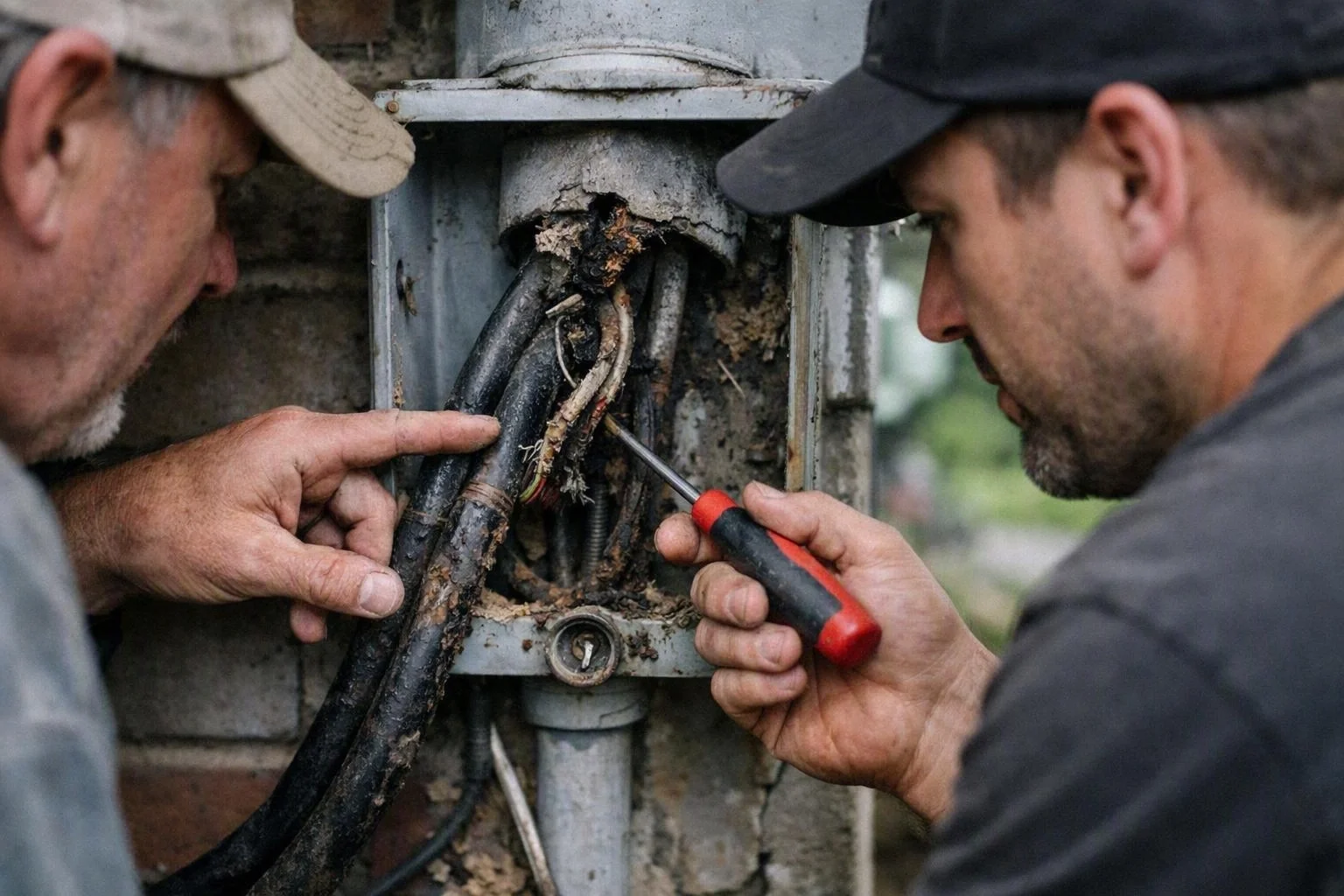
An electrical service entrance problem affects equipment that carries utility power to a building’s main panel. The problem may affect the service drop, weatherhead, service wires, meter socket, meter base, disconnect, or service panel. It can cause low or high voltage, partial outages, or total power loss.
The service entrance marks the power path between the utility and the building. On an overhead system, the service drop runs from the utility line to the weatherhead. It then reaches the service connection. An underground service lateral carries power below ground toward the meter. Service entrance wires then carry power through the meter base and toward the main panel.
A fault in this path can affect every circuit in the home. A loose connection may make lights brighten and dim. A bad service cable may cause a partial outage. Damage at the main disconnect may stop power from reaching the panel.
Some equipment belongs to the utility. Other equipment belongs to the property owner. The service point marks this boundary. Its exact location depends on utility rules and service type. Don't remove a utility meter. Don't open a sealed area. Never test exposed wires. Safe testing needs trained methods and utility help.
Signs of a Damaged Electrical Service Entrance
Common warning signs include flickering lights, dimming, and power that cuts in and out. Other signs include partial outages, buzzing, sizzling, burning smells, heat, rust, water marks, and exposed wires. These signs may point to a loose connection, sparks, damaged insulation, or failing equipment.
Don't wait for a total outage before calling for help. A service entrance can fail under heavy use, rain, or heat. If you see smoke, sparks, or fire, leave the area. Call emergency services from a safe place.
Common Causes of Service Entrance Power Loss
Service entrance power loss often comes from storms, rust, loose connections, heat, water, impact, old insulation, or aging equipment. Damage may affect utility equipment or customer-owned equipment. The owner must be known before repairs begin.
Repair plans depend on the failed part and its owner. The utility may need to shut off power first. A licensed electrician can then work on customer-owned equipment. This check affects timing, permits, inspections, and power restoration.
Can a Damaged Meter Base Cause Power Loss?
A damaged meter base can cause power loss. Loose terminals, rust, cracked insulation, water, or heat can break the connection. A failing meter socket may cause flickering, partial power, overheating, or sparks. Untrained people shouldn't open or repair it.
The meter base holds and connects the utility meter. Its line-side connection receives utility power. Its load-side connection sends power to the main disconnect and panel. Damage on either side can make service unstable. One service leg may fail, leaving only part of the home without power.
Meter Base Repair may include tightening an approved connection or stopping water entry. It may also require a new socket or full enclosure. The right fix depends on heat marks, wire condition, maker rules, utility rules, and electrical code. A safe connection repair differs from replacing a melted meter base.
How to Tell Whether the Utility or Electrician Owns the Repair?
The utility usually owns equipment on the supply side. The customer usually owns equipment on the building side. The utility often handles its meter, service line, and supply connections. A licensed electrician usually handles the meter base, service wires, disconnect, and panel wiring.
Ownership rules vary. Don't guess by looking at the equipment. Call the utility if the meter, pole, overhead line, or utility seal looks damaged. Contact an electrician for customer-side damage, such as a cracked meter base or bad service cable. Both parties may need to work together before power returns.
Who Repairs the Electrical Line from the Meter to the House?
A licensed electrician usually repairs customer-owned wiring between the meter and main panel. This includes service wires, meter bases, disconnects, and damaged cable. The utility usually handles its lines, meters, and supply equipment. The utility and electrician may need to coordinate before power returns.
The line from the meter to the house may run overhead. It may also run inside approved conduit. Some homes use an underground service lateral. The electrician must find the service point and confirm which wires carry power. Utility rules must be followed before equipment is replaced.
Repair needs can vary. A sound connection may need a safe correction and weather sealing. A damaged meter base may need replacement. Burned or undersized wires may need new cable and conduit. Unsafe panels, disconnects, grounding parts, or enclosures may need a full service upgrade.
Electrical Service Entrance Repair isn't a do-it-yourself task. Line-side parts may stay live, even when the meter looks removable. Our services may include inspections, meter base work, wire replacement, weatherproofing, and utility coordination. The needed work depends on what the inspection finds.
When service is unsafe after hours, an emergency electrician can inspect customer-owned equipment. The utility must first make its side safe. A small repair may take a few hours after access and clearance are ready. A full replacement may take longer. Parts, plans, inspections, and reconnection may be needed.
| Observed condition | Typical direction | Power restoration factor |
|---|---|---|
| Loose, accessible connection | Connection repair and testing | May be restored after safe approval |
| Cracked or heat-damaged meter base | Meter base replacement | Utility removal and reconnection may be needed |
| Burned service entrance conductors | Cable or conductor replacement | Utility coordination and inspection may apply |
| Unsafe or undersized service equipment | Full service equipment upgrade | Planned shutdown and final reconnection are common |
Is Intermittent Power from the Service Entrance an Emergency?
Intermittent power from a service entrance can be an electrical emergency. Voltage changes, loose connections, and sparks can damage equipment or start fires. Turn off the main disconnect only when it's safe. Stay away from damaged equipment. Call the utility when needed. Request urgent electrical inspection and repair.
Intermittent service is more serious when lights grow bright or appliances restart. It also matters when only some circuits work. These signs may show an unstable part of the incoming supply. Continued use can heat a weak connection and raise the fire risk.
Don't touch a fallen line, exposed wire, damaged meter, wet equipment, or sparking enclosure. Move away from the building if you see smoke or flames. Call the utility for supply-side damage. Use an emergency electrical repair service for customer-owned equipment after the area is safe.
Power restoration must never come before safety. Power may return for a short time without fixing the fault. The system still needs inspection before normal use.
How Electricians Diagnose and Repair Service Entrance Damage?
Electricians diagnose service entrance damage by checking visible damage and finding the service point. They test voltage safely and inspect wires and connections. They also decide if utility help is needed. Repairs may include meter base replacement, wire repair, weatherproofing, disconnect work, or full service entrance replacement.
Diagnosis should show what failed and why. A loose connection may be repairable when wires and terminals remain sound. Melted insulation may require new wires. Repeated water entry may require a new enclosure and better sealing. A service upgrade may be needed when current equipment can't safely handle the building’s load.
What to Do Before Professional Help Arrives?
How to Prevent Future Service Entrance Problems?
Preventive maintenance can lower the risk of service entrance failure. Keep equipment dry and fix rust early. Keep space around overhead wires clear. Have a professional check for heat and loose connections. Use surge protection. An inspection matters after severe weather, remodeling, visible damage, or repeated outages.
Never paint over rust or cover heat marks. Don't tighten service terminals without training and proper isolation. Early inspection may prevent a large replacement. Safety depends on finding the cause, not hiding the sign.
Questions About 24 Hour Electrician
How Much Does It Cost to Replace an Electrical Service Entrance?
The cost depends on the failed parts, wire size, access, utility rules, permits, and inspections. It also depends on repair type. A licensed electrician must inspect the system before giving a reliable estimate. Utility repairs may follow a separate process. The electrician may not bill for them.
What Are the Signs of a Bad Electrical Meter Base?
Signs include flickering lights, partial power, buzzing, sizzling, burning smells, heat, melted plastic, rust, water marks, cracked covers, and visible sparks. Don't remove the meter or open the socket. Contact the utility and a licensed electrician. Each party can then check its own equipment.
Can a Loose Electrical Connection Cause Intermittent Power?
Yes. A loose electrical connection can heat up and cool down as power use changes. It may also spark. This can cause power loss, flickering, dimming, or partial outages. Stop using damaged equipment. Arrange an urgent inspection because the connection can start a fire.
How Do You Know if a Power Outage Is Caused by the Utility or Your House?
Check if nearby homes also lost power. Don't approach lines or the meter. Report suspected line, meter, or pole damage to the utility.
Can Storm Damage Affect the Electrical Service Entrance?
Yes. Wind, ice, lightning, flooding, and falling branches can damage service lines, weatherheads, meter bases, cables, or utility connections. Stay away from damaged equipment and fallen wires. Report utility damage first. A licensed electrician should inspect customer-owned equipment before power returns.
If you see heat, smoke, sparks, exposed wires, or repeated power loss, stay clear. Arrange professional help. Our team can check the service point and explain the repair path. We can also help coordinate utility work.
Related Resources
How Much Does a 24-Hour Emergency Electrician Cost in Cincinnati?
24 hour emergency electrician cost Cincinnati
What It CostsHow Much Does It Cost and How Long Does It Take to Rewire a House?
home rewiring cost and timeline Cincinnati
Compared ToEmergency Electrician vs. Regular Electrician: Which Should You Hire?
emergency electrician vs regular electrician
Compared ToElectrical Panel Upgrade vs. Full Service Upgrade: What Does Your Home Need?
electrical panel upgrade vs electrical service upgrade cost Cincinnati