Electrical Panel Repair Mistakes That Can Create Bigger Safety Problems
Electrical panel repair mistakes can cause shock, fire, equipment damage, or recurring faults when the underlying problem is missed. Cincelux Electric identifies unsafe repair practices, explains what drives the repair cost, and completes electrical panel repair, troubleshooting, and safety inspections.
Get a Free EstimateWhy Electrical Panel Repair Mistakes Become Safety Hazards
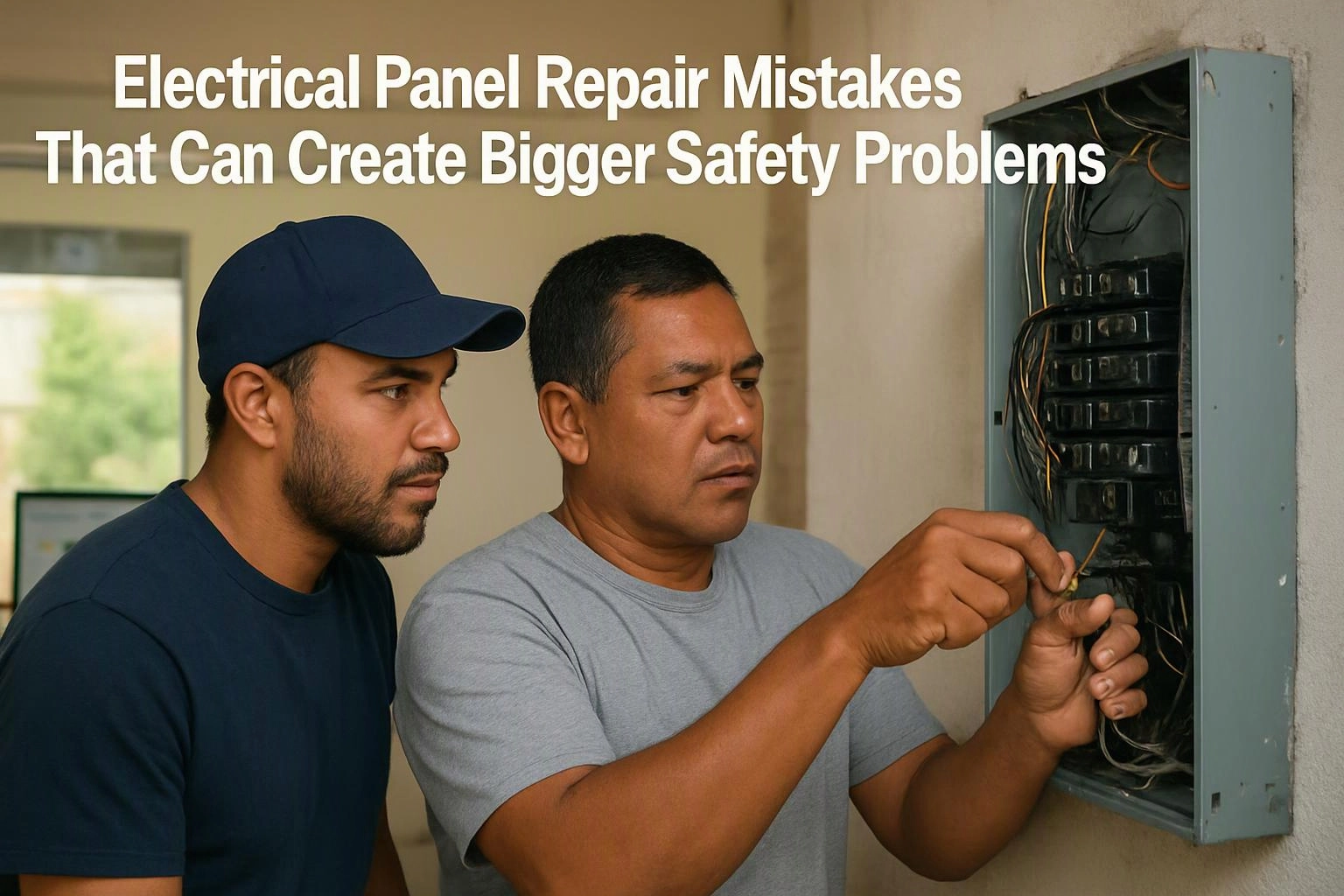
Electrical panel repair mistakes become safety hazards when an incorrect repair leaves energized parts, excessive current, loose connections, or the original fault unresolved.
An electrical panel distributes power through circuit breakers and conductors. An unsafe repair can create a shock hazard, fire hazard, or equipment problem that electrical troubleshooting must uncover before the panel is used normally.
Our team traces the cause, checks the panel condition, and corrects the unsafe work instead of treating only the visible symptom.
Turning Off the Wrong Disconnect
Turning off the wrong disconnect can leave an energized circuit inside the panel. The main disconnect may not remove power from every part of the service equipment, so verification testing is necessary before work begins.
We identify the correct disconnect, test for voltage, and control the shock hazard through safe de-energization. Labor and access cost can rise when the panel is difficult to reach or when additional circuits require testing.
Replacing a Breaker Without Matching the Panel
Replacing a circuit breaker without checking panel compatibility can weaken overcurrent protection or create an unsafe connection. Breaker compatibility depends on the panel listing, the manufacturer, and the approved breaker type.
We verify the manufacturer listing, breaker rating, bus connection, and physical fit before installing a replacement. Parts and inspection cost depend on whether the correct component is available and whether earlier work damaged the panel.
Installing a Breaker With the Wrong Rating
Installing a breaker with the wrong rating can allow more current than the electrical wiring can safely carry. The breaker rating must protect the conductor according to its wire ampacity and circuit rating.
We compare the breaker, conductor, and connected load before deciding on the fix. Rewiring and repair cost depends on the wire condition, access, and whether the circuit needs correction to meet electrical code.
Leaving Loose Terminals and Connections
Leaving a loose terminal screw or wire connection can increase electrical resistance and create heat. Continued heating can cause arcing, burn marks, and damage to the conductor or bus bar.
We inspect the connection, check for heat damage, and repair or replace affected parts as needed. Connection repair cost depends on the damage, the condition of the terminal, and the amount of access required.
Overlooking Aluminum or Damaged Wiring
Overlooking aluminum wiring, corrosion, oxidation, or damaged insulation can leave a weak wire termination inside the panel. These conditions can increase resistance and reduce the reliability of the circuit.
We examine the conductor, insulation, and termination before selecting a repair. Rewiring scope and material cost depend on how far the damage extends and whether the existing wire can be safely terminated.
Mixing Neutrals and Grounds Improperly
Mixing the neutral conductor and grounding conductor in the wrong location can place normal current on grounding paths. The neutral bus and ground bus have different functions, and improper bonding can affect ground-fault current protection.
We trace each conductor, inspect the bus arrangement, and correct the connection before testing the panel. Correction and testing cost depends on the wiring layout, previous modifications, and access to the affected circuits.
Ignoring Water, Rust, or Heat Damage
Ignoring water intrusion, rust, corrosion, or heat damage can make the panel enclosure and its internal parts unsafe. Moisture and heat can affect insulation, terminals, breakers, and the bus structure.
We find the source of the damage, assess the enclosure, and determine whether repair or panel replacement is appropriate. Replacement scope and repair cost depend on the affected components and whether the damage extends beyond the enclosure.
Resetting a Tripping Breaker Without Finding the Cause
Resetting a tripping breaker without finding the cause can leave a short circuit, overload, or ground fault active. Repeated trips are a warning that the circuit needs electrical troubleshooting.
We test the circuit, trace the fault, and repair the cause before restoring normal operation. Diagnostic and repair cost depends on where the fault is located and whether the circuit or connected equipment is damaged.
Adding Circuits Without Checking Panel Capacity
Adding circuits without checking service capacity can overload the electrical system. A load calculation, available circuit space, and inspection for a double-tapped breaker are needed before adding new loads.
We review panel capacity, existing loads, and breaker connections before recommending an installation. Upgrade and installation cost depends on the service capacity, panel condition, wiring route, and whether panel replacement is needed.
How We Check an Electrical Panel After a Repair Mistake
Cincelux Electric checks the panel condition, verifies safe de-energization, examines breakers and conductors, tests connections, and traces the original fault before recommending a repair.
Our Electrical Safety Inspection focuses on both visible damage and hidden conditions that may cause another failure.
What Changes the Cost of Correcting a Panel Repair Mistake?
The cost of correcting an electrical panel repair mistake depends on the damaged components, wiring condition, panel compatibility, access, and testing required; we explain the work included in the estimate.
Minor connection corrections may require different work than damaged conductors, incompatible breakers, or a panel replacement. Diagnostic testing also affects the scope when the original fault is not visible.
Our estimate describes the needed Electrical Panel Repair, replacement parts, wiring work, inspection, and testing. Free Estimates Available means you can request an estimate that reflects the actual panel condition.
When to Call Cincelux Electric Instead of Repairing the Panel Yourself
Call Cincelux Electric when the panel shows signs of arcing, heat, water damage, exposed energized parts, or a fault that returns after a reset.
Electrical panel work can expose you to electrical shock and electrical fire hazards. Our team uses electrical troubleshooting to identify the cause before completing the repair.
How to Prevent Electrical Panel Repair Mistakes
Preventing electrical panel repair mistakes requires accurate circuit identification, compatible components, sound connections, correct conductor protection, and testing after the work.
Keep circuit labeling clear so the correct disconnect can be identified during an emergency or repair. We verify labels and connections when we inspect the panel.
Use compatible replacement parts and match each breaker to the conductor and circuit. We also review panel capacity and load management before adding circuits.
Safe troubleshooting means stopping when you find energized parts, water damage, arcing, or an unclear fault. Our team can complete the inspection and explain the repair scope without leaving the underlying problem unresolved.
Questions About Electrical Panel Repair Mistakes
Can a tripping breaker indicate a bigger electrical panel problem?
Yes, a tripping breaker can indicate a short circuit, overload, ground fault, damaged wiring, or another electrical panel problem. Cincelux Electric traces the cause before resetting or replacing the breaker.
What should I do if an electrical panel smells burnt?
Turn away from the affected panel, avoid touching damaged parts, and call for electrical troubleshooting when an electrical panel smells burnt. A burning smell can point to overheating, arcing, or a loose connection.
Can the wrong circuit breaker damage an electrical panel?
Yes, the wrong circuit breaker can damage the bus connection, reduce overcurrent protection, or create an unsafe fit. We check breaker compatibility, the breaker rating, and the panel listing before making a correction.
Why do loose electrical panel connections create heat?
Loose electrical panel connections increase electrical resistance at the terminal. The resistance creates heat and can lead to arcing, insulation damage, or a failed connection.
When does a panel repair mistake require panel replacement?
A panel repair mistake can require panel replacement when the enclosure, bus structure, breakers, wiring, or internal parts have damage that cannot be safely corrected. We inspect the complete panel and explain whether repair or replacement fits the condition.
Related Resources
How Much Does a 24-Hour Emergency Electrician Cost in Cincinnati?
What It CostsElectrical Troubleshooting and Circuit Breaker Repair: Cost and Process
What It CostsHow Much Does It Cost and How Long Does It Take to Rewire a House?
What It CostsElectrical Panel Upgrade Cost Factors: Size, Scope, and Replacement Materials