Electrical Panel Upgrade Process: Inspection, Installation, and Final Testing
The electrical panel upgrade process includes evaluating the existing system, planning the replacement, installing the panel and circuits, and completing final safety tests. Cincelux Electric handles the inspection, installation, new circuit work, and testing as one coordinated project.
Get a Free Estimate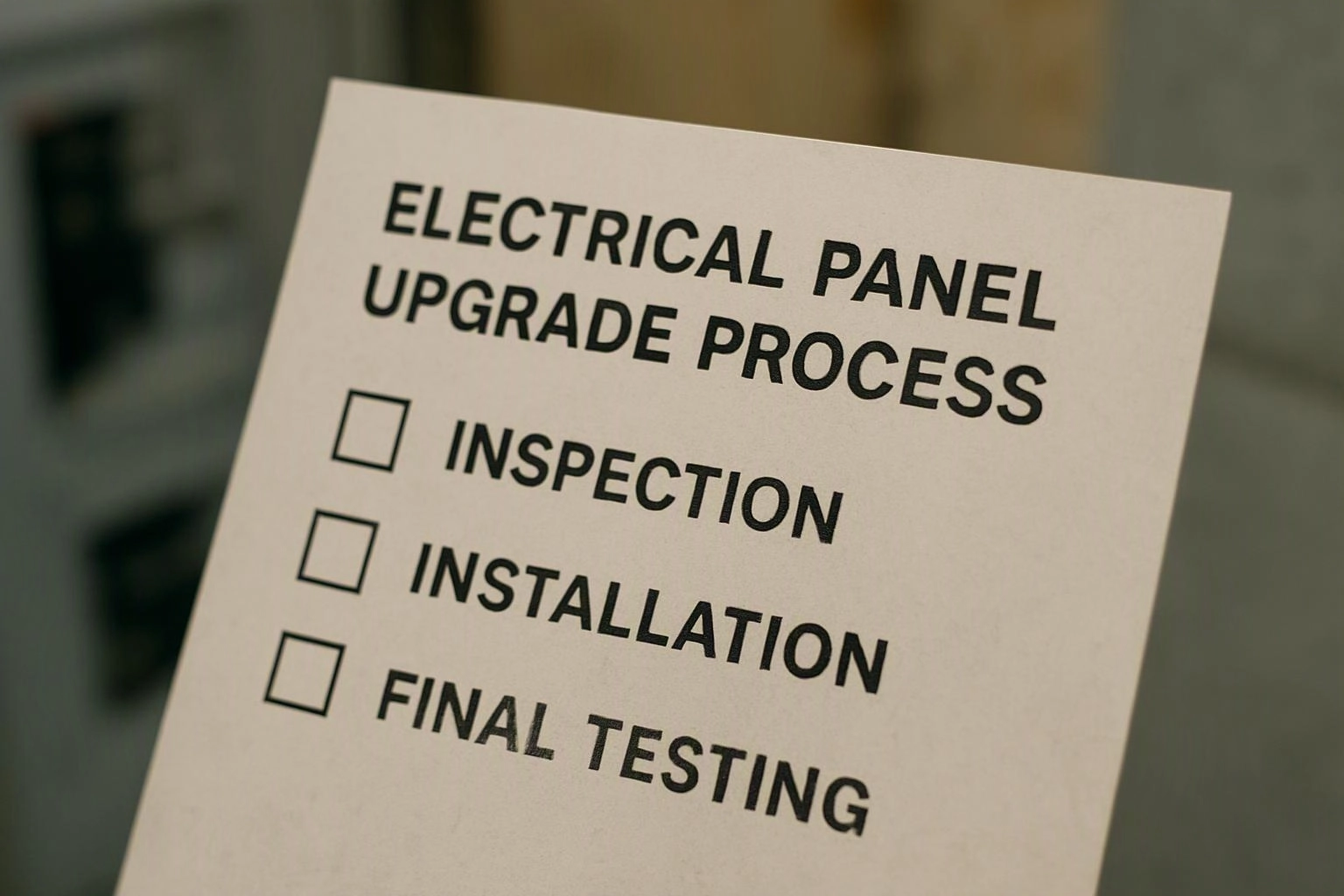
What Happens During an Electrical Panel Upgrade?
An electrical panel upgrade replaces or improves the central distribution equipment after the existing service, wiring, and circuit demands have been evaluated.
The work begins with an electrical inspection and load assessment. We review the electrical panel, service equipment, and branch circuits to determine how the system supports present and planned electrical demand.
Our team then coordinates panel installation, circuit integration, wiring changes, and final testing. This approach helps connect the panel replacement to the full electrical system.
How We Inspect the Existing Electrical System
Cincelux Electric inspects the existing panel, service conductors, grounding, bonding, breakers, and visible circuit wiring before designing the upgrade.
We examine the main service, electrical meter area, grounding electrode system, and service conductors for visible damage, corrosion, loose connections, or other conditions that affect the project.
Our team also reviews the panelboard, circuit breakers, neutral conductor, and branch-circuit wiring. We document conditions that may require repair, replacement, or further testing during the electrical panel upgrade.
What We Review Before Preparing the Upgrade Plan
The upgrade plan connects the home's present electrical demand with planned loads, available panel capacity, conductor requirements, and new circuit needs.
We compare the connected load with expected home electrification equipment and other planned electrical loads. The review shows whether the service capacity, feeder conductors, and panel capacity can support the proposed changes.
| Review area | What we evaluate | Why it matters |
|---|---|---|
| Electrical load | Existing connected loads and planned demand | Guides the load calculation and service planning |
| Panel capacity | Available spaces, bus capacity, and main equipment | Shows whether the panel can accept planned circuits |
| Feeder conductors | Conductor size, condition, routing, and terminations | Connects the service equipment to the panel safely |
| Circuit compatibility | Breaker types, wiring methods, and circuit requirements | Supports correct circuit integration and protection |
The findings determine whether the project needs a panel replacement, feeder upgrade, new circuit installation, or wiring upgrade.
What to Prepare Before Electrical Panel Work Begins
Homeowners can help the project move smoothly by gathering information and keeping the work area accessible. Our team uses these details to confirm the scope and protect occupants during the work.
The Electrical Panel Upgrade Process From Inspection to Installation
The electrical panel upgrade process follows a planned sequence from assessment through final testing. We coordinate each stage so the panel, wiring, circuits, and protective devices work together.
Step 1: Assess the Existing Electrical Service
The existing electrical service shows how the service entrance, service conductors, grounding, and bonding support the home.
We inspect the existing panel and trace visible service conductors to the service equipment. Our team checks grounding and bonding connections for condition and proper relationship to the equipment.
Step 2: Plan Panel Capacity and Circuit Changes
A load calculation determines how panel capacity and circuit changes should support present and planned electrical demand.
We prepare a circuit schedule and review breaker compatibility with the new panelboard. We also identify new circuits needed for home electrification loads and other dedicated equipment.
Step 3: Prepare the Work Area and Disconnect the Existing Panel
Electrical isolation and a controlled work area allow the existing panel to be removed safely.
We identify conductors before disconnecting the service equipment and organize the panel enclosure area for the new installation. Our crew protects nearby surfaces and keeps occupants away from exposed electrical work.
Step 4: Install the New Electrical Panel and Connect Circuits
The new electrical panel receives the main breaker, circuit breakers, feeder conductors, and branch circuits according to the planned design.
We connect the feeder conductors and place the neutral conductor on the neutral bar as designed. We connect grounding conductors to the ground bar, install compatible circuit breakers, and label each circuit for clear identification.
Step 5: Add New Circuits and Complete Wiring Upgrades
New circuit installation extends power to equipment that the existing distribution layout cannot support properly.
We install the required dedicated circuit using the planned cable or conduit method. Our team routes electrical wiring through suitable paths, adds junction boxes where needed, and completes each electrical connection at the panel and equipment.
Step 6: Complete the Final Electrical Testing
Final electrical testing confirms that the completed panel and circuits operate safely and match the planned design.
We perform voltage testing, polarity testing, breaker operation checks, and grounding continuity checks. Our team also verifies GFCI protection, AFCI protection, circuit connections, and the operation of connected equipment.
How We Verify the Finished Panel and Circuits
Cincelux Electric verifies panel connections, circuit identification, protective devices, voltage, polarity, grounding continuity, and the operation of the completed system.
We compare the installed work with the circuit directory and check breaker identification. We also inspect the panel enclosure, terminations, neutral and ground arrangements, and visible electrical wiring.
Final testing helps confirm electrical safety and gives the homeowner a clear record of how the system is arranged.
What Changes the Scope of a Panel Upgrade Project?
The project scope changes with the existing service capacity, panel location, wiring condition, required circuit additions, and planned electrical loads.
A service panel in a difficult location may require different access planning or conductor routing. Damaged or obsolete wiring can add wiring upgrades to the panel replacement.
Home electrification equipment may require dedicated circuits, additional capacity, or changes to feeder conductors. We review electrical code requirements and access conditions before finalizing the work.
How the Estimate Covers the Planned Electrical Work
Cincelux Electric provides Free Estimates Available for the planned panel, circuit, wiring, installation, and testing work, with the exact quote based on the evaluated project scope.
We review the panel replacement, new circuits, wiring upgrades, materials, labor, electrical connections, and final testing included in the plan. The estimate reflects the conditions found during the electrical inspection and the work needed for the completed system.
To request an estimate, contact our team through the service page for Electrical Panel Upgrade and share the planned equipment and known electrical concerns.
When a Panel Upgrade Should Include Wiring or Circuit Changes
A panel upgrade should include wiring or circuit changes when the existing conductors, circuit capacity, or distribution layout cannot support the planned electrical loads safely.
We look for overloaded circuits, obsolete wiring, poor connections, and limited circuit capacity during the electrical inspection. We then plan dedicated circuits or a wiring upgrade where the equipment and electrical code require them.
Home electrification upgrades can make these changes especially important because new equipment may need separate circuits and properly sized conductors.
What Should Be Documented After the Upgrade?
Post-project documentation gives occupants and future service work a clear record of the completed electrical system. We review the documents with the customer after the panel and circuits have been tested.
Questions About the Electrical Panel Upgrade Process
Can an electrical panel upgrade support new home electrification equipment?
Yes, an electrical panel upgrade can support new home electrification equipment when the service capacity, load calculation, panel capacity, feeder conductors, and dedicated circuits are planned for the equipment. Cincelux Electric evaluates the existing system and coordinates the required panel and wiring work.
What should be checked before replacing an electrical panel?
Before replacing an electrical panel, the service conductors, main service, grounding electrode system, bonding, panelboard, circuit breakers, branch-circuit wiring, and connected loads should be checked. We use the inspection findings to plan compatible equipment and required wiring changes.
When does a panel upgrade require new circuits?
A panel upgrade requires new circuits when planned equipment needs dedicated protection or when existing circuits cannot safely support the electrical load. We determine the need during the load calculation and electrical inspection.
What does final testing include after an electrical panel installation?
Final testing includes voltage testing, polarity testing, breaker operation, grounding continuity, GFCI protection, AFCI protection, circuit verification, and a review of circuit labeling. We use these checks to confirm the completed system operates as designed.
How do I request an electrical panel upgrade estimate from Cincelux Electric?
Cincelux Electric provides Free Estimates Available for electrical panel upgrade projects. Contact us through our contact page with information about the existing panel, planned equipment, and requested circuit changes so we can evaluate the project scope.
Plan Your Electrical Panel Upgrade
Cincelux Electric coordinates the electrical inspection, load calculation, panel installation, new circuit installation, wiring upgrades, and final electrical testing for one complete project.
Contact us through our contact page to discuss the existing system and request an estimate.
Related Resources
How Much Does It Cost and How Long Does It Take to Rewire a House?
What It CostsHow Much Does Level 2 EV Charger Installation Cost in Cincinnati?
What It CostsWhole-Home Generator Installation in Cincinnati: Cost, Scope, and Timeline
What It CostsElectrical Panel Upgrade Cost Factors: Size, Scope, and Replacement Materials