Should You Repair Emergency Wiring or Rewire Your Home?
Emergency electrical wiring repair fixes urgent dangers. These dangers include sparks, exposed wires, burning odors, and power loss. Complete home rewiring replaces unsafe circuits across the property. An electrician should inspect the wiring first. Then, they can suggest a repair, rewiring, or new circuit installation.
Get a Free Estimate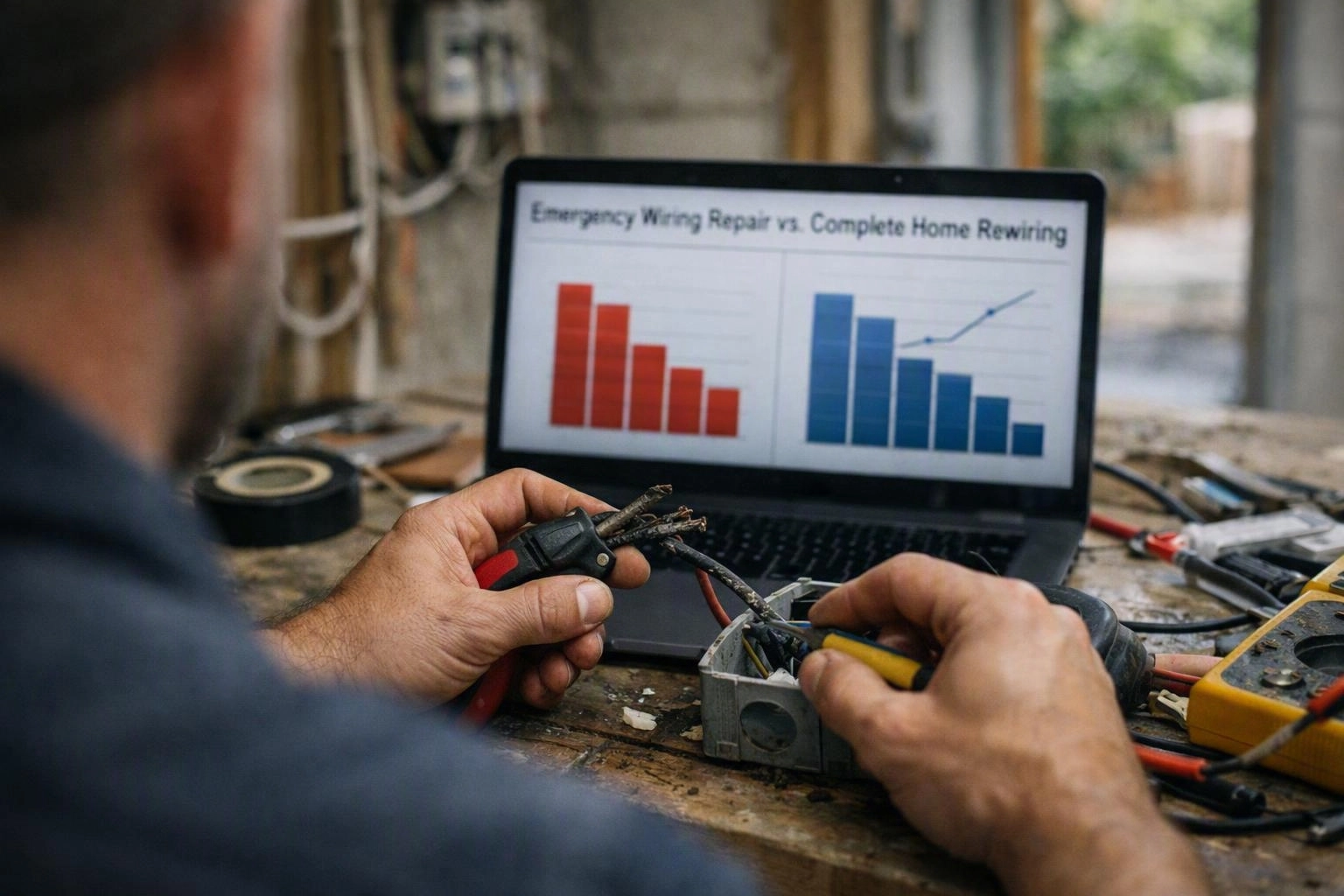
Electrical wiring repair and home rewiring help fix unsafe electrical problems. At ElectricianCincinnatiOH.com, we check the system before suggesting work. We look for small faults and larger system issues. A 24 Hour Electrician may help when danger is active. Fast help also matters when power loss affects key equipment.
Emergency Wiring Repair or Complete Home Rewiring: What Is the Difference?
Emergency wiring repair fixes one urgent problem. This may include damaged wire, a bad connection, or a sparking outlet. Complete home rewiring replaces many old circuits. It may replace the entire wiring system. An electrician checks safety, wiring age, damage, circuit size, and code needs.
A small repair may replace damaged wire. It may also secure a loose connection or replace an unsafe outlet. The goal is to make the affected area safe. Sound wiring elsewhere should stay undisturbed. An emergency electrician first shuts off the circuit. They check for heat, arcing, and unsafe voltage.
Rewiring covers a much larger area. It may require opening walls or reaching through ceilings. The work may replace old cables and improve grounding. It may also include.electrical panel upgrade. Partial rewiring covers one floor or several damaged circuits. Complete rewiring replaces wiring throughout the property.
Electrical troubleshooting helps find the real source of trouble. A tripping circuit breaker may have several causes. It could mean an overload or a ground fault. It could also mean a loose connection or damaged wire coating. People and pets in the home can affect the work plan. Essential appliances may also need temporary safe power.
Access can change the work plan. Hidden cables may take more time to reach. The electrical panel may limit new capacity. We explain each safe and practical choice. Options may include repair, partial rewiring, or complete rewiring. Another residential electrical service may fit better.
Which Wiring Problems Require an Emergency Electrician?
Call an emergency electrician when wiring creates an immediate safety risk. The risk may involve fire, shock, or major power loss. Stop using the circuit first. Keep people and pets away. Seek urgent help when you see these signs:
Do not remove a panel cover. Do not keep resetting the circuit breaker. If smoke or fire appears, leave the property. Call emergency services first. We can inspect the electrical fault safely afterward.
Can Damaged Electrical Wiring Be Repaired Safely?
Yes, damaged electrical wiring can often be repaired safely. The problem must be local. The remaining cable must also be sound. All work must follow the electrical code. A qualified electrician should find why the damage happened. They should also test the repair under normal load.
Wire insulation plays an important role. Brittle, cracked, melted, or damaged insulation may need full replacement. A loose connection needs approved parts. Those parts belong inside a proper junction box. No loose splice should remain hidden in a wall or ceiling.
The electrician may test the breaker and wire size. They may also test polarity, grounding, and voltage. A local repair may work when the circuit is healthy. The breaker must also match the circuit. More work may be needed after an overload or heat damage.
Safe repair means more than covering the problem. Tape cannot fix a damaged cable. An oversized breaker cannot fix a bad connection. A new outlet may not solve the real cause. A proper check covers the whole affected area. It also considers hidden wires and local code rules.
When Does a House Need Rewiring?
A house may need rewiring when wiring has widespread damage. It may also lack safe grounding or enough power capacity. One failed outlet does not mean the whole home needs rewiring. Repeated faults may point to a larger problem.
Old wiring may have cracked insulation or weak connections. It may also have poor grounding or too few circuits. Aluminum wiring needs a careful check. Its connections may overheat without proper parts and care. Knob-and-tube wiring may lack grounding and modern protection. Changes or added insulation may make the risks worse.
A fuse box is not always unsafe. Its condition and capacity still need a check. The same applies to system fit and current use. Electric heating and air conditioning can raise demand. Cooking, laundry, workshops, and electric vehicle charging add more load.
Rewiring may cover part or all of the home. The choice depends on wiring age and insulation. It also depends on grounding, panel fit, and circuit size. Hidden cables may affect the work. We plan safe work areas around children, pets, older adults, and key appliances.
How Do I Know if My Wiring Is Unsafe?
An electrical inspection is the safest way to check wiring. Some dangers stay hidden inside walls or panels. Arrange an inspection when you notice these signs:
Do not judge wiring by looks alone. Voltage tests and load checks can reveal hidden risks. Grounding tests can find problems at outlets and panels. We record the findings and explain the next step. That step may involve repair, troubleshooting, or house rewiring.
What Benefits Does Professional Wiring Work Provide?
Professional wiring work helps lower hazards and improve power use. It can help the home support its actual electrical load. The right service may be a repair or partial upgrade. It may also involve full replacement.new circuit. The work should match the system’s condition.
Fire Prevention
A careful repair removes damaged wires and hot connections. It also replaces devices that may cause fires. The electrician checks the breaker and wire match. A repair may involve one device or a short cable section. The full circuit still needs testing.
Shock Protection
Good grounding and secure connections help lower shock risk. Work may correct polarity or replace damaged outlets. It may also address a ground fault. Bathrooms, kitchens, garages, and outdoor areas need extra care. Moisture can raise the risk in these spaces.
Reliable Power
New connections can reduce trips and sudden outages. Separate circuits can also reduce overloads. A dedicated circuit gives one high-demand appliance its own power path. This may help heating units, kitchen tools, laundry machines, or workshop tools.
Energy Efficiency
Wiring work does not create energy savings by itself. Good connections can reduce heat loss, though. They can also help equipment run as it should. We may find poor connections or unusual power use during an upgrade. Appliance choice and daily use still affect energy use.
New Circuit Capacity
New circuit installation adds safe power for an appliance. The electrical panel and service must support it. The electrician checks panel space, breaker fit, wire size, and grounding. They also check the wire path and expected load. Adding a breaker without these checks can create danger.
Property Protection
Planned work helps protect walls, ceilings, appliances, and personal items. Crews can plan access points and protect rooms. They can also plan outages around key appliances. Small repairs often take part of a day. Larger jobs may take days or several weeks. Home size and cable access affect the time.
Safer use matters more than keeping every old part. We explain the limits of the current electrical panel. We also show which work can happen now. Some work may happen in stages.
| Typical condition | Likely improvement | Illustrative outcome |
|---|---|---|
| Loose or failed connection | Localized repair | One affected point made secure and tested |
| Deteriorated circuits in one area | Partial rewiring | A section receives safer conductors and connections |
| Widespread old or unsafe wiring | Complete rewiring | Multiple circuits are replaced and coordinated with the panel |
| High-demand appliance without suitable supply | Dedicated circuit | The appliance receives an appropriately protected circuit |
Typical Outcomes: Repair, Rewiring, and New Circuit Installation
Electrical repair fixes one known fault. Rewiring improves several circuits. A new circuit gives one high-demand appliance dedicated power. The right choice depends on damage, wiring condition, load, and safety risk.
Electrical diagnosis comes first. We inspect the area and test the voltage. We check the panel, heat, arcing, grounding, and overloaded circuits. We also look for code concerns. A local repair may work when the rest of the circuit is sound.
Partial rewiring fits one damaged area or selected circuits. Complete rewiring fits widespread damage or unsafe materials. It may also fit homes with poor grounding throughout. The system may need replacement when it cannot meet normal demand.
A dedicated circuit is not the same as rewiring. It adds power for one appliance or use. The job may need panel work and new cable. It may also need wall access and load checks. Panel fit and hidden cables can change the plan. We schedule work around children, pets, older adults, and key appliances.
| Service path | Best fit | Main decision checks |
|---|---|---|
| Localized repair | A defined fault in otherwise sound wiring | Damage extent, connection quality, breaker protection |
| Partial rewiring | Deterioration limited to selected circuits or areas | Wiring age, insulation, grounding, access |
| Complete rewiring | Widespread unsafe or outdated wiring | System condition, panel compatibility, total load |
| New circuit installation | A high-demand appliance needs separate power | Available capacity, conductor route, protective device |
A warm outlet may need emergency outlet repair. Several warm outlets may point to a wider issue. Repeated breaker trips support a broader inspection. Ask for a written summary of the findings. It should explain the safety concern and suggested work.
Questions About 24 Hour Electrician
What Wiring Problems Require an Emergency Electrician?
Call an emergency electrician for arcing, burning odors, exposed wires, shocks, or hot outlets. Call for smoke, scorch marks, or power loss affecting key equipment. Stop using the circuit. Do not keep resetting the breaker while waiting for help.
When Does a House Need Rewiring?
A house may need rewiring when old wiring has damaged insulation or poor grounding. Widespread heat damage and unsafe changes may also require rewiring. Low capacity can create the same need. Aluminum or knob-and-tube wiring needs a careful check. Either material alone does not prove full replacement is needed.
Can Damaged Electrical Wiring Be Repaired?
Damaged electrical wiring can often be repaired when the damage is local. The cable, insulation, grounding, and breaker protection must be sound. Repairs need approved parts and proper junction boxes. Testing must confirm safe use under the expected load.
How Do I Know if My Wiring Is Unsafe?
Warning signs include flickering lights, breaker trips, warm outlets, buzzing, and burning odors. Scorch marks, shocks, exposed wires, and poor grounding also signal risk. An electrical inspection is the safest way to confirm wiring condition.
How Much Does It Cost to Rewire a House?
The cost depends on home size, wiring condition, and cable access. It also depends on circuit count, panel fit, grounding, and wall repairs. Local rules can affect the price too. An electrician should inspect the home and give a scope-based estimate.
How Long Does It Take to Rewire a House?
Timing depends on home size, cable access, and circuit count. Inspections and wall access can also affect the schedule. Small repairs may take part of a day. Complete rewiring often takes several days to multiple weeks. The electrician should explain each work stage and outage.
Use the inspection findings to choose the safest next step. Options include repair, partial house rewiring, or complete replacement. A dedicated circuit installation may also fit your needs.
Related Resources
How Much Does a 24-Hour Emergency Electrician Cost in Cincinnati?
24 hour emergency electrician cost Cincinnati
What It CostsElectrical Troubleshooting and Circuit Breaker Repair: Cost and Process
electrical troubleshooting and circuit breaker repair cost
What It CostsHow Much Does It Cost and How Long Does It Take to Rewire a House?
home rewiring cost and timeline Cincinnati
What It CostsHow Much Does Level 2 EV Charger Installation Cost in Cincinnati?
residential Level 2 EV charger installation cost Cincinnati