Half the House Has No Power: Causes and Next Steps
A partial power outage often comes from a tripped breaker or utility problem. It can also result from damaged service wires or a failed meter base. If one room is dark, check its breaker and GFCI outlets. If half the home is dark, call the utility company and a licensed electrician. Don’t open the panel or touch damaged wires. Don’t reset a breaker again and again. An electrician can test the panel, meter base, service wires, and circuits. ElectricianCincinnatiOH.com can help you choose a safe next step.
Get a Free Estimate
A partial outage may come from a small circuit issue. It may also signal a serious service fault. The area without power offers a useful clue. One room often points to a branch circuit. Several rooms or large appliances may point to a service issue.
Why Does Only Half My House Have Power?
A partial outage happens when one part of your home’s power service fails. The other part may keep working. A main breaker, service wire, meter base, or utility fault can cause this problem.
Most North American homes use a split-phase electrical system. This system has two 120-volt power lines. Lights and outlets use one line or the other. Large appliances often use both lines for 240-volt power. If one line fails, some rooms may stay bright.
The dark areas may not form one clean half. Circuits are spread across the main panel. A failed power line may stop a range, dryer, water heater, or heat pump. Other lights and outlets may still work.
The problem may be outside or inside your home. A transformer, service line, or supply wire may have failed. The weatherhead, meter, main breaker, or panel may also have damage. Some of these parts stay live during an outage.
Older homes need extra care. Old panels, worn breakers, aluminum wires, and loose connections can create heat. Flickering lights can also signal trouble. Turn off sensitive devices and arrange electrical testing.
What Causes a Partial Power Outage at Home?
Common causes include a tripped breaker, lost utility phase, damaged service entrance, faulty meter base, or loose connection. The cause depends on which rooms and appliances lost power.
Start by noting the symptoms. Don’t remove covers. Write down the rooms, outlets, lights, and appliances without power. If nearby homes are also dark, call the utility first.
Many testing and repair visits take about one to three hours. The time can change with access, hidden damage, utility work, or needed parts.
Signs That Point to a Service or Panel Problem
These signs suggest more than one dead outlet. Don’t touch the panel, meter, or wires near heat, smoke, or burning smells.
- Flickering lights: Dimming or brightening lights may signal loose wires, uneven power, or a lost phase.
- Burning odor: A sharp plastic smell near an outlet, panel, meter, or appliance can mean overheating.
- Warm electrical panel: A panel cover or nearby wall should not feel hot. Heat may mean a loose wire or bad breaker.
- Uneven voltage can make some circuits seem weak. It can also make equipment act strangely.
- Damaged appliances, repeated resets, or failed controls may follow an electrical fault or surge.
- Buzzing or crackling near electrical equipment needs prompt professional help.
Turn off noisy or damaged equipment if you can do so safely. Leave the area if you see smoke, fire, or exposed wires. Call emergency services when needed. Then arrange electrical repair.
What Can You Safely Check Before Calling for Help?
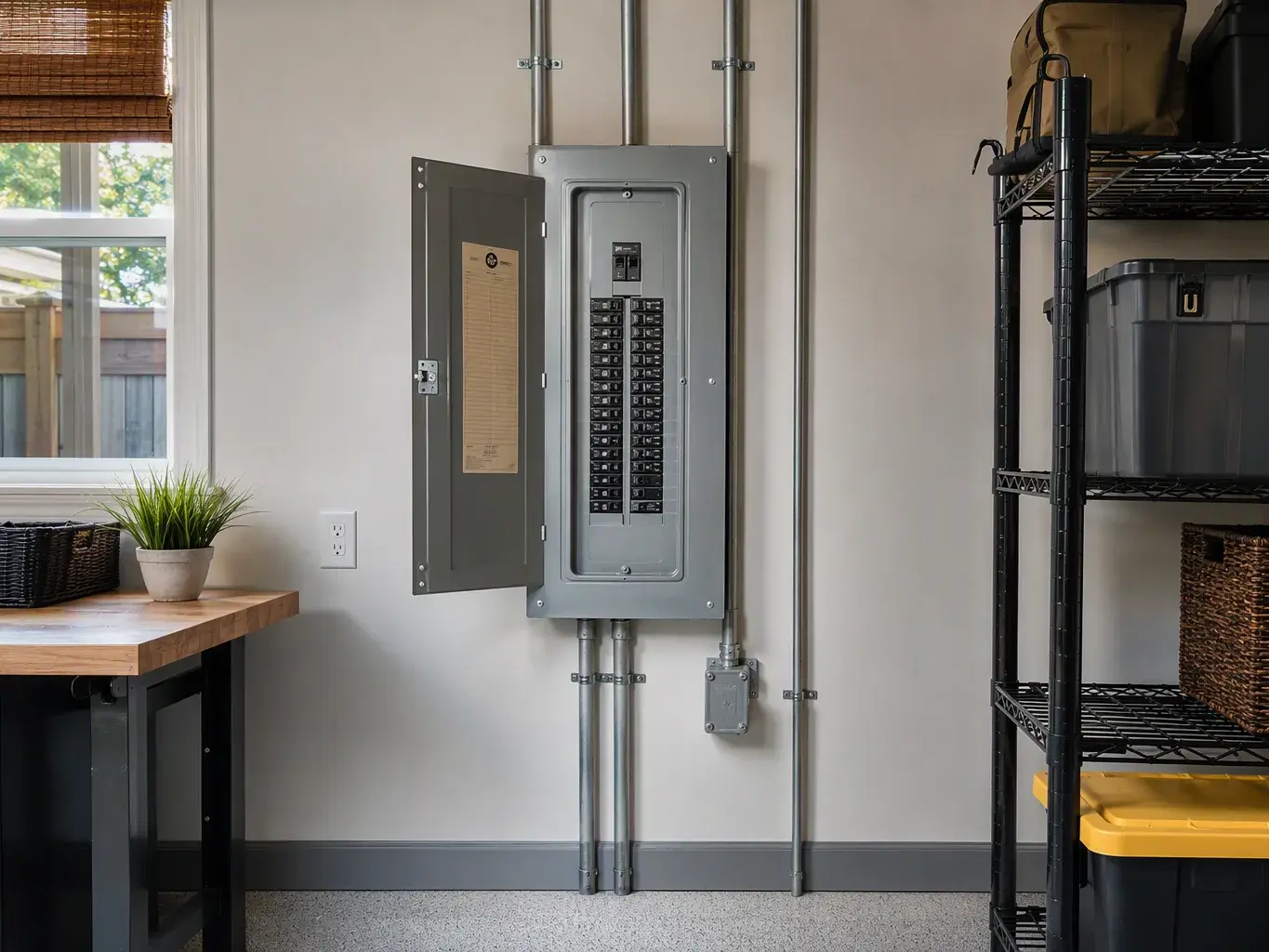
Safe checks include nearby homes, the breaker panel, GFCI outlets, and large appliances. Reset a breaker only once when it’s clearly tripped. Stop if it trips again, smells burnt, feels hot, or looks damaged.
Don’t remove the panel cover or pull the meter. Don’t open a meter socket or touch service wires. Dangerous voltage may still be present.
Leave a breaker off if it trips again. Repeated resets can worsen a short or create an arc. A licensed electrician can test the problem safely.
Why Is One Side of My House Without Electricity?
One side of a home may lose power when one split-phase line fails. The fault may be at the utility, service drop, meter socket, service wires, or main panel. These parts can stay live, so a qualified electrician should test them.
“One side” describes the pattern, not a set part of the home. Circuits connect to different power lines in the main panel. If one line fails, several unrelated rooms may lose power.
| What you notice | Possible location | First contact |
|---|---|---|
| One outlet or one room is dead | Branch circuit, breaker, or GFCI device | Electrician after safe checks |
| Several rooms and some appliances are dead | Main panel, service conductor, meter socket, or lost phase | Utility company and electrician |
| Nearby homes are also out | Utility supply or transformer | Utility company |
| Heat, odor, noise, or visible damage is present | Unsafe connection, panel, meter equipment, or wiring | Electrician; emergency services if there is fire |
The utility usually handles its transformer and incoming supply. A property owner usually needs an electrician for the meter base, service wires, main panel, and interior wiring. Service boundaries can differ. Both teams may need to test the system.
How an Electrician Restores Power Safely?
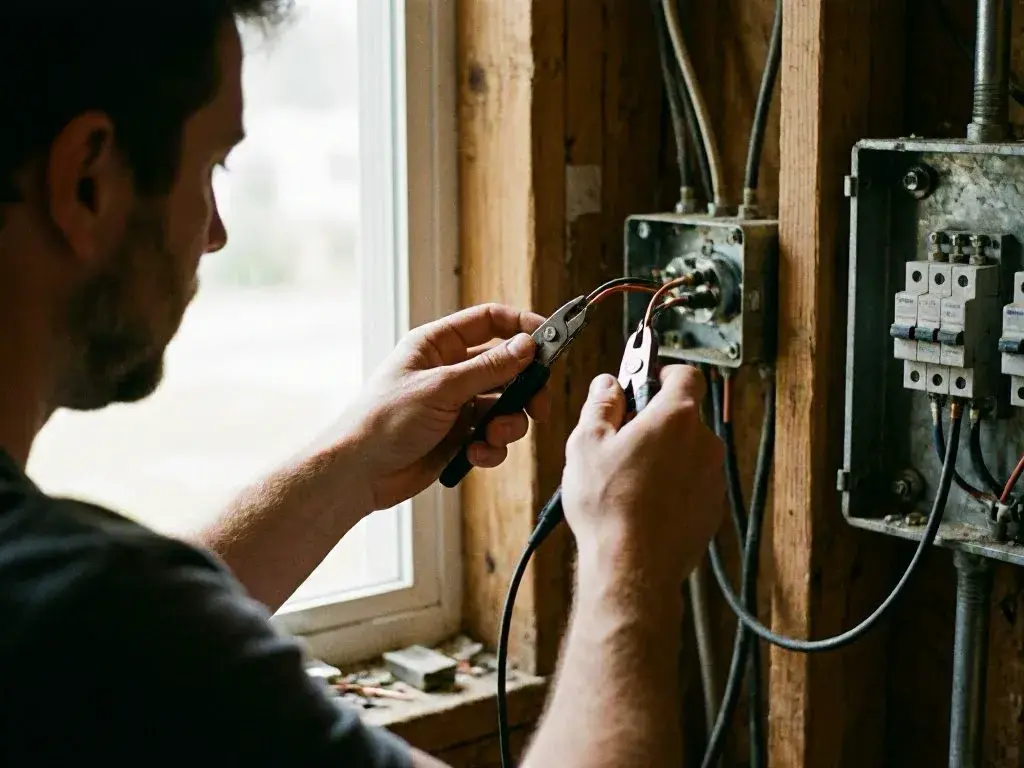
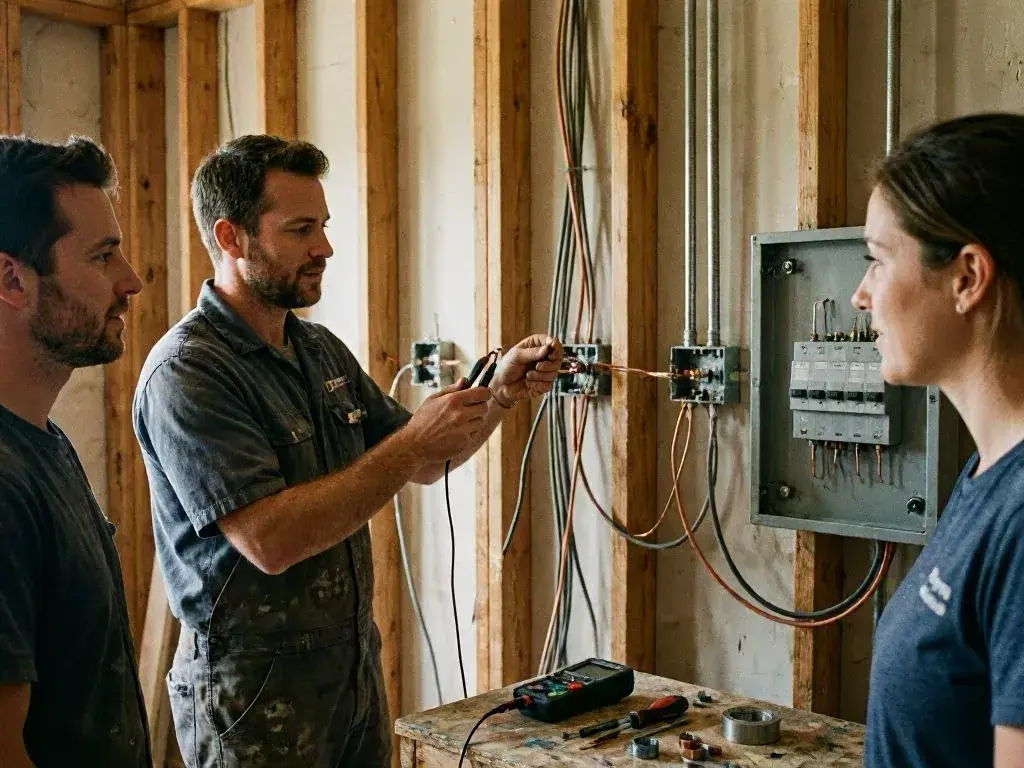
An electrician first isolates the affected circuits. Then the electrician tests voltage at the panel and service equipment. The electrician checks wires and connections. This shows whether the utility or home equipment caused the outage.
Our team starts with the outage pattern. We find which circuits work and which circuits don’t. We also check where power stops. This helps separate a single-circuit problem from a lost service phase.
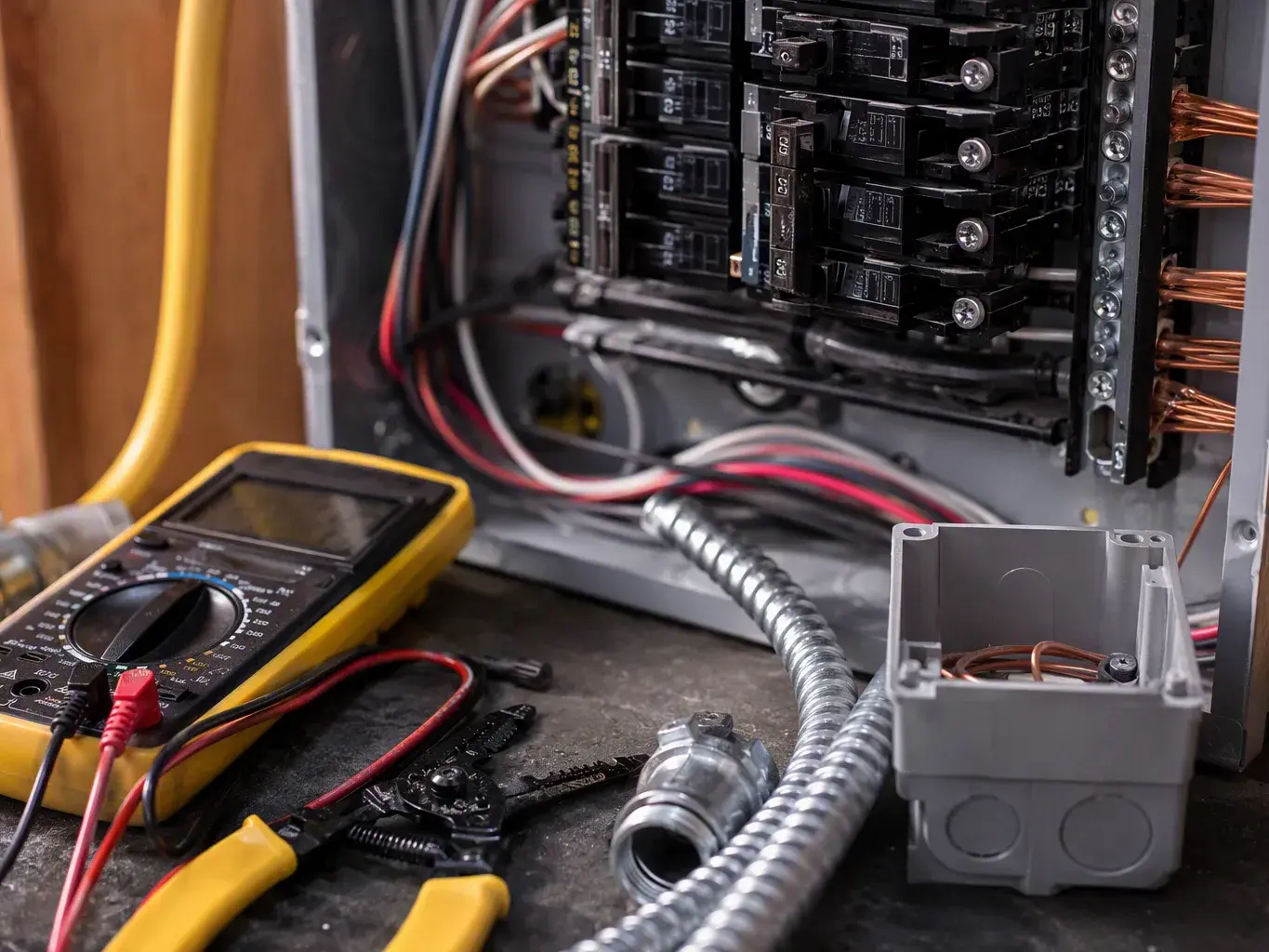
Next, the electrician tests voltage at approved points. These readings show whether both power lines are present. They also show if voltage is balanced. Service equipment may stay live during testing.
If the utility caused the problem, we explain the findings. We can also help coordinate with the utility company. Property-side repairs may involve a breaker, service wires, meter base, loose connections, or unsafe panel wiring.
Power Restoration means more than turning on a breaker. The repair must fix the cause and protect the wires. We also confirm that circuits have safe voltage. Some appliances may need to stay unplugged until power is stable.
Older panels and repeated trips need more than temporary resets. An emergency electrician can check hazards after hours. The electrician can also decide if a controlled shutdown is safer. We provide Power Restoration in Cincinnati for property-side faults.
How Can You Prevent Another Partial Power Outage?
Good electrical care can lower the risk of another outage. Fix loose connections and worn breakers early. Avoid overloaded circuits. Use surge protection for sensitive devices. Take flickering lights seriously.
Preventive work helps older homes with aging panels or meter equipment. It also helps before adding.electric vehicle charger, heat pump, or workshop tools. Large loads can expose a weak circuit or service connection.
Questions About 24 Hour Electrician
Who Do I Call When Half the House Loses Power?
Call the utility company first if nearby homes are also out. Call a licensed electrician if only your home has trouble. You should also call an electrician for trips, heat, burning odors, buzzing, or damaged service equipment. Both teams may need to help.
Can a Bad Breaker Cause Half the House to Lose Power?
Yes. A bad or tripped main breaker can cut power to many circuits. A faulty breaker can also affect a group of circuits. A lost utility phase, service wire, or meter base can cause the same pattern. Testing should come before breaker replacement.
Why Do Some Rooms Have Power but Others Do Not?
Different rooms use different branch circuits. Those circuits may use different power lines. A breaker or GFCI can affect one area. A lost phase can affect several rooms and appliances.
Is It Safe to Reset the Main Breaker During a Partial Power Outage?
Reset it once if it’s clearly tripped and shows no warning signs. Keep the panel cover closed. Move the handle fully off, then on. Leave it off if it trips again or seems unsafe. Then call an electrician.
Can a Power Outage Damage Appliances or Electronics?
Yes. Surges, repeated outages, and uneven voltage can damage electronics and motors. They can also harm control boards and compressors. Unplug sensitive devices during unstable power. Use surge protection and have the system checked before reconnecting major appliances.
Related Resources
How Much Does a 24-Hour Emergency Electrician Cost in Cincinnati?
24 hour emergency electrician cost Cincinnati
What It CostsElectrical Troubleshooting and Circuit Breaker Repair: Cost and Process
electrical troubleshooting and circuit breaker repair cost
Compared ToEmergency Electrician vs. Regular Electrician: Which Should You Hire?
emergency electrician vs regular electrician
Compared ToElectrical Panel Upgrade vs. Full Service Upgrade: What Does Your Home Need?
electrical panel upgrade vs electrical service upgrade cost Cincinnati