Burning Smell or Scorch Marks From an Outlet: When to Call an Electrician
A burning smell or scorch marks from an outlet require you to stop using the outlet and arrange an electrical inspection; Cincelux Electric checks the outlet, wiring, and circuit to identify the hazard and complete the repair.
Get a Free Estimate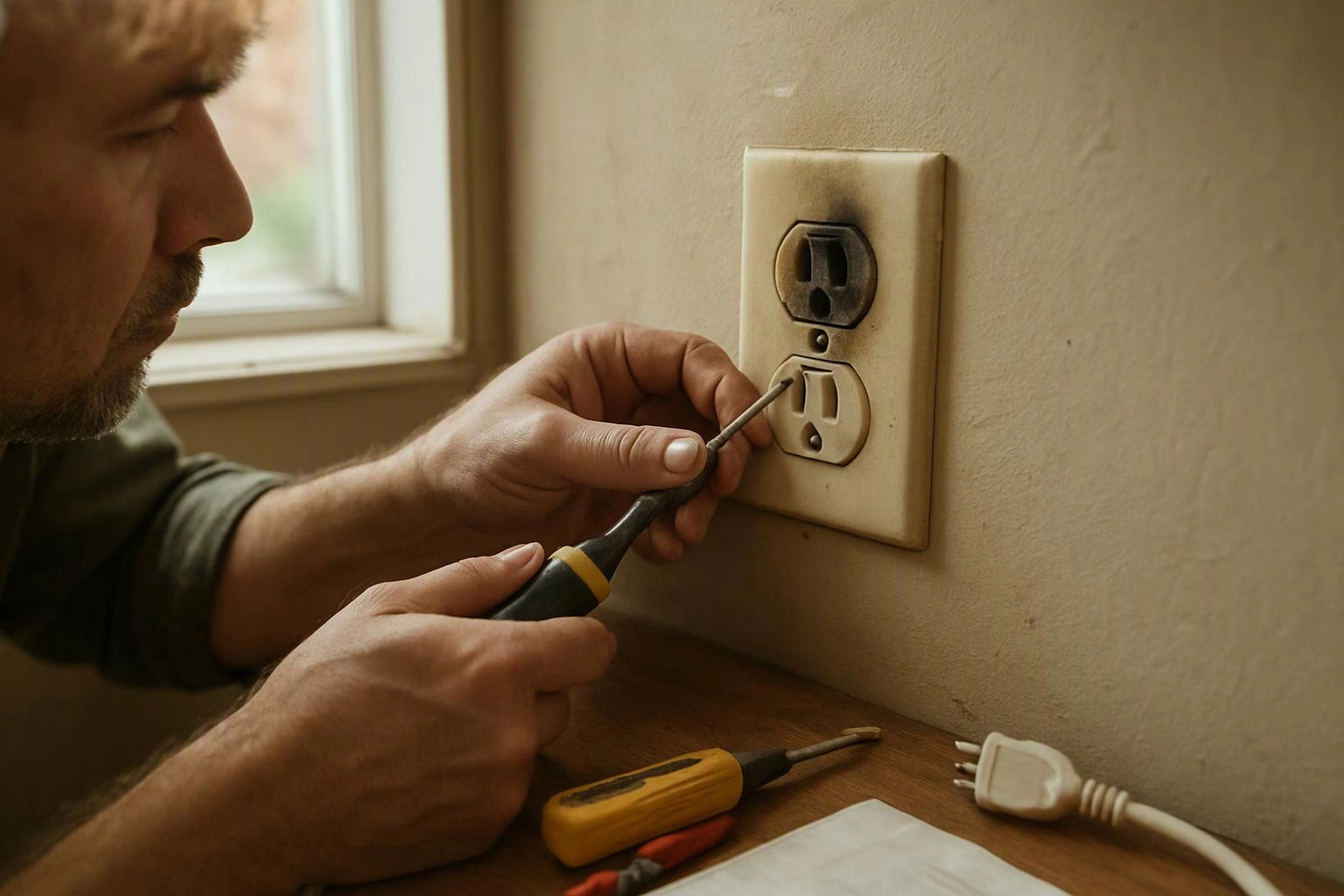
Which Warning Signs Mean an Outlet Needs Immediate Attention?
A burning smell or scorch marks mean you should stop using the outlet and arrange an electrical inspection. These signs can point to heat, arcing, or damaged wiring behind the wall outlet.
What Should You Do When an Outlet Smells Burnt?
Turn off and avoid the affected outlet, keep combustible items away, and call Cincelux Electric when the outlet is hot, smoking, sparking, or visibly damaged.
Electrical safety starts with stopping use of the outlet and moving anything that could catch fire away from the area. Do not touch a smoking outlet or attempt to pull out a melted plug.
If you can do so safely, turn off the breaker that supplies the outlet. A tripped breaker may identify the circuit, but resetting it can restore power to a damaged outlet and create a fire hazard.
Our team performs electrical troubleshooting without asking you to open the receptacle. We inspect the outlet, electrical box, and circuit before recommending outlet repair or another solution.
When Is an Outlet Problem an Electrical Emergency?
An outlet problem is an electrical emergency when smoke, flames, active sparking, rapid heating, or a spreading burning odor is present.
Leave the area and contact emergency services if flames or heavy smoke are present. Do not use water on an energized electrical fire.
If the circuit breaker trips repeatedly, leave the breaker off and keep away from the outlet. We provide emergency electrical repair when the outlet or circuit needs urgent attention.
For more warning signs, our guide, Signs You Have an Electrical Emergency at Home, explains when an electrical problem needs immediate action.
DIY Troubleshooting vs Calling Cincelux Electric
Limited safety steps are appropriate when you do not open the outlet or handle damaged wiring. Cincelux Electric handles energized testing, outlet repair, wiring diagnosis, and circuit work.
The comparison below shows where safe customer action ends and our electrical troubleshooting begins.
| Factor | What you can do yourself | What we do |
|---|---|---|
| Outlet inspection | Stop using the outlet and look for heat, smoke, or visible damage without removing the cover. | We inspect the receptacle, cover, electrical box, and nearby wiring. |
| Circuit breaker | Turn off the breaker if you can identify it and reach it safely. | We test the circuit and identify why the breaker tripped or failed to protect the circuit. |
| Outlet replacement | Do not replace a scorched or melted receptacle while the cause is unknown. | We replace the receptacle after checking for wiring damage and heat at the electrical box. |
| Electrical wiring | Keep the circuit off if you notice smoke, heat, or a persistent burning odor. | We diagnose loose connections, damaged insulation, and overloaded circuits. |
| Emergency electrical repair | Leave the area when flames or active smoke are present and seek emergency help. | We address the electrical hazard and restore safe operation after testing. |
Opening the outlet can expose you to energized parts and may hide damage inside the box. We handle outlet replacement and circuit diagnosis when the fault goes beyond a visible cover or receptacle.
How We Diagnose the Source of a Burning Outlet
Electrical troubleshooting identifies whether the receptacle, electrical wiring, circuit, or connected equipment caused the burning odor.
We begin with a visual inspection of the receptacle, outlet cover, electrical box, and wire insulation. Our team looks for a loose connection, arcing connection, melted parts, and signs of heat.
We test the circuit for an overloaded circuit, improper connections, and problems that could affect the circuit breaker. We also check whether a ground fault or missing GFCI protection is contributing to the problem.
Connected appliances can also create heat at a receptacle. We assess the outlet and circuit together so the repair addresses the source instead of only replacing the visible part.
What Changes the Repair Quote for a Scorched Outlet?
The repair quote depends on whether the damage is limited to the receptacle or extends into the wiring, circuit breaker, electrical box, or connected equipment; Cincelux Electric provides Free Estimates Available.
A simple outlet replacement involves different work from damaged wiring inside the electrical box. The condition of the circuit breaker, the need for a GFCI outlet, and damage that extends along the branch circuit can also change the recommended repair.
Our team explains what we found, which parts need attention, and what the proposed repair includes before work begins. Request a quote through our contact page so we can assess the actual outlet and circuit.
How We Repair the Outlet and Prevent Further Damage
Outlet repair starts with making the circuit safe and identifying the cause of the heat, smoke, or arcing.
We disconnect unsafe equipment, remove damaged components, and inspect the electrical box and electrical wiring. Our crew repairs wiring damage and installs a replacement receptacle when the existing outlet is no longer safe.
GFCI outlet repair may be needed where ground fault protection is required or where the GFCI device has failed. We check the device, connections, and downstream outlets before restoring power.
Circuit breaker repair or related circuit work may be needed when the breaker does not protect the wiring or when the circuit is overloaded. We complete electrical testing after the repair to confirm proper operation and reduce the risk of further damage.
Questions About Burning Smells and Scorched Outlets
Can a burning smell from an outlet go away on its own?
No, a burning smell from an outlet should not be treated as resolved when the odor fades. Cincelux Electric inspects the outlet and circuit to locate heat or wiring damage before the outlet is used again.
Should I turn off the breaker if an outlet is scorched?
Yes, turn off the breaker if you can identify it and reach it safely without touching the damaged outlet. Keep the circuit off and arrange an electrical inspection.
Can a bad outlet cause a circuit breaker to trip?
Yes, a bad outlet can cause a circuit breaker to trip when the outlet has a short, loose connection, ground fault, or connected equipment problem. We test the receptacle and circuit to identify the cause.
Is a warm outlet always dangerous?
A warm outlet requires attention when the heat is unusual, increasing, or paired with a burning odor, discoloration, smoke, or sparking. Stop using the outlet and arrange an inspection.
Can I replace a scorched outlet myself?
No, replacing a scorched outlet without finding the cause can leave damaged wiring or an overloaded circuit in service. We inspect the electrical box and circuit before completing outlet replacement.
Why does a GFCI outlet smell like burning?
A GFCI outlet can smell like burning because of a loose connection, overloaded circuit, failed device, or heat-damaged wiring. Stop using the outlet and have the GFCI protection and circuit tested.
A burning smell, scorch marks, smoke, or sparking can signal a serious electrical fault. Contact Cincelux Electric for an inspection and repair plan before using the affected outlet again.
Related Resources
How Much Does a 24-Hour Emergency Electrician Cost in Cincinnati?
What It CostsElectrical Troubleshooting and Circuit Breaker Repair: Cost and Process
What It CostsHow Much Does It Cost and How Long Does It Take to Rewire a House?
Compared ToEmergency Electrician vs. Regular Electrician: Which Should You Hire?