Why Your GFCI Outlet Won’t Reset or Keeps Tripping
A GFCI outlet won’t reset when it finds an active electrical fault, ground fault, overload, moisture, or wiring problem. Unplug all devices first. Press the reset button firmly. Then check nearby GFCI outlets and the circuit breaker. If the button won’t latch, power stays off, or the outlet trips again, stop resetting it. Arrange electrical troubleshooting instead. Moisture near outdoor, bathroom, kitchen, laundry, or basement outlets needs extra care. Water can create a dangerous path for electricity. At ElectricianCincinnatiOH.com, we help homeowners make safe choices before testing or repairs begin.
Get a Free EstimateWhat Does a GFCI Outlet Protect You From?
A ground-fault circuit interrupter protects people from electric shock. It cuts power when electricity leaves its normal path. The device compares the power going out with the power coming back. It trips when the difference points to a ground fault. The test and reset buttons check protection and restore power.
A ground fault can send electricity through a person. This can happen with a damaged tool, wet surface, or exposed wire. The interrupter acts fast to lower the risk of shock. Still, it can’t replace safe habits or proper wiring.
The test button should shut off power to the receptacle. The reset button should restore power. Some receptacles also protect outlets farther along the circuit. One device may control several outlets in a bathroom, kitchen, laundry area, garage, basement, or outside wall.
A GFCI works differently from a standard circuit breaker. The receptacle mainly watches for leaking current. The breaker protects against high current, overloads, and short circuits. Both devices can trip during one event. Each one points to a different part of the problem.
What Are the Signs of a GFCI Problem?
A GFCI problem often starts with a reset button that won’t stay in. The outlet may trip again or leave nearby outlets dead. Other signs include buzzing, heat, dark marks, a burning smell, moisture, or weak power. These signs may point to a fault that needs prompt electrical troubleshooting.
A dead outlet farther down the circuit may not have failed. An upstream GFCI may have tripped. The circuit breaker may have opened, too. Heat, burning smells, sparks, and melted plastic are serious signs. Leave the area and get professional help.
Why Won’t My GFCI Outlet Reset or Why Does It Keep Tripping?
A GFCI outlet won’t reset when it still finds a problem. Possible causes include a ground fault, short circuit, overload, moisture, bad appliance, or wiring error. The issue may be inside the receptacle. It may also be in another outlet or device. Repeated trips mean the circuit needs a closer check.
A faulty appliance is a common cause. Motors, heating parts, damaged cords, and wet tools can leak current. This may happen as soon as you plug them in. Unplug every device and test the outlet with no load. This can help narrow down the problem. It doesn’t prove the wiring is safe.
An overload may trip the circuit breaker instead of the GFCI. A short circuit can trip the breaker quickly, too. If the breaker trips again after one reset, stop switching it on. A miswired receptacle can also cause trouble, so can loose connections, damaged insulation, or an old device.
The fault may be farther along the branch circuit. A downstream outlet, light, appliance, or junction box may have water damage. It may also have current leakage. Older receptacles can have worn contacts or internal damage. Most basic visits take about 30 to 90 minutes. Hidden wiring faults may take longer. Never remove the cover unless you’re trained to work near live wires.
Can Moisture Cause a GFCI Outlet to Trip?
Yes. Moisture can cause a GFCI outlet to trip. Water can carry leaking current between live parts, grounded surfaces, or a person. Rain, steam, plumbing leaks, splashes, damp walls, and wet cords can all cause problems.
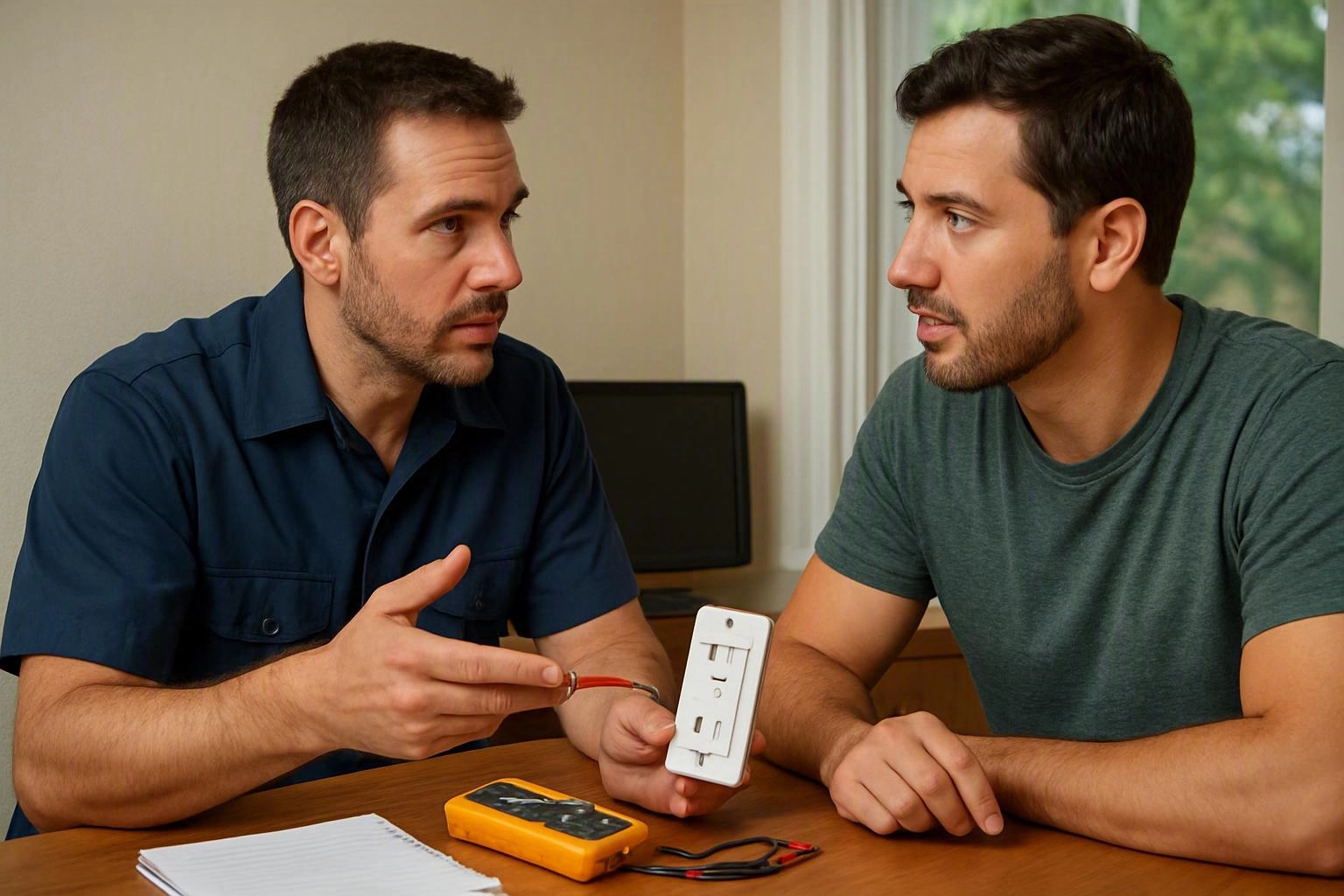
Outdoor receptacles need a weather-resistant cover that closes well. They also need proper GFCI protection. Bathroom outlets can trip after steam or splashes. Kitchens, garages, laundry areas, and basements can collect moisture, too. Don’t touch a wet receptacle. Don’t reset it while standing on a damp floor.
Move away from the water source if you can do so safely. Disconnect power only from a dry place. Drying the receptacle won’t fix damaged seals or wet wiring. It won’t fix corrosion, either. If water entered the box or the device trips again, arrange electrical troubleshooting.
What Should You Do When Resetting the GFCI Does Not Restore Power?
If resetting the GFCI doesn’t restore power, unplug connected devices. Press the reset button firmly. Check for another tripped GFCI or circuit breaker upstream. Don’t open the receptacle. Don’t force the button over and over. If power stays off or the device trips again, arrange professional electrical troubleshooting.
Reset a breaker only when the panel and floor are dry. Don’t reset it if you see smoke, heat, sparks, or exposed wires. If the breaker stays on but one area remains dead, another GFCI may have tripped. A failed receptacle may also block power. If the breaker won’t stay on, an overload, short, or wiring fault may exist.
Our team can trace the circuit and find the first protective device. We can inspect connected loads and suggest a repair or replacement. A dead outlet is not the same as a tripped GFCI. It’s also different from a failed receptacle or breaker. Forcing resets can hide a real hazard.
How Can You Prevent GFCI Trips and Outlet Failure?
You can lower the risk of GFCI trips in several ways. Keep receptacles dry and check cords often. Don’t overload circuits. Test the device with its test button on a regular basis. Weather-resistant covers help in damp areas. They can’t fix damaged wiring, old receptacles, or a lasting ground fault.
Choose a device that fits the location and load. A weather-resistant GFCI may suit an exposed area. A tamper-resistant GFCI can help stop unsafe object insertion. A 20-amp GFCI receptacle must match the circuit and wires. It must also match the equipment needs. Don’t choose it only because it has a higher rating.
Testing is part of basic care. It isn’t a repair. If the test button won’t cut power, stop using the receptacle. Stop if the reset button won’t restore power, too. Proper GFCI Outlet Installation can lower risk. Routine appliance checks help as well. Neither can fix water damage or bad wiring.
When Should You Call an Electrician for a GFCI Outlet?
Call an electrician when a GFCI won’t reset. Call when it trips after you unplug appliances, too. Get help if it shows heat or damage. You should also call when several outlets lose power. Emergency electrical repair may be needed for smoke, burning smells, sparks, or exposed live wires.
Don’t keep resetting the device to power an appliance. This includes a refrigerator, pump, tool, or other equipment. Repeated trips show that the safety device is working. They may also show that the receptacle has failed. Leave damaged equipment unplugged. Keep people away from wet or sparking areas.
Our crews can find the right solution for your home. That may include GFCI Outlet Repair, replacement, or new GFCI Outlet Installation. If you need GFCI Outlet Repair in Cincinnati, share a few details first. Tell us which rooms are affected. Mention water exposure, connected appliances, and breaker activity.
We use electrical troubleshooting to find the cause. We can tell a bad appliance from a circuit fault. We can also check downstream protection. If there is immediate danger, contact emergency services as needed. Then request a 24 Hour Electrician. Electrical safety comes first. Don’t open the receptacle or touch exposed wires.
Questions About 24 Hour Electrician
Why Won't My GFCI Outlet Reset?
It may still find a ground fault, moisture, overload, bad appliance, wiring error, or internal failure. Unplug devices first. Check another GFCI and the circuit breaker. Then try one firm reset.
Why Does My GFCI Keep Tripping?
Repeated trips usually mean current is still leaking from the circuit. A bad appliance, wet cord, damaged wire, short circuit, or moisture may cause it. A miswired receptacle can also trip. Unplug connected devices. Arrange troubleshooting if the trip returns.
Can Moisture Cause a GFCI Outlet to Trip?
Yes. Rain, leaks, condensation, splashes, and wet tools can create a path for leaking current. This can trip the safety device. Don’t touch a wet receptacle. Have the water source, cover, wiring, and device checked before use.
What Should I Do if Resetting the GFCI Does Not Restore Power?
Unplug appliances and check nearby GFCI receptacles. Check the electrical panel for a tripped breaker. Reset the breaker once if the area is dry and safe. If power stays off, call an electrician. Call if the button won’t latch or the breaker trips again.
How Do I Know if My GFCI Outlet Needs to Be Replaced?
The device may need replacement if the test or reset function fails. Replacement may also help if it feels warm, looks cracked, or shows dark marks. Corrosion, damage, or unexplained trips are warning signs. An electrician should check for wiring and moisture problems first.
Related Resources
How Much Does a 24-Hour Emergency Electrician Cost in Cincinnati?
24 hour emergency electrician cost Cincinnati
What It CostsElectrical Troubleshooting and Circuit Breaker Repair: Cost and Process
electrical troubleshooting and circuit breaker repair cost
Compared ToEmergency Electrician vs. Regular Electrician: Which Should You Hire?
emergency electrician vs regular electrician
How It WorksPower Restoration for Homes: What an Electrician Does and How It Works
electrician power restoration process Cincinnati