How do I know when a hot breaker needs replacement?
A hot breaker needs prompt assessment when heat appears with repeated trips, odor, buzzing, or visible damage. Cincelux Electric checks the breaker, panel connection, and circuit before replacement. A warm or damaged part can point to a loose connection, overload, wiring fault, or failed breaker. Stop using the affected circuit if smoke or sparks appear.
Which part of the property decides the replacement scope?
The electrical panel and affected circuit decide most of the replacement scope. We inspect the breaker position, bus connection, wire condition, connected load, and access to the panel. A breaker change may be enough when the circuit tests sound. Damaged wiring, an overloaded circuit, or panel faults call for added repair work.
What material changes how long breaker replacement takes?
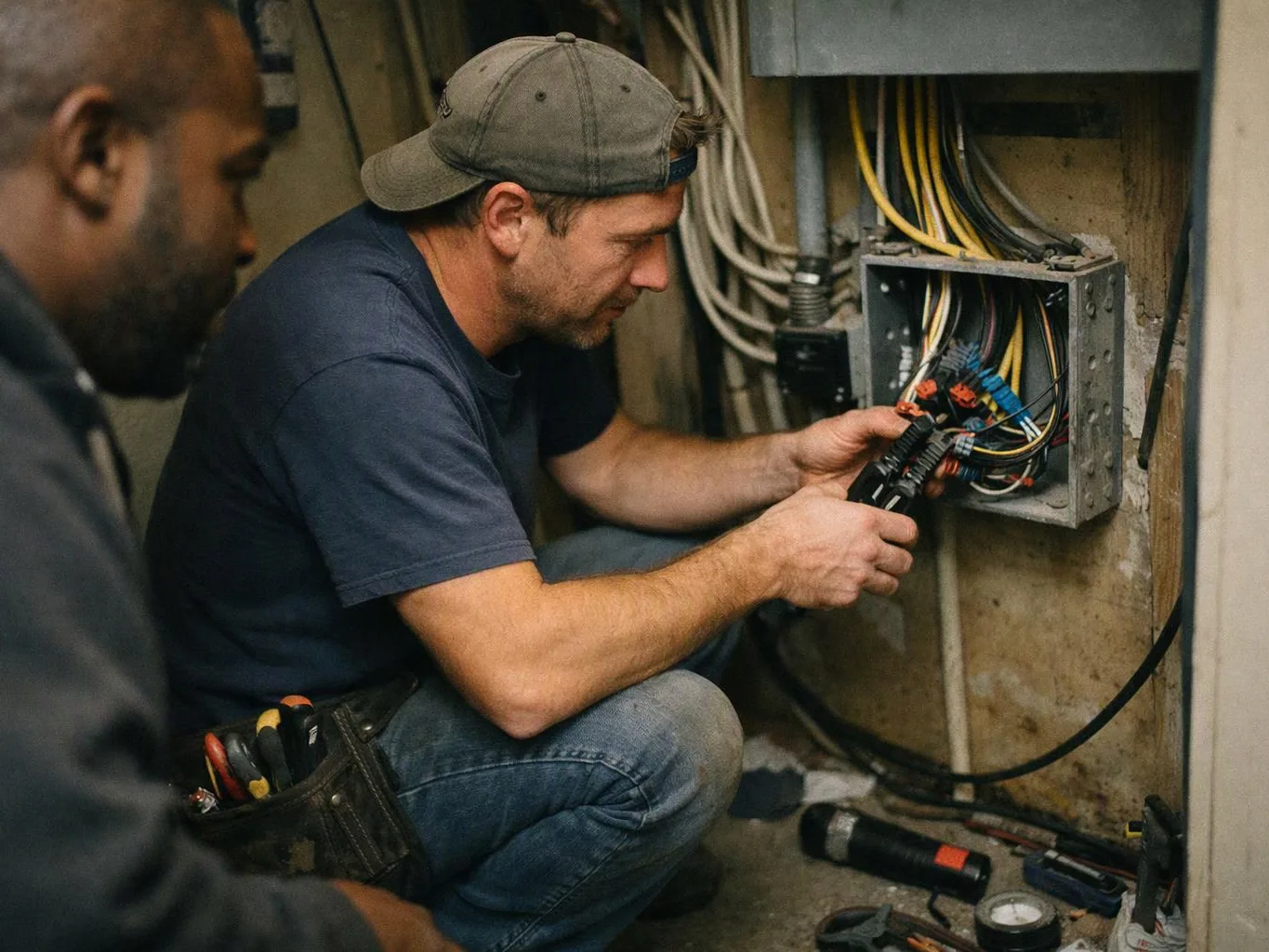
Damaged copper or aluminum conductors can change the work needed for breaker replacement. Wiring condition affects access, repair steps, and testing after the new breaker is fitted. Our team checks the visible conductor and terminal connection before setting the scope. We explain any wiring repair needed instead of treating the breaker as the only issue.
When should I stop resetting a tripping breaker?
Stop resetting a breaker when it trips repeatedly or shows heat, odor, buzzing, smoke, or damage. Repeated resets can leave an active fault connected to the circuit. We isolate the affected area, inspect the panel and wiring, and test the load. Keep people away from a panel with smoke, sparks, or a strong burning smell.
Why can a new breaker still trip after installation?
A new breaker can still trip when the circuit has an overload, short circuit, ground fault, damaged wire, or faulty connected device. We test the circuit after installation and trace the cause if the trip continues. The breaker protects the system, so repeated trips signal a problem that needs diagnosis rather than more resets.
How does a replacement visit move from the first call to the last step?
The visit moves from symptom review to circuit isolation, panel inspection, fault tracing, replacement, and testing. You share what happened and which circuit lost power. We then explain the findings, set the repair scope, install a suitable breaker when appropriate, and verify the affected circuit before discussing any remaining work.
Which warning signs make a breaker problem urgent?
Burning smell, smoke, sparks, strong heat, buzzing, or visible panel damage make a breaker problem urgent. These signs can point to unsafe heat or a failing connection. Turn off use of the affected circuit if you can do so safely, keep clear of damaged equipment, and call for urgent electrical assistance.