What causes an outlet to spark or overheat?
Arc faults, loose connections, worn contacts, and overloaded circuits can cause an outlet to spark or overheat. Stop using the outlet when sparks, heat, or a burning smell appear. We inspect the receptacle, box, and circuit to find the source, then explain the repair scope before work begins.
Which part of the property decides the scope of outlet repair?
The affected outlet, electrical box, connected wiring, and circuit decide the repair scope. A damaged receptacle may need a focused repair, while heat at several outlets calls for circuit tracing. We check the nearby wiring and load signs before deciding whether the work stays at one outlet.
Which material changes how long outlet repair takes?
The condition of the wire and electrical box can change the work involved. Brittle insulation, damaged terminals, or a crowded box can require more careful access and testing. We inspect those materials first, then explain the work needed for a sound connection.
How does an outlet repair visit move from the first call to the last step?
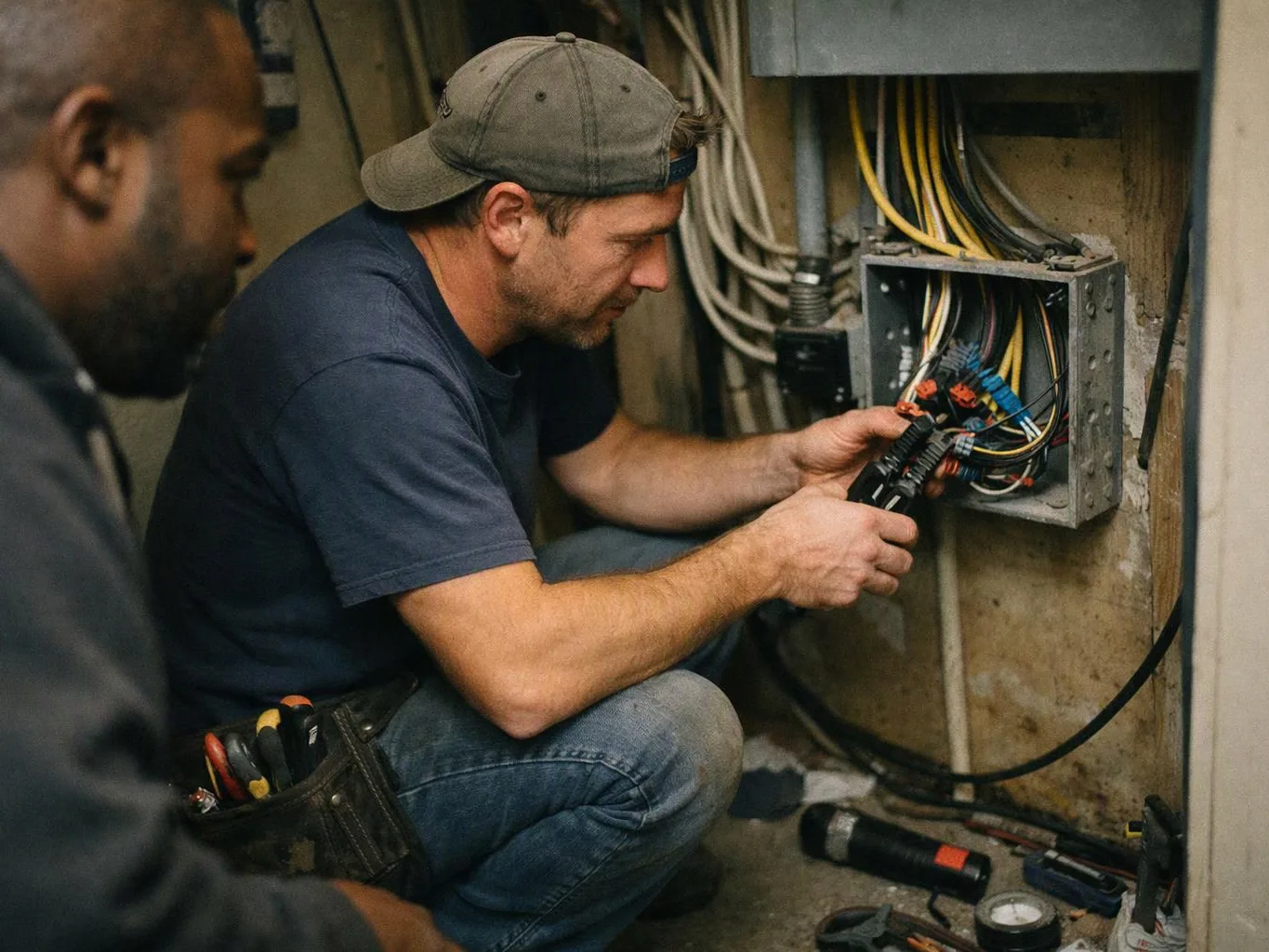
The visit moves from symptom review to inspection, circuit checks, repair, and testing. We first record what happened and examine the outlet. Next, we trace related wiring when needed, complete the agreed scope, and verify the repaired connection before explaining the result.
When should I stop using a sparking outlet?
Stop using a sparking outlet as soon as sparks, heat, smoke, or a burning smell appear. Turn off the device and avoid touching damaged parts. We inspect the outlet and circuit for heat or wiring damage, because continued use can make the fault worse.
Why does an outlet feel warm during normal use?
A warm outlet can signal a loose connection, worn contact, or excess circuit load. Disconnect the device and stop using the outlet until it is checked. We inspect the receptacle, wire terminals, and circuit to separate an outlet problem from a wider load issue.
What should I tell Cincelux Electric before an outlet assessment?
The outlet symptom, affected device, nearby outlet behavior, and any heat or smell help us prepare for the assessment. Share whether the issue affects a home, business, or rental property. Photos can help describe visible damage, but they do not replace an on-site electrical inspection.