Commercial EV Charging Stations: Installation and Repairs in Cincinnati, OH
Commercial EV charging station installation in Cincinnati, OH starts with a site review and load check. It also includes equipment choice, permits, wiring, testing, and safety checks. Electricians install Level 2 or DC fast chargers. They connect each charger to the right electrical service. They may also add emergency disconnects when the design or code requires them. Project time depends on charger count, trenching, panel space, utility work, and inspections. Costs vary by equipment, switchgear, concrete, networking, and labor. A qualified commercial electrician repairs charging stations by finding faults in power, controls, wiring, networks, or charger parts. At ElectricianCincinnatiOH.com, we help property owners plan the electrical work from design through service.
Get a Free EstimateWhat Does Commercial EV Charging Station Installation Include?
Commercial EV charging station installation includes reviewing the property, checking electrical load, and choosing compatible chargers. It also includes preparing the site, installing feeders and safety devices, and connecting networks. The work must fit the building’s power, parking layout, and daily needs. It must also follow Cincinnati, OH rules.
A workplace, hotel, apartment building, retail center, or fleet yard may use chargers differently. Level 2 EV chargers work well for longer parking times. Employees may charge during a shift. Hotel guests may charge overnight. A DC fast charger adds power much faster. It often needs more capacity, larger wires, and bigger electrical equipment.
Our team checks the existing service, main switchboard, panel, and transformer capacity. We also check open breaker space. The parking lot matters too. We review charger locations, traffic flow, wire routes, and access for crews. The final plan may include conduit, trenching, concrete pads, bollards, cable holders, weather-rated boxes, and safety barriers.
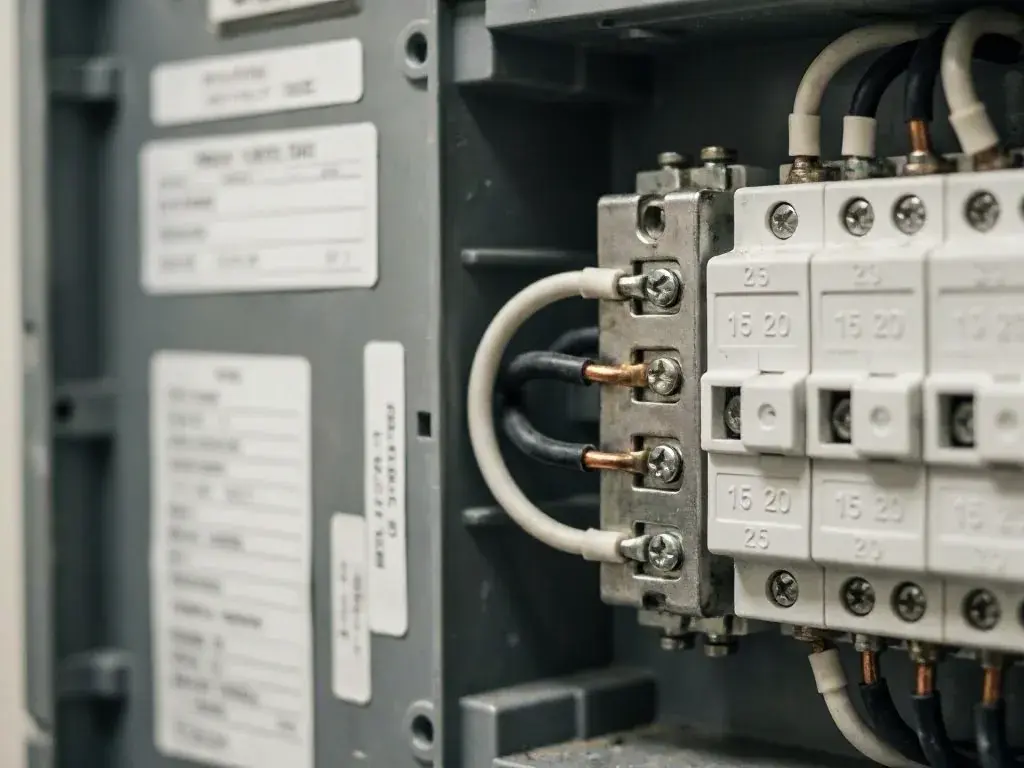
Commercial charging involves more than mounting a charger. It is electrical construction and service work for commercial properties. Grounding, bonding, breaker protection, wire size, working space, and equipment ratings all need review.
Permits and inspections should be checked before work begins. Commercial EV Charging Station Installation in Cincinnati must follow local approval steps. It must also follow the authority having jurisdiction and the Ohio electrical code in use when permits are issued.
How Does Commercial EV Charging Station Installation Work?
Commercial EV charging station installation follows a planned order. Crews review the site, check demand, design the circuit, get approval, and install the wiring. They then connect the charger and test the system. A commercial electrician checks grounding, breaker protection, emergency shutoff, network links, and safe operation before handover.
Cincinnati weather can affect outdoor chargers. Freeze-thaw cycles, snow, and deicing salt can damage concrete, fasteners, drainage, and exposed wires. Weather-rated equipment and good drainage help. A post-winter inspection can find problems early.
Our crews can work in stages when a lot must stay partly open. We may use barriers, small trench zones, and off-hours work. Property managers, tenants, paving crews, and the utility may need to coordinate.
What Should a Cincinnati Commercial Site Prepare Before Installation?
A Cincinnati commercial site should prepare a parking plan, utility details, trench access, bollard locations, and network service. Early planning helps the design account for traffic, business hours, buried utilities, weather, and existing electrical gear.
Property owners should choose the charging spaces and charger count. They should also know how many vehicles may charge at once. Employees, guests, tenants, and fleet drivers may use the system. Mark accessible paths, fire lanes, loading zones, snow storage, and traffic lanes. This helps prevent charger location conflicts.
Gather utility bills, electrical drawings, panel lists, and property plans before work starts. Include network needs when available. Confirm where crews may trench. Check if concrete removal, repair, or traffic control is needed. Utility locating is very important in busy commercial areas.
Outdoor stations need drainage that carries water away. Plan for bollards, lighting, snow clearing, and safe deicing. Inspect exposed parts after winter. Network owners should check cell service, wired links, firewall rules, and payment accounts before testing.
How Much Does Commercial EV Charger Installation Cost?
Commercial EV charger installation cost depends on the charger type and number. It also depends on electrical capacity, wire distance, trenching, concrete, switchgear, networking, permits, and labor. Service upgrades, long wire runs, and utility work can raise the cost.
The charger is only one part of the budget. A wall unit may need less building work than a post-mounted unit. A fleet site may need several circuits and a larger panel. It may also need load controls and vehicle scheduling. DC fast charger installation may need large feeders, stronger switchgear, special protection, and utility review.
Existing electrical service is a major cost factor. Enough spare capacity may allow a new breaker, panel, feeder, and disconnect. If capacity is low, the site may need a service upgrade or transformer change. Duke Energy service coordination can add time and work.
Site work can change the price too. Concrete work may include pads, cutting, removal, repair, and bollards. Trenching costs depend on distance, surface type, depth, buried conflicts, and access. Long conduit runs need more wire, pull points, supports, and labor.
Network and payment systems may need equipment, monthly plans, cell service, software setup, and testing. Permit and inspection needs vary by project. We set the work scope after reviewing the property. Buying a charger alone isn't a complete electrical plan.
Small projects often have one or two chargers and a short wire route. Larger work may include many spaces, new electrical gear, concrete, trenching, and utility work. These are planning ranges, not a quote:
| Typical project factor | Common planning range |
|---|---|
| Small charger group | Often one to two charging spaces with a shorter electrical route |
| Moderate conduit route | Commonly several dozen to a few hundred feet, depending on the property |
| Large infrastructure project | May include multiple chargers, switchgear, trenching, concrete, and utility work |
A useful estimate lists each cost group. Include equipment, service work, switchgear, concrete, trenching, networks, permits, inspections, and labor. This makes designs easier to compare. It can also show ways to lower future expansion costs.
How Long Does Commercial EV Charger Installation Take?
Commercial EV charger installation time depends on project size, equipment, permits, trenching, electrical upgrades, inspections, and utility work. A small project may need limited wiring and one or two chargers. A large project may need new equipment, concrete work, and longer testing. A site review is needed to confirm the schedule.
The table below gives planning ranges only. The schedule may change if drawings need changes or buried utilities are hard to find. Equipment delays can also add time. Utility service or transformer changes may take longer.
| Project size | Typical duration | Common schedule factors |
|---|---|---|
| Small installation | Often several days to a few weeks | One or two chargers, available panel capacity, limited conduit, standard inspection |
| Average installation | Commonly a few weeks to several months | Multiple circuits, trenching, concrete work, network setup, and permit inspection |
| Large installation | Often several months or longer | New service, switchgear, utility coordination, civil work, phased construction, and commissioning |
Include permit and inspection review in the schedule. Don't add these steps at the end. Utility work may take the longest. Duke Energy may need to review capacity or plan transformer and service changes.
What Is an EV Charger Emergency Disconnect?
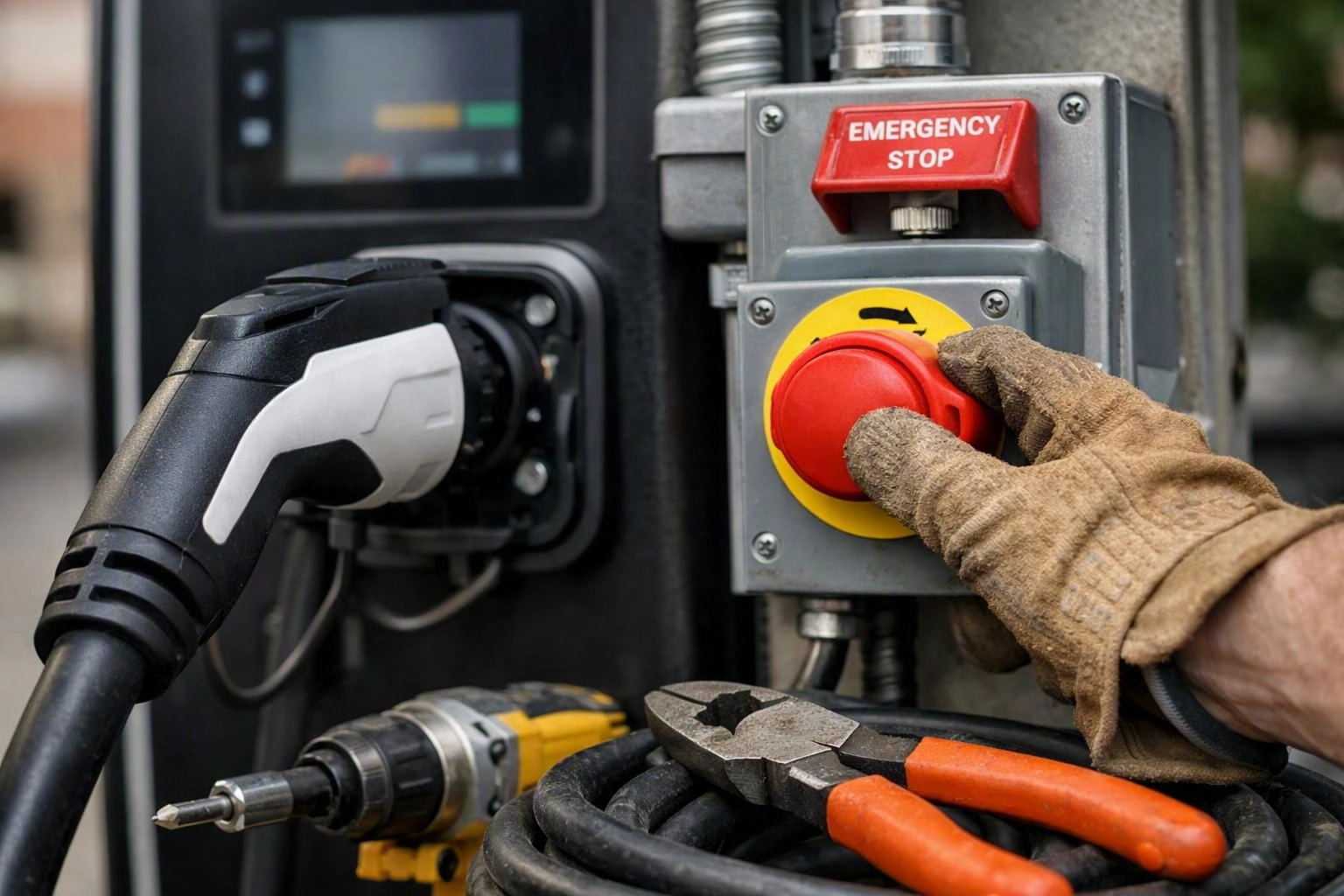
An EV charger emergency disconnect is a device or setup that quickly cuts power to charging equipment. Authorized workers can use it during an emergency, service visit, or electrical fault. The design sets its location, label, access, rating, and connection to the charger circuit. Local safety rules also apply.
The disconnect may be a switch, breaker, or approved setup. It separates the charger circuit from its power source. Service workers and emergency crews should be able to find and use it when the design or code requires it.
Placement matters. The device must be easy to reach and clearly marked. It must have the right rating and working space. Plans should show which charger or chargers it controls. Some systems use a remote emergency stop. That stop doesn't replace required electrical isolation unless the approved design and code allow it.
Ohio electrical code rules depend on the code edition and local authority. We check disconnect placement, grounding, bonding, breaker protection, labels, and working space during design and inspection. We also review outdoor equipment exposed to snow, water, freeze-thaw movement, and deicing materials.
EV Charger Emergency Disconnect Installation should happen before conduit and chargers are placed. Adding one later may require a shutdown, new wires, extra conduit, wall or concrete work, and another inspection.
Who Repairs a Commercial EV Charging Station?
A commercial electrician repairs a commercial EV charging station by checking its power, breakers, wires, grounding, controls, network, and charger parts. The maker or approved service company may handle software, firmware, warranty work, or special parts. Repairs should start with safe power shutoff and a clear diagnosis.
A charger that won't start may have no power, a tripped breaker, damaged wires, or a loose connection. It may also have a bad contactor, control fault, or network issue.ground fault may come from damaged insulation, water, wrong wiring, poor grounding, or an internal fault. Charging circuits can carry high current. Testing must be done safely.
Our repair process starts by securing the area and shutting off power safely. We inspect the panel, disconnect, feeder, conduit, wires, grounding, charger screen, cable, plug, and fault history. Then we test the power and control path before changing parts.
Check network and payment systems apart from the electrical supply. A station may have the right voltage but still stay offline. A cell link, software account, firmware issue, login setting, or network outage may cause the problem. The maker or approved service company may handle special controls and parts.
Regular service can help prevent repeat failures. A plan may include torque checks, cleaning, connector checks, weather seals, bollards, ground-fault tests, and network checks. It may also include an inspection after Cincinnati snow or deicing exposure. For an urgent loss of charging service, a 24 Hour Electrician may make the system safe before full repairs.
After repairs, we record the failed part, test results, and corrective work. We also record final safety checks. This helps property managers track repeat faults. It can show when replacement makes more sense than another repair.
Questions About 24 Hour Electrician
How Much Does Commercial EV Charger Installation Cost?
Cost depends on the charger, charger count, electrical capacity, service upgrades, switchgear, trenching, concrete, networking, permits, and labor. Level 2 equipment is often simpler than a DC fast charger. A site review and load check are needed for a useful estimate.
How Does Commercial EV Charging Station Installation Work?
The process includes a site review, load check, equipment choice, electrical design, permits, conduit, feeders, charger connection, network setup, inspection, testing, and commissioning. The electrician also checks grounding, breaker protection, emergency shutoff, and safe operation before handover.
What Is an EV Charger Emergency Disconnect?
It is a device or approved setup that lets authorized workers quickly shut off power to one charger or several chargers. It may be used during an emergency, service visit, or fault. The design must cover location, labels, access, rating, working space, and electrical code rules.
How Long Does Commercial EV Charger Installation Take?
A small project may take several days to a few weeks. An average project often takes a few weeks to several months. A large project with new service, trenching, switchgear, utility work, and concrete may take several months or longer. The final schedule follows site review and approval.
Who Repairs a Commercial EV Charging Station?
A qualified commercial electrician checks electrical faults, power, grounding, wiring, breakers, and controls. The EV charger maker or approved service company may handle firmware, special software, warranty work, internal hardware, or special parts.
We can review your property, charging goals, electrical service, emergency shutoff needs, permits, and repair concerns. Share site details through our contact form so we can plan the next step around your operations.
Related Resources
Electrical Problems With Generators, EV Chargers, and High-Power Equipment
high power appliance electrical emergency
Why It MattersThe Benefits of Having a 24-Hour Electrician on Call
benefits of a 24 hour electrician
Who It's For24-Hour Emergency Electrical Services for Cincinnati Businesses
24 hour commercial emergency electrician