Electrical Emergency Repair Mistakes to Avoid During a Power or Wiring Problem
Electrical emergency repair mistakes can increase shock, fire, and property-damage risks; Cincelux Electric identifies the hazard, isolates the problem, and completes the needed repair safely.
Get a Free EstimateWhat Should You Do First During an Electrical Emergency?
Electrical emergency response starts with stopping use of the affected equipment, keeping people away, and contacting Cincelux Electric when danger remains.
Move away from smoke, sparks, exposed wiring, or water near electrical equipment. If you can do so without approaching the hazard, switch off the affected circuit breaker. Do not touch damaged equipment or investigate a power outage by opening electrical parts.
Our team identifies the electrical hazard, checks whether safe isolation is possible, and explains the next repair step. Leave the area and contact emergency services if smoke or fire is spreading.
Electrical Emergency Repair Mistakes at a Glance
Electrical emergency repair mistakes often begin with a quick response to a tripped circuit breaker, an overloaded outlet, or damaged wiring. The wrong action can increase the chance of electrical shock, electrical fire, or added property damage.
Water and electricity create a separate danger because wet equipment can remain unsafe after visible water disappears. We use the trigger and the visible signs to choose a safe correction.
| Mistake | Why it is risky | Safe correction |
|---|---|---|
| Touching exposed or damaged wiring | The circuit may still be energized. | Keep away and arrange electrical troubleshooting. |
| Resetting a breaker repeatedly | A short circuit, overload, or ground fault may remain. | Leave the breaker off and isolate the fault. |
| Using a hot, burned, or sparking outlet | Heat damage can worsen inside the receptacle. | Stop use and arrange an outlet inspection. |
| Ignoring water near electrical equipment | Wet parts can create a shock hazard. | Keep clear and arrange safe testing. |
Mistake 1: Touching Exposed or Damaged Wiring
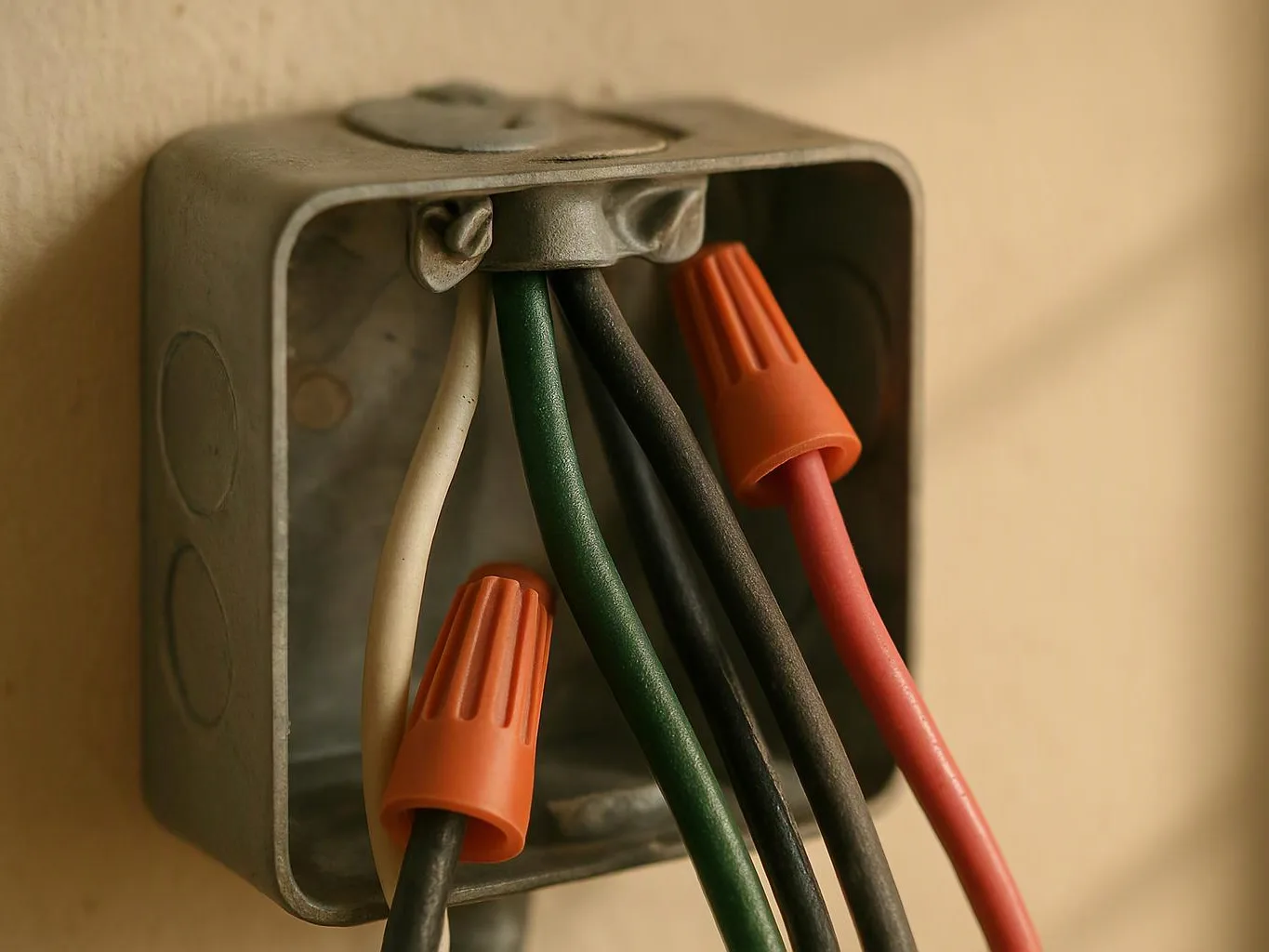
Exposed wiring can cause electrical shock when damaged insulation leaves an energized circuit accessible. People often touch a loose wire because they want to restore power or identify the failed device.
The potential cost includes injury, damage to connected equipment, and a larger electrical wiring repair. We keep the area clear, perform voltage testing, and repair or replace damaged wiring after safe isolation.
Mistake 2: Repeatedly Resetting a Tripped Breaker
A tripped circuit breaker is a warning that a short circuit, overload, or ground fault may be present. Repeated resets can keep fault current flowing and increase heat in the wiring.
The added cost can include damage to the breaker, connected equipment, or wiring. We identify the affected circuit, test the load, and correct the cause before restoring power.
Mistake 3: Using an Outlet That Is Hot, Burned, or Sparking
An electrical outlet with burn marks, heat damage, or sparks should not be used. A loose connection inside the receptacle can create heat even when the outlet appears to work.
Continued use can turn outlet damage into an electrical fire or damage nearby wiring. We isolate the circuit, inspect the receptacle and connections, and complete the needed repair.
Mistake 4: Replacing a Fuse or Breaker With the Wrong Rating
A fuse or circuit breaker rating must match the circuit and its conductors. Installing a larger rating can defeat overcurrent protection and allow wiring to overheat.
The resulting cost may include damaged conductors and electrical panel corrections. We check the circuit design, confirm the protection required, and install a suitable component.
Mistake 5: Using Extension Cords as Permanent Wiring
An extension cord or power strip is intended for temporary wiring, not a permanent replacement for a circuit. Long-term use can create overheating when the electrical load exceeds the cord or connection.
Heat damage can affect the cord, outlet, and connected equipment. We assess the load and wiring path, then recommend electrical wiring repair or a properly installed circuit when needed.
Mistake 6: Ignoring Water Near Electrical Equipment
Water intrusion near a wet electrical panel, outlet, or appliance can create a ground fault and serious shock hazard. Dry surfaces do not prove that internal components are safe.
Using the equipment can spread damage and increase the repair scope. We keep people clear, assess the affected equipment, and use safe testing before deciding what can be repaired or replaced.
Mistake 7: Opening an Electrical Panel Without Safe Testing
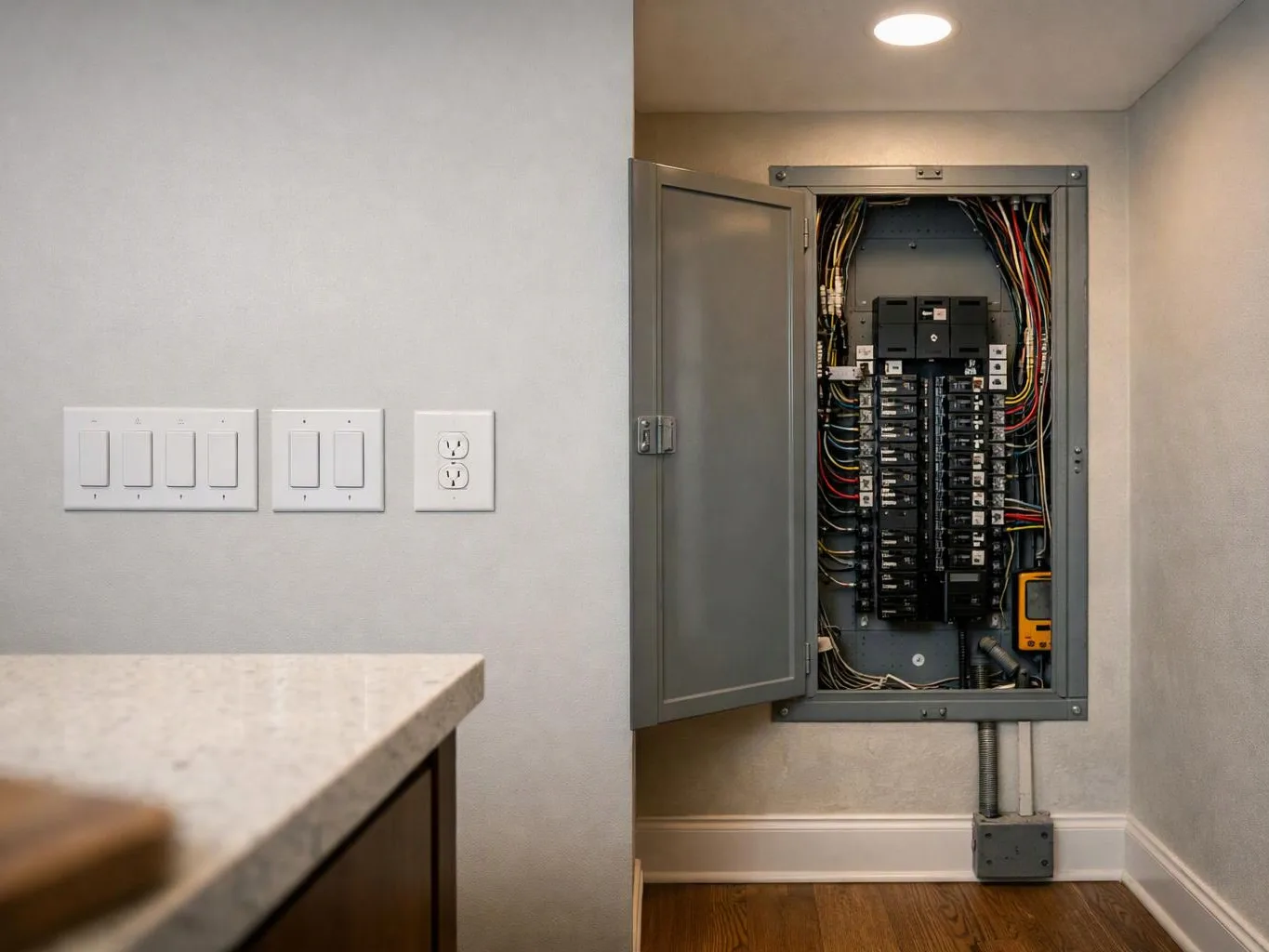
An electrical panel can contain live parts even when one circuit is switched off. Opening a panel without proper voltage testing can expose a person to arc flash and shock.
The cost of an unsafe mistake can include injury and damage to the panelboard. We establish safe isolation, test for voltage, inspect the fault, and complete the work without treating the enclosure as harmless.
Mistake 8: Covering Up Burning Smells or Discoloration
A burning smell or discolored outlet can signal an overheating wire or loose connection. Covering the mark or masking the odor does not remove the electrical fire risk.
Continued operation can damage insulation and nearby materials. We trace the heat source, inspect the connections, and repair the damaged section before the circuit is used again.
Mistake 9: Guessing at the Cause of a Whole-Home Power Loss
A whole-home power outage can result from a utility outage, service connection problem, main breaker issue, or electrical fault. Guessing can lead to unsafe resets or missed damage.
Unnecessary part replacement can increase the repair scope. We check the available supply, inspect the main equipment, and perform fault isolation before deciding whether the issue is inside the building or at the utility connection.
When Should You Call Cincelux Electric Instead of Repairing the Problem Yourself?
Emergency electrical repair is the safer choice when you cannot identify or isolate the hazard without contact with live equipment. Stop work and call us when any of these conditions are present:
Our team can perform electrical troubleshooting and electrical wiring repair after the area is made safe. Do not remove covers, handle damaged parts, or keep testing a sparking circuit.
How We Diagnose an Electrical Emergency Before Repairing It
Electrical troubleshooting starts by identifying the affected circuit and checking for unsafe conditions. Cincelux Electric uses circuit testing, voltage testing, and wiring inspection to locate the fault.
Our team separates the failed part from the rest of the system through safe isolation. We then assess the damaged components, confirm the repair scope, and explain the correction before work proceeds.
Fault isolation matters because the visible symptom may not be the source. A sparking outlet can involve its receptacle, a loose connection, damaged insulation, or an upstream circuit problem.
What Changes the Cost of Correcting an Electrical Emergency?
The cost of correcting an electrical emergency changes with the fault location, damaged components, wiring access, panel condition, and amount of corrective work required; Cincelux Electric provides Free Estimates Available.
A fault that is easy to access may require less corrective work than damaged wiring inside a wall or a problem involving the electrical panel. Water damage can also expand the repair scope when multiple components need assessment.
Our estimate explains the observed problem, the work included, the parts involved, and any code-related corrections needed for the repair. Requesting an assessment gives us the information needed to provide an exact quote for the work.
How to Prepare for an Emergency Electrical Repair Visit
Preparing clear information helps our team complete a safer repair assessment. Do not disturb damaged equipment while gathering the details below.
Our crew uses these details with the electrical inspection findings to define the repair scope. Contact us through Emergency Electrical Repair when the problem cannot be safely isolated.
Questions About Electrical Emergency Repair Mistakes
Can I reset a breaker that keeps tripping?
No, repeated breaker trips require electrical troubleshooting before continued use. Cincelux Electric checks for an overload, short circuit, ground fault, or damaged circuit before restoring power.
What should I do if an electrical outlet is sparking?
Stop using a sparking outlet, keep people away, and switch off its circuit only if you can do so safely. We inspect the receptacle, wiring, and connections before completing the repair.
Is a burning smell from an outlet an electrical emergency?
Yes, a burning smell from an outlet can indicate overheating, a loose connection, or damaged wiring. Stop using the outlet and arrange an electrical inspection.
Can water-damaged electrical wiring be used after it dries?
No, dried water-damaged electrical wiring may still have weakened insulation, corrosion, or hidden component damage. Safe testing and inspection must determine the repair needed.
What information should I provide when requesting emergency electrical repair?
Provide the affected area, recent breaker trips, appliance symptoms, smoke or burning odor, visible damage, and any water contact. This information helps us plan safe isolation and the initial repair assessment.
Get Safe Help With an Electrical Emergency
Electrical emergency repair should begin with safe isolation and a clear diagnosis. Cincelux Electric identifies the hazard, tests the affected system, and explains the repair scope before completing the needed work.
Use our contact page to request help with exposed wiring, breaker trips, burning evidence, water contact, or an unsafe power problem.
Get a Free EstimateRelated Resources
How Much Does a 24-Hour Emergency Electrician Cost in Cincinnati?
What It CostsElectrical Troubleshooting and Circuit Breaker Repair: Cost and Process
Compared ToEmergency Electrician vs. Regular Electrician: Which Should You Hire?
Compared ToDIY Electrical Repair vs a Licensed Electrician: Which Is Safer?