Fuse Box Repair vs. Electrical Panel Upgrade
A qualified electrician can repair a fuse box when its parts remain safe. Homeowners should choose an electrical panel upgrade when capacity, wiring, fuse failures, or missing AFCI and GFCI protection create risks. An inspection, current demand, and future plans should guide the choice.
Get a Free Estimate
Can a Fuse Box Be Repaired, or Should It Be Replaced?
Fuse box repair may work when the box, fuse holders, wires, and service equipment are safe. Replacement is safer when fuses blow often or parts overheat. It may also be needed for low capacity, worn wiring, or missing circuit protection. An electrician must inspect the box first.
| Inspection finding | Possible repair path | When replacement is safer |
|---|---|---|
| Damaged fuse holder | Replace the holder with a listed, compatible part. | The box has heat damage, loose connections, or unavailable parts. |
| Electrical fuse blows once | Find and fix the fault before adding the correct fuse. | The fuse fails often, is oversized, or serves an overloaded circuit. |
| Limited service capacity | Reduce demand only when the home can safely support it. | A load check shows that current or planned demand exceeds capacity. |
| Older wiring condition | Repair a confirmed defect with approved materials. | Insulation is brittle, wires are damaged, or grounding is incomplete. |
| No room for new circuits | A suitable subpanel may work after a full review. | The equipment cannot safely accept new circuits or protection. |
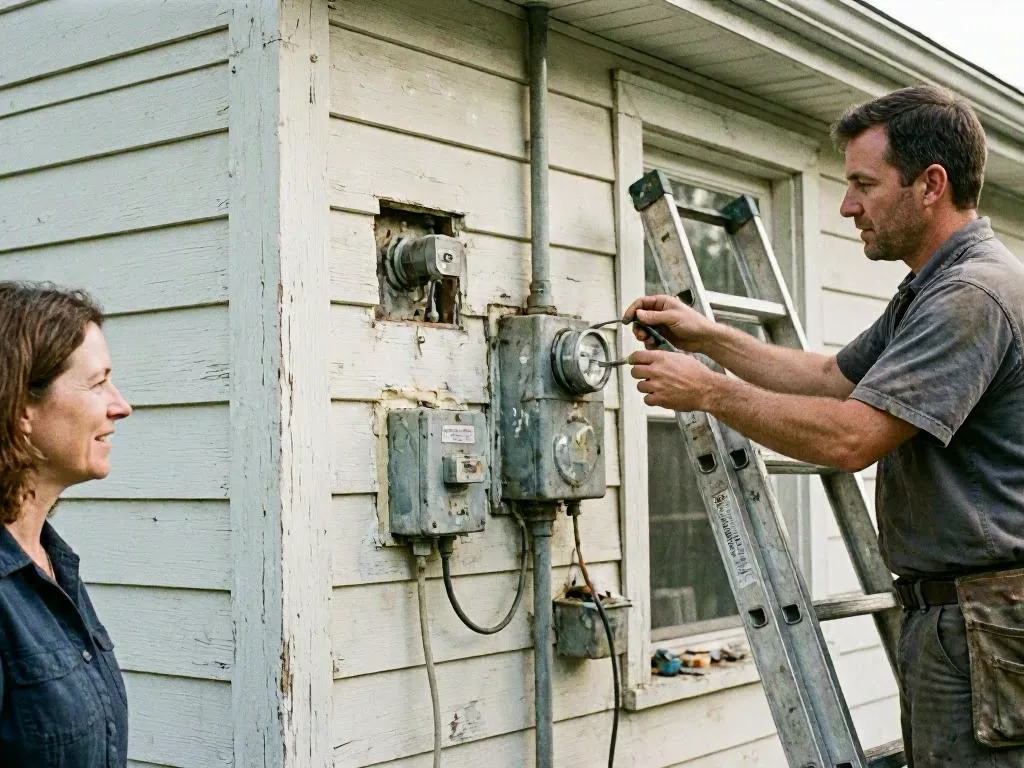
Older homes may have fuse equipment and mixed wiring. They may also have limited service capacity. Age alone doesn't prove that a fuse box needs replacement. An inspection should check the box, holders, bus connections, wire sizes, grounding, bonding, and branch circuits.
Small repair jobs often take several hours. A full panel change may take one workday or longer. Service work, wiring repairs, permits, and inspections can add time. These are planning ranges, not promises. The repair should follow inspection findings.
When Does an Electrical Panel Need an Upgrade—and What Are AFCI and GFCI Requirements?
Electrical panel upgrades are needed when the panel can't support present or planned demand. Problems may involve capacity, condition, space, grounding, or protective devices. AFCI and GFCI rules depend on the circuit, location, equipment, and local code. A licensed electrician should decide what applies.
An electrical load calculation compares home demand with the service rating. It should include plans for heat pumps, EV chargers, electric water heaters, induction ranges, and backup power systems. A large appliance can overload the service, even when the panel has open spaces.
An AFCI breaker, or arc-fault circuit interrupter, detects unsafe arcing. It protects certain circuits and locations. GFCI protection, or ground-fault circuit interrupter protection, helps lower shock risk. It applies where power may contact people and grounded surfaces. Wet and damp areas often need this protection. The National Electrical Code gives model rules. The local adopted code controls the project.
During an electrical service panel replacement, the electrician may check grounding and bonding. They may also check the service disconnect, neutral wires, branch circuits, and panel busbar. Permits and inspections may be required. AFCI breaker installation and GFCI breaker installation don't apply the same way in every home. The code, circuit, location, and work scope decide the need.
Ask how permits and inspections fit the job before work starts. A panel may look new while hidden wiring or grounding problems remain. An upgrade is safer only after the full electrical system is checked and fixed.
How Do Fuse Box Repair and Panel Replacement Compare?
Fuse replacement and small repairs fix a specific, confirmed problem. A damaged fuse holder or loose connection may need this approach. Panel replacement updates the home's electrical equipment and circuit capacity. Repair may fit a small fault. Replacement may fit overloaded or damaged equipment. An inspection should guide the choice.
A fuse is a one-time overcurrent device. When it opens, it must be replaced with the right rating. The cause must be found first. A circuit breaker can be reset, but resetting it doesn't fix an overload, short, damaged wire, or loose connection. Neither device makes an unsafe circuit safe.
Repair work may include testing and tightening approved connections. It may also include a new fuse holder, wire repair, or better labels. Panel replacement may include a new panelboard and circuit breakers. It may also include service work, grounding repairs, circuit labels, and required protection. The job may cause more disruption because circuits must be disconnected and tested.
Future electrical demand should guide the choice. A home may later add a heat pump, EV charger, electric water heater, induction range, or backup power system. A load calculation should come first.Cincinnati, OH, a homeowner seeking Fuse Box Repair in Cincinnati should expect the equipment and code findings to guide the work.
Separate urgent hazards from planned upgrades. Turn off affected equipment if it's safe. Seek qualified help for smoke, burning odors, melting, buzzing, sparks, or repeated power loss. A 24 Hour Electrician may help with an active emergency. Planned upgrades still need careful work.
What Benefits Can a Safer Electrical Panel Upgrade Provide?
Electrical safety may improve when an upgrade fixes the real problem. Problems can include damaged wires, weak grounding, low service capacity, or old protection. A new system may also make faults easier to find. It can support planned home electrification.
A new cover alone doesn't make a system safe. The electrician should check the service rating, branch wiring, protective devices, grounding, bonding, and panel directory. A properly planned upgrade may provide these improvements.
Improve Overcurrent Protection
Correct protection helps a breaker trip when current gets too high. This can limit heat from an overload or short circuit. Fuse and breaker ratings must match the wire and equipment. A larger device can create a fire risk. The electrician should review every active circuit.
Create Capacity for Modern Electrical Loads
A correctly sized service can support planned electrical loads. Heat pumps, EV chargers, and induction ranges can add high demand. A load calculation shows if the current service can handle them. It may also show if load management or a larger service is needed. Good planning looks at future additions, too.
Add Space for New Branch Circuits
A replacement panel may add spaces for new dedicated circuits. These circuits may serve an oven, workshop tool, or heat-pump system. The panel must be listed for its breakers. Wires must also be routed and protected correctly. A subpanel may add space, but it doesn't always add service capacity. The service rating and load calculation still control.
Support AFCI and GFCI Protection
AFCI protection helps respond to dangerous arc faults. GFCI protection helps respond to ground faults that can cause shocks. Required locations vary under the adopted code. Remodeling work can also affect the rules. A panel upgrade may make AFCI breaker installation and GFCI breaker installation easier. The electrician must match each device to the circuit and equipment.
Make Troubleshooting and Maintenance Easier
Clear labels make electrical work safer and faster. A complete panel directory should list rooms, appliances, and disconnects. This helps homeowners shut off the right breaker during an emergency. It also helps electricians test the right circuit. Notes should show unusual or shared circuits.
Typical changes after proper work may look like this:
| Before the work | Typical result after corrective work |
|---|---|
| Unclear or missing circuit directory | A labeled directory lists the tested branch circuits. |
| No usable spaces for planned circuits | Several listed spaces may become available. |
| Repeated fuse failures or nuisance trips | The cause is tested and fixed. |
| Protection that does not match current needs | Required AFCI or GFCI devices are added where code requires them. |
Questions About 24 Hour Electrician
Can a Fuse Box Be Repaired?
Yes. A fuse box can be repaired when its parts are safe and serviceable. An electrician should check for heat damage, loose connections, worn wires, wrong fuse ratings, grounding problems, and repeat failures first.
Should I Replace My Fuse Box with a Breaker Panel?
Replace it when the equipment is damaged, overloaded, hard to maintain, or unable to support needed circuits. A breaker panel isn't automatically safer because its devices reset. An electrician must inspect and install the complete system correctly.
When Does an Electrical Panel Need an Upgrade?
An electrical panel needs an upgrade when its condition, capacity, space, grounding, or protection can't support current or planned demand. A load calculation matters before adding an EV charger, heat pump, electric water heater, induction appliance, or backup power system.
What Are AFCI and GFCI Breaker Requirements During a Panel Upgrade?
AFCI and GFCI rules depend on circuit location, use, equipment, wiring, and local code. AFCI protection addresses arc-fault risks on certain circuits. GFCI protection addresses shock risks from ground faults. A licensed electrician should identify the needed devices and permit steps.
Is It Safer to Have a Fuse Box or a Breaker Panel?
Safety depends on condition, sizing, wiring, grounding, bonding, and protection. A well-kept fuse box may be safe for its design. A damaged breaker panel may be unsafe. Modern equipment often makes upgrades and AFCI or GFCI protection easier. An inspection should guide the choice.
How Do I Know if My Electrical Panel Is Overloaded?
Warning signs include frequent fuse failures, breaker trips, warm covers, buzzing, burning odors, flickering lights, and extension cords for major appliances. These signs don't prove the cause. An electrician should test the circuits and complete a load calculation.
Our team can review the equipment and explain the repair scope. We can also check whether future home electrification changes the recommendation. For a safety-focused evaluation, contact us through our contact form.
Related Resources
Electrical Troubleshooting and Circuit Breaker Repair: Cost and Process
electrical troubleshooting and circuit breaker repair cost
What It CostsHow Much Does Level 2 EV Charger Installation Cost in Cincinnati?
residential Level 2 EV charger installation cost Cincinnati
What It CostsWhole-Home Generator Installation in Cincinnati: Cost, Scope, and Timeline
whole house generator installation cost and process Cincinnati
Compared ToElectrical Panel Upgrade vs. Full Service Upgrade: What Does Your Home Need?
electrical panel upgrade vs electrical service upgrade cost Cincinnati