GFCI and AFCI Protection: When Your Home Needs It
GFCI and AFCI protection helps lower electrical risks at home. GFCI devices help prevent shocks near water. They stop ground-fault current quickly. AFCI breakers find dangerous electrical arcs. Homeowners may need installation, repairs, replacements, panel upgrades, or inspections. These services help when protection is missing, old, damaged, or tripping often. At ElectricianCincinnatiOH.com, we help homeowners choose the right safety device.
Get a Free Estimate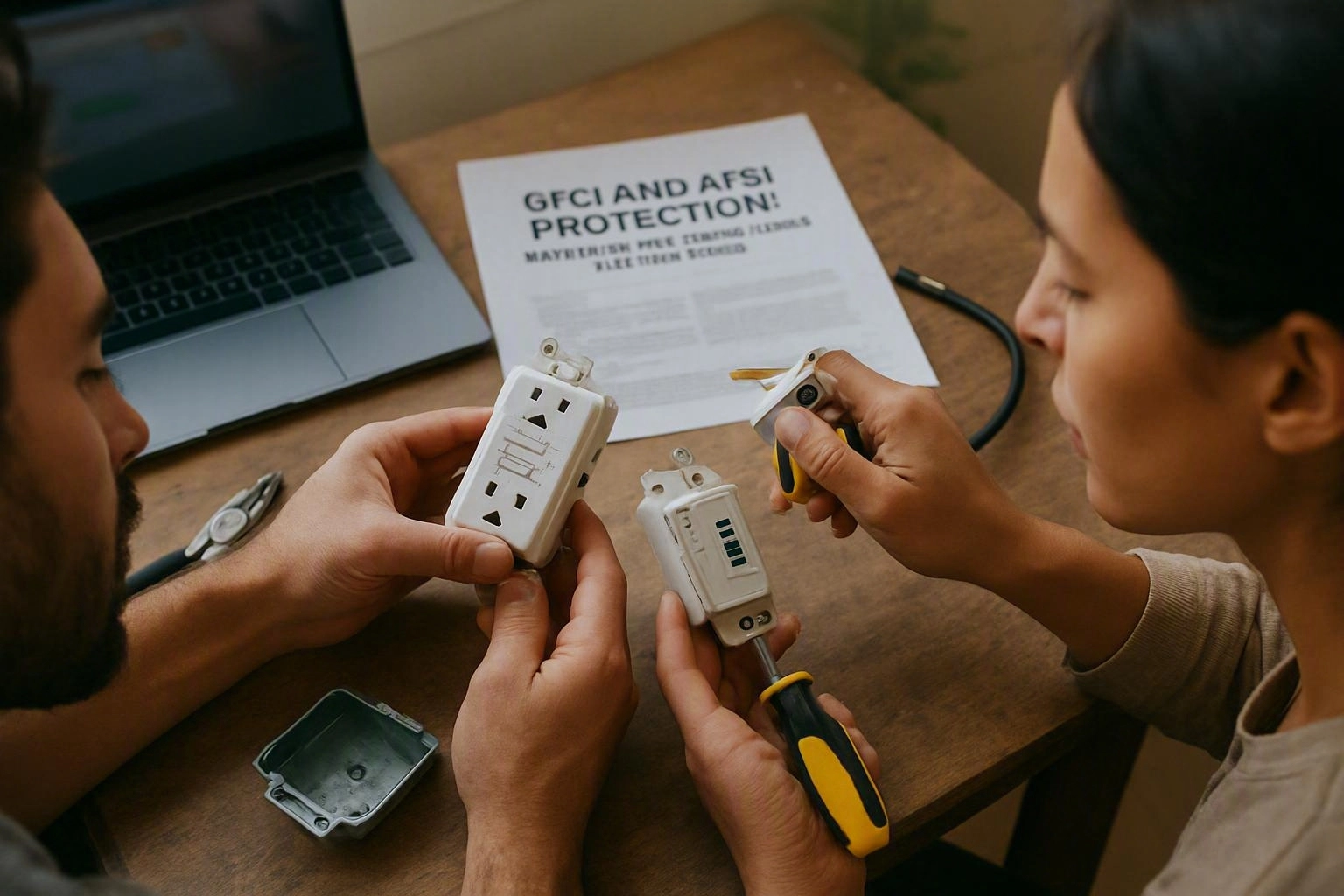
Homes of different ages need different fixes. Older systems may need circuit mapping and testing. A remodeled kitchen, garage, or outdoor circuit may need new outlets. It may also need wiring changes or a panel upgrade.
A qualified electrician can find the real problem. The issue may be a bad device, wiring, or appliance.
What Is the Difference Between GFCI and AFCI Protection?
GFCI protection responds to ground faults that can cause shocks. AFCI protection responds to electrical arcs that can start fires. GFCI protection often uses outlets or breakers in areas with water. AFCI protection usually uses a breaker for living areas.
A ground-fault circuit interrupter compares outgoing and returning current. Current may take an unsafe path through a person or wet surface. The device then opens the circuit quickly. This helps lower shock risk. It doesn't fix the cause of the fault.
An arc-fault circuit interrupter looks for signs of an arc fault. Damaged insulation can cause arcing, so can loose terminals or crushed cords. A series arc happens along one wire. A parallel arc jumps between wires. Both types can create heat and fire.
A GFCI receptacle is common in wet areas. These areas include bathrooms, kitchens, garages, laundry rooms, and outdoors. An AFCI breaker sits in the electrical panel. It protects a branch circuit in living, sleeping, or work areas. Some devices provide both types of protection.
These devices serve different safety needs. A circuit may need GFCI protection, AFCI protection, or both. The right choice depends on the location and wiring. It also depends on equipment and local electrical rules. Never use a standard breaker to stop nuisance trips.
Where Is GFCI Protection Required, and When Should It Be Repaired or Replaced?
GFCI protection is usually needed where electricity may meet water. Common areas include bathrooms, kitchens, garages, unfinished spaces, laundry areas, and outdoors. Repair or replacement may be needed when a device won't reset. It may also be needed after a failed test, heat, damage, or repeated trips.
Rules can change based on the home's age and remodel permits. Local rules also affect the required protection. Bathroom outlets near sinks need careful review. Kitchen counter outlets need review too. Outdoor outlets, garages, and unfinished basements also need attention.
Older homes may have two-wire circuits or crowded panels. They may also have mixed wiring changes. Some devices may never have been tested. A remodeled room can have other problems. New outlets may be wired wrong or may add too much load.
We use circuit mapping to find protected outlets. We also check whether one GFCI outlet protects others.
Choose repair when the wiring and box are in good shape. The fault must also be clear. Choose replacement for a cracked, warm, or loose outlet. Replacement also fits a device that fails its test. A failed reset button needs an inspection.
Most simple replacements take about 30 to 90 minutes. Some jobs take longer. An electrician may need to trace hidden outlets or fix line and load wires. They may also check moisture or panel capacity. GFCI Outlet Installation in Cincinnati may differ from GFCI Outlet Repair in an older garage.
We may suggest a panel upgrade when the panel lacks space. An upgrade may also help with old, damaged, or mismatched equipment. It may be needed when the panel can't safely support AFCI and GFCI protection.24 Hour Electrician may help with burning smells, sparks, or water near power. Call for a hot panel. Turn off power only when it's safe.
How GFCI and AFCI Protection Improves Home Electrical Safety?
GFCI and AFCI protection helps improve home electrical safety. These devices watch for ground faults and electrical arcs. They shut off power when they find a dangerous pattern. This means faster fault interruption and fewer unprotected circuits.
The table below shows common examples. These results aren't guaranteed for every home. Actual results depend on wiring, devices, and proper installation.
| Safety check | Before correction | Typical outcome after correction |
|---|---|---|
| Shock-risk receptacles | Protection may be missing or unknown | Tested GFCI device installed and mapped |
| Living-area branch circuits | Arc-fault protection may not match the circuit | Compatible AFCI breaker evaluated or installed |
| Fault response | Repeated trips have no clear cause | Appliance, moisture, and wiring faults narrowed during diagnosis |
| Inspection record | Panel and outlets are undocumented | Circuit map, test results, and safety deficiencies recorded |
Reduced Risk of Electric Shock near Water
GFCI devices watch for current leaving its intended path. They shut off power when they find a ground fault. This matters because a regular breaker may not trip soon enough. Test bathroom and kitchen outlets with their test buttons. Test them after remodeling or water exposure too.
Monthly testing takes less than a few minutes. It can show that a device has failed. Testing can't replace professional service. Call for help if the outlet won't reset, feels warm, or trips with nothing plugged in.
Earlier Detection of Dangerous Electrical Arcing
An AFCI breaker can find signs of series and parallel arcs. It can shut off power before a fire hazard grows. This helps protect circuits with cords, plugs, and wall wiring.
An AFCI test at the panel takes little time. The breaker must match the panel and circuit. Repeated trips need diagnosis. Don't keep resetting the breaker.
Better Protection for Older or Modified Wiring
Older systems may have brittle insulation or ungrounded outlets. They may also have changed boxes or added wiring. A clear circuit map may be missing. Protective devices can lower risk. They can't make damaged insulation or loose connections safe.
During an inspection, an electrician may check several boxes. They may find shared or mixed circuits. They may also compare panel labels with outlet activity. The time needed depends on the number of circuits.
Faster Identification of Faulty Appliances and Circuits
A faulty appliance, wet cord, or damaged outlet can cause trips. The safety device may be working as designed. It may be reporting leakage current or another unsafe condition.
First, unplug the equipment and reset the device once. If the trip returns with one appliance, stop using it. If the trip returns with everything unplugged, call for circuit testing. A service visit may find one appliance, outlet, or wiring fault.
More Complete Documentation During an Electrical Inspection
An electrical inspection can show which outlets have protection. It can also show if the test button works. The panel check may find missing labels, heat, or wrong breakers.
Many homes can receive a basic circuit map during a visit. This record helps with future repairs. It shows which device serves each downstream outlet. It also shows circuits for garages, remodeled rooms, and outdoor areas.
Why Does a GFCI Outlet Keep Tripping?
A GFCI outlet keeps tripping when it finds unsafe current flow. Common causes include moisture, bad appliances, wiring faults, and failed devices. A downstream outlet may also cause the trip. Unplug equipment and dry the area. Reset the outlet once. Call for help if it trips again.
Don't assume the GFCI outlet itself is bad. It may be working correctly. The fault may be somewhere else on the circuit. These steps can help find the problem.
Panel capacity and circuit mapping also matter. An older panel may not fit a new protective device. A remodeled room may have hidden junctions or added loads. We inspect the full circuit before choosing GFCI Outlet Repair, replacement, wiring work, or an electrical panel upgrade.
Questions About 24 Hour Electrician
Why Does a GFCI Outlet Keep Tripping?
It may detect moisture, a faulty appliance, leakage current, or a wiring fault. A downstream outlet or failed device may also cause trips. Unplug equipment, dry the area, and reset once. Seek diagnosis if the trip returns.
Can a GFCI Outlet Be Repaired, or Does It Need to Be Replaced?
A loose connection or wrong line and load wiring may be repairable. A cracked, hot, failed, or non-resetting device usually needs replacement. The circuit should be tested first. A new outlet shouldn't hide a deeper fault.
How Often Should GFCI Outlets Be Tested?
Many manufacturers suggest monthly testing. Press the test button and confirm power turns off. Then press reset. Follow the device instructions. Arrange service if the buttons don't work normally.
Do Older Homes Need AFCI Protection?
An older home may benefit from AFCI protection. This is especially true after circuits are remodeled, extended, or replaced. The right choice depends on the panel, wiring, and circuit layout. Local rules also matter. An inspection can show if an AFCI breaker or panel upgrade fits.
Can One GFCI Outlet Protect Other Outlets?
Yes. A GFCI receptacle can protect downstream outlets when wired correctly. Circuit mapping and outlet testing can confirm this protection.
What Should I Do if an AFCI Breaker Keeps Tripping?
Unplug portable equipment and reset the breaker once. Note when the trip happens. Stop resetting it if the trip returns. A damaged cord, appliance, loose connection, shared neutral, or wrong breaker may be involved. An electrician should check the circuit.
We can check missing protection, damaged devices, and repeated trips. We also inspect older panels, remodeled spaces, garages, and outdoor circuits. Testing and circuit mapping help us choose the right next step.
Contact our electrical team to discuss the symptoms and arrange a safe evaluation.
Related Resources
Electrical Troubleshooting and Circuit Breaker Repair: Cost and Process
electrical troubleshooting and circuit breaker repair cost
What It CostsHow Much Does It Cost and How Long Does It Take to Rewire a House?
home rewiring cost and timeline Cincinnati
What It CostsHow Much Does Level 2 EV Charger Installation Cost in Cincinnati?
residential Level 2 EV charger installation cost Cincinnati
What It CostsWhole-Home Generator Installation in Cincinnati: Cost, Scope, and Timeline
whole house generator installation cost and process Cincinnati