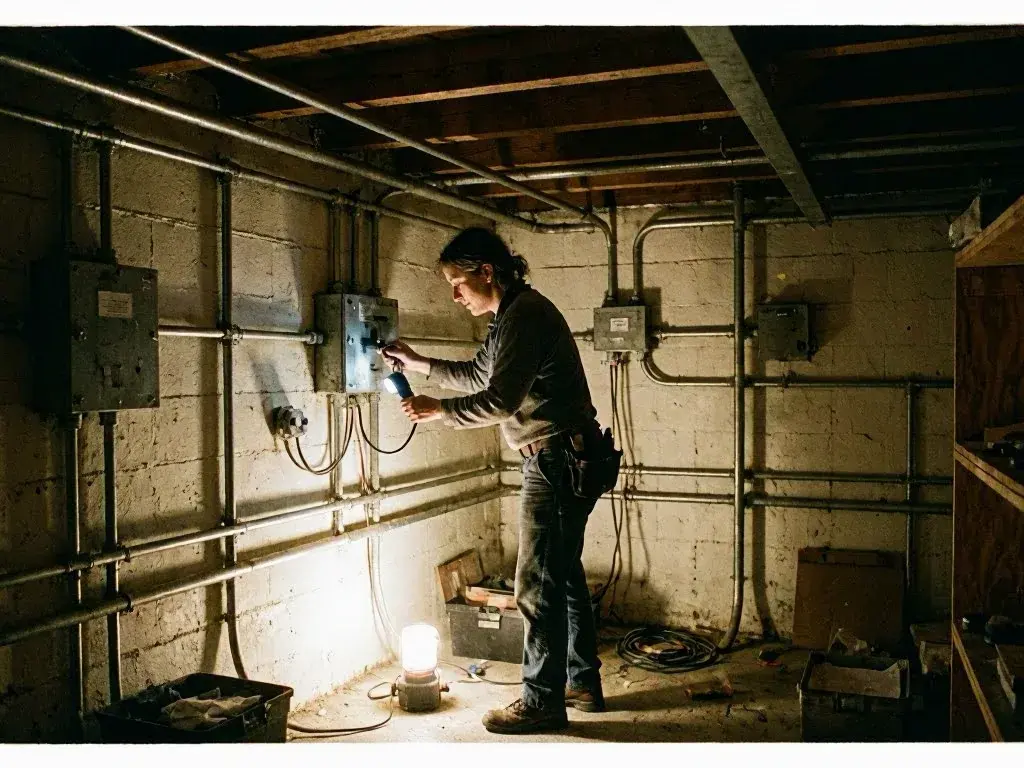
What a Buzzing or Crackling Electrical Panel May Mean
A buzzing electrical panel often shows a loose connection, heavy circuit load, or bad breaker. It may also signal electrical arcing. Some powered equipment makes a soft, steady hum. Loud buzzing, crackling, popping, heat, burning odors, flickering lights, or damage need quick attention. Turn off the affected circuit only if you can do so safely. Never remove the panel cover or touch wires. Call a qualified emergency electrician if the sound continues. Call right away if it comes from the main breaker. Leave the area if you see smoke or feel heat. ElectricianCincinnatiOH.com can find the fault and explain the safest next step.
Get a Free EstimateWhy Is My Electrical Panel Buzzing?
An electrical panel may buzz when powered parts vibrate. It may also buzz when current meets resistance. Loose connections, heavy circuit loads, bad breakers, and arcing can cause this problem.
A quiet, steady hum may be normal for some equipment. New, loud, uneven, or growing noise needs an electrician's help.
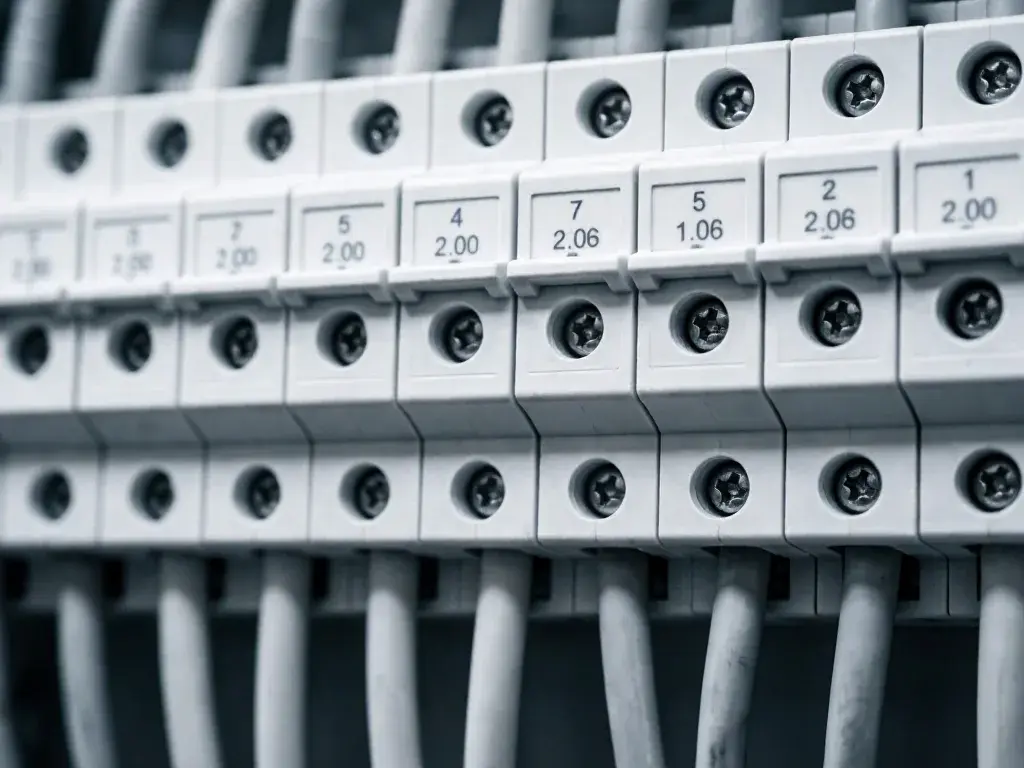
A panel has bus bars, breaker terminals, service wires, and other powered parts. These parts carry high electrical current. A transformer or another part may make a soft hum. Watch the sound if it changes. Pay attention if it starts after adding new equipment.
A loose electrical connection can create resistance at a terminal. Resistance creates heat. Heat can harm wire covers and breaker parts.
An overloaded circuit can also make a breaker work harder. You may hear buzzing and notice a warm cover. Lights may flicker. The breaker may trip again and again.
Electrical arcing is more serious. It happens when current jumps across a damaged gap. Arcing can cause crackling, flashes, soot, or a burning smell.
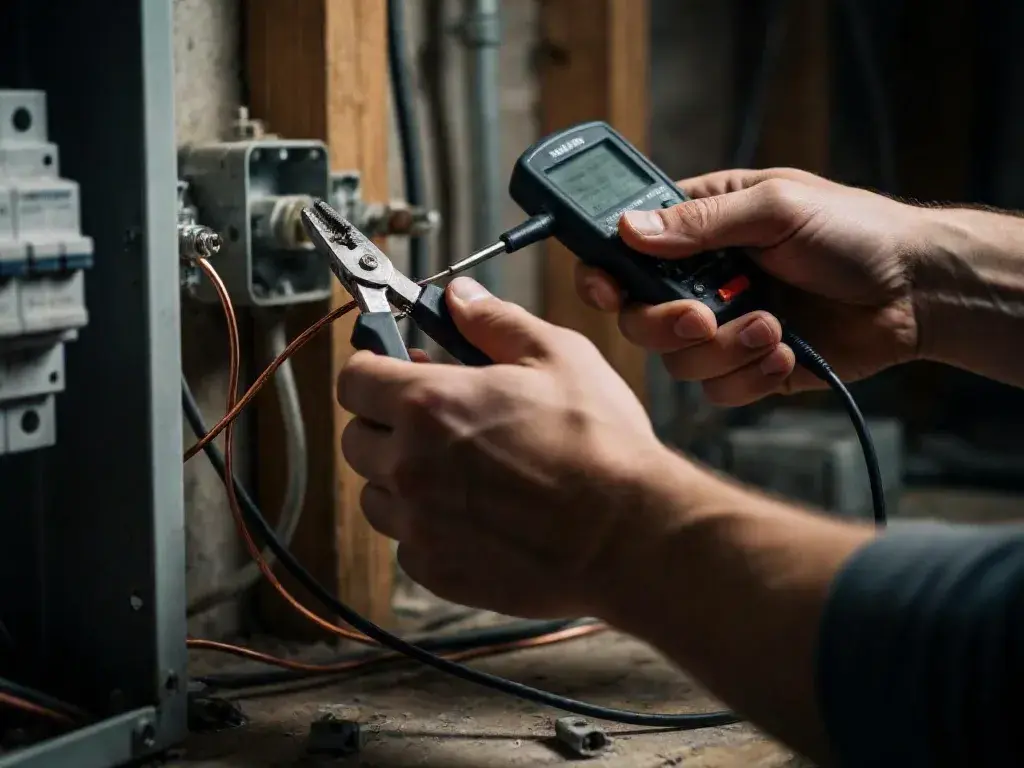
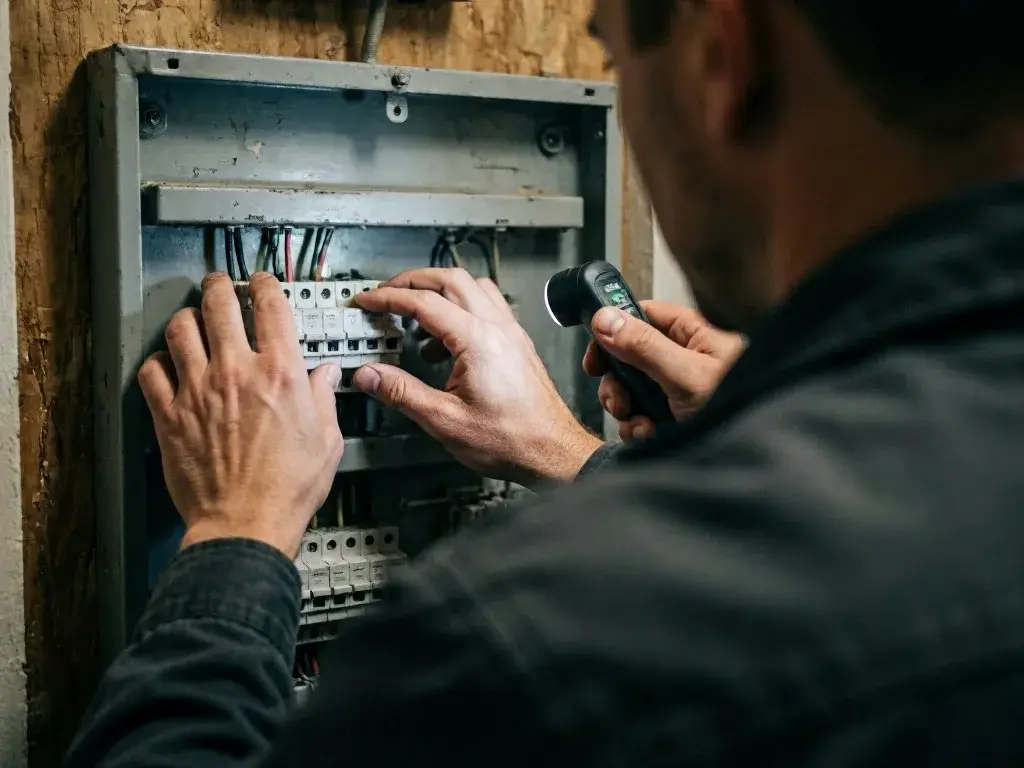
Never open the panel to find the source. Our electricians use safe checks to find the fault. These checks include a visual inspection, connection testing, and load testing.
The sound may not come from the panel. A breaker box can send vibration through a wall. A nearby switch, outlet, junction box, or transformer may cause the noise.
Most jobs begin by tracing the sound. We check recent changes next. Then we find out if one circuit or the main supply is involved.
Signs a Buzzing or Crackling Panel Needs Immediate Attention
Warning signs include loud buzzing, crackling, burning odors, heat, smoke, and scorch marks. Flickering lights and repeated breaker trips also matter. A loose breaker or one that will not reset needs attention. These signs may show overheating or arcing. Stop looking for the cause. Keep away from the panel. Get emergency electrical repair when danger is present.
Leave the area if you see smoke, flames, intense heat, or exposed wires. Call emergency services if fire may be present.
Never spray water on electrical equipment. An emergency electrician can check the fault after the area is safe. The electrician can then make a safe repair.
Common Causes of a Buzzing Electrical Panel
Common causes include loose wires, loose terminals, heavy circuit loads, and worn breakers. A damaged bus bar can also cause buzzing. Electrical arcing is another possible cause.
The sound may come from a failing transformer near the panel. An electrician must test the system to find the exact cause.
A circuit may overload after you add an air conditioner or heater. A workshop tool can also create a heavy load. Replacing one breaker may not solve the real problem.
An older home may need a panel check or new circuits. It may need a full electrical panel upgrade instead.
Our team checks the panel and connected circuits. We test the load, connections, breakers, terminals, and bus bars.
These checks help us tell a buzzing breaker from another noisy device. They also help prevent guesswork.
What Does Crackling in an Outlet or Wall Mean?
Crackling in an outlet or wall usually means current is arcing. The arc may cross a loose, damaged, or hot connection.
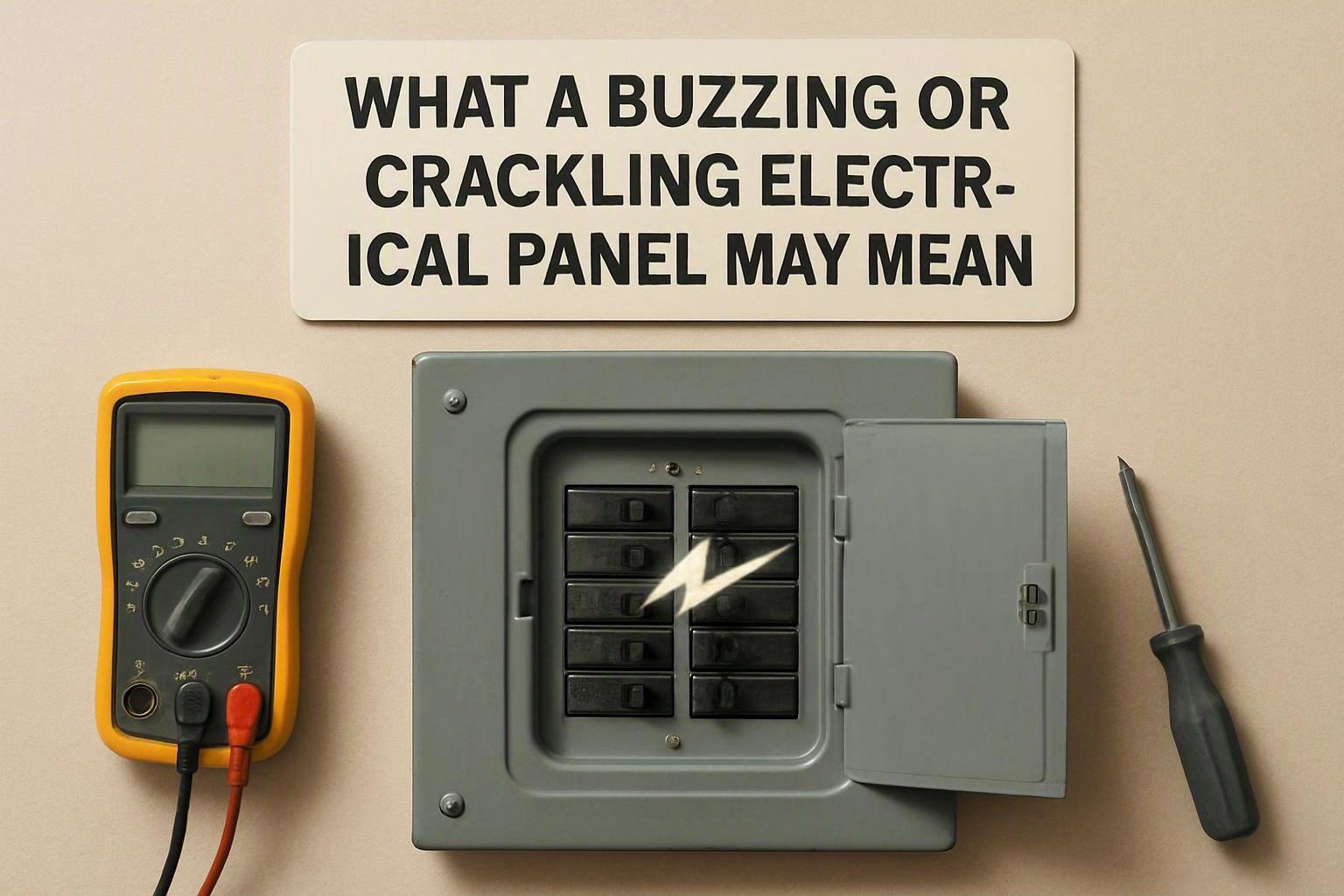
The source may be an outlet, junction box, switch, or hidden wire. Turn off the circuit only if it is safe. Stop using the outlet. Arrange electrical troubleshooting because hidden arcing can start a fire.
An outlet may crackle when its inner contacts are worn. A loose wire under a terminal screw can also cause noise.
The outlet may feel warm or show dark marks. It may crackle when you move a plug. Stop using it. Do not test it with another appliance.
Wall wires can crackle when their covers are damaged. A loose splice or poor junction box connection can do the same.
The sound may travel through the wall. This can make the panel seem like the source. A hidden arc can create heat in one small area.
Switches, junction boxes, and hidden cables need careful testing. Turn off the branch circuit only when you can identify it safely.
Do not approach smoke, water, exposed wires, or intense heat. Never cut into a wall or remove an outlet cover.
A trained electrician can isolate the circuit and test it safely. Keep paper, furniture, and other items away from a hot outlet.
Leave the building if crackling continues after shutdown. Leave if smoke or a burning odor appears.electrical troubleshooting service finds the fault. We do more than replace the visible outlet.
Is a Humming Breaker Dangerous?
A humming circuit breaker can be dangerous. This is more likely when the sound is new, loud, or uneven.
Heat, odors, flickering lights, or repeated trips add to the risk. The breaker may have bad inner contacts. It may also respond to a heavy load or damaged circuit.
Do not reset the breaker again and again. Have an electrician test the breaker and connected circuit.
Breaker contacts must open and close firmly. This helps protect your home from too much current.
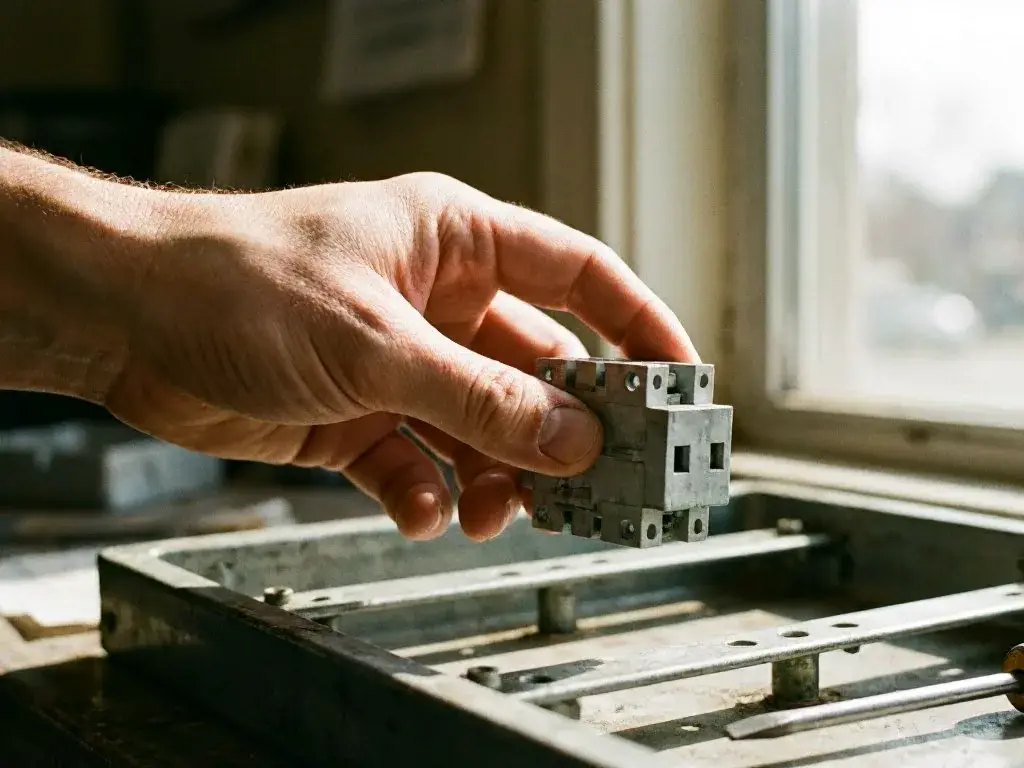
Worn contacts may shake or fail to stop current. Heat damage can weaken the breaker. It can also harm the bus bar.
A faint hum from some powered equipment is not always an emergency. Still, do not ignore a louder or changing sound.
Pay attention if lights flicker. Watch for trips after using a new appliance.
Never hold the breaker, tighten terminals, or remove the panel cover. Professional tests may check current, voltage, heat, and breaker action.
The electrician will also check the wiring. These checks show if the issue involves the breaker, circuit, or panel capacity.
For urgent service, our team can explain if you need 24-Hour Emergency Electrical Repair. Anyone searching for a 24 Hour Electrician should treat heat, smoke, and arcing as safety risks.
Should I Turn off a Buzzing Electrical Panel?
Turn off the affected branch breaker only when you can identify it safely. Do not approach smoke, flames, water, exposed wires, or intense heat.
Never remove the panel cover. Leave the area if the main panel buzzes, feels hot, looks damaged, or smokes.
Contact emergency services when fire may be present. Then call an emergency electrician.
A safe shutdown uses the outside handle of a known breaker. Stand on a dry, stable surface. Never open the panel or reach around its cover.
When unsure, stay clear. That choice is safer than checking the source yourself.
Our crews provide 24-Hour Emergency Electrical Repair in Cincinnati. We help when a dangerous condition needs quick attention.
We can also arrange standard testing for faint sounds. This includes sounds that are new or getting worse.
How to Prevent Panel Buzzing and Electrical Damage?
Preventing panel buzzing starts with safe circuit loads. It also means replacing bad breakers and fixing loose connections.
Keep electrical equipment dry and easy to reach. Schedule an inspection if the panel is old or trips often.
An electrician may suggest circuit repairs or arc-fault protection. An arc-fault device helps stop dangerous electrical sparks.
An electrical panel upgrade may help when the system lacks enough space or power.
Older panels may have fewer circuits than a modern home needs. Breakers that trip during normal use may point to a larger problem.
You may need a new circuit or larger service. One replacement breaker may not solve the issue.
An upgrade may fit when the panel is damaged, old, crowded, or too small. It can help manage electrical loads safely.
A routine inspection usually takes 30 to 90 minutes. The time depends on access and the number of circuits.
Repairs may take longer when wires are hidden. They may also take longer when several parts need testing.
Our team explains the findings before suggesting repairs, safety upgrades, or replacement.
Questions About 24 Hour Electrician
Why Is My Electrical Panel Buzzing?
A buzzing sound may come from a loose connection, heavy circuit load, bad breaker, damaged bus bar, or transformer. Electrical arcing can also cause buzzing. A faint, steady hum may be normal for some equipment. New, loud, uneven, or growing noise needs professional testing.
What Does Crackling in an Outlet or Wall Mean?
Crackling usually means current is arcing across a loose, damaged, or hot connection. The fault may be in an outlet, switch, junction box, or wall wire. Stop using the area. Turn off the circuit only if safe. Arrange electrical troubleshooting.
Is a Humming Breaker Dangerous?
It can be dangerous when humming is new, loud, or uneven. Heat, burning odors, flickering lights, or trips raise the risk. Do not reset the breaker again and again. A qualified electrician should test the breaker and circuit.
Should I Turn off a Buzzing Electrical Panel?
Turn off a known branch breaker only when no smoke, flame, water, exposed wires, or intense heat exists. Leave the area if the main breaker or panel is hot, damaged, or smoking. Seek emergency help.
How Much Does It Cost to Fix a Buzzing Electrical Panel?
The cost depends on the cause, access, parts, and wire condition. It also depends on the needed work. The job may involve one breaker, a circuit repair, or an electrical panel upgrade. An electrician should test the system before giving a reliable estimate.
Contact our team through our contact page for a safe evaluation of a noisy breaker box or electrical fault.
Related Resources
How Much Does a 24-Hour Emergency Electrician Cost in Cincinnati?
24 hour emergency electrician cost Cincinnati
What It CostsElectrical Troubleshooting and Circuit Breaker Repair: Cost and Process
electrical troubleshooting and circuit breaker repair cost
What It CostsHow Much Does Level 2 EV Charger Installation Cost in Cincinnati?
residential Level 2 EV charger installation cost Cincinnati
What It CostsWhole-Home Generator Installation in Cincinnati: Cost, Scope, and Timeline
whole house generator installation cost and process Cincinnati