Why Your Circuit Breaker Keeps Tripping and When It Is an Emergency
A circuit breaker keeps tripping when a circuit has too much power demand. It can also detect a short circuit, ground fault, bad appliance, or failed breaker. Turn off devices and reset it once. If it trips again, smells hot, sparks, or feels warm, stop using it. Then call an electrician.
Get a Free Estimate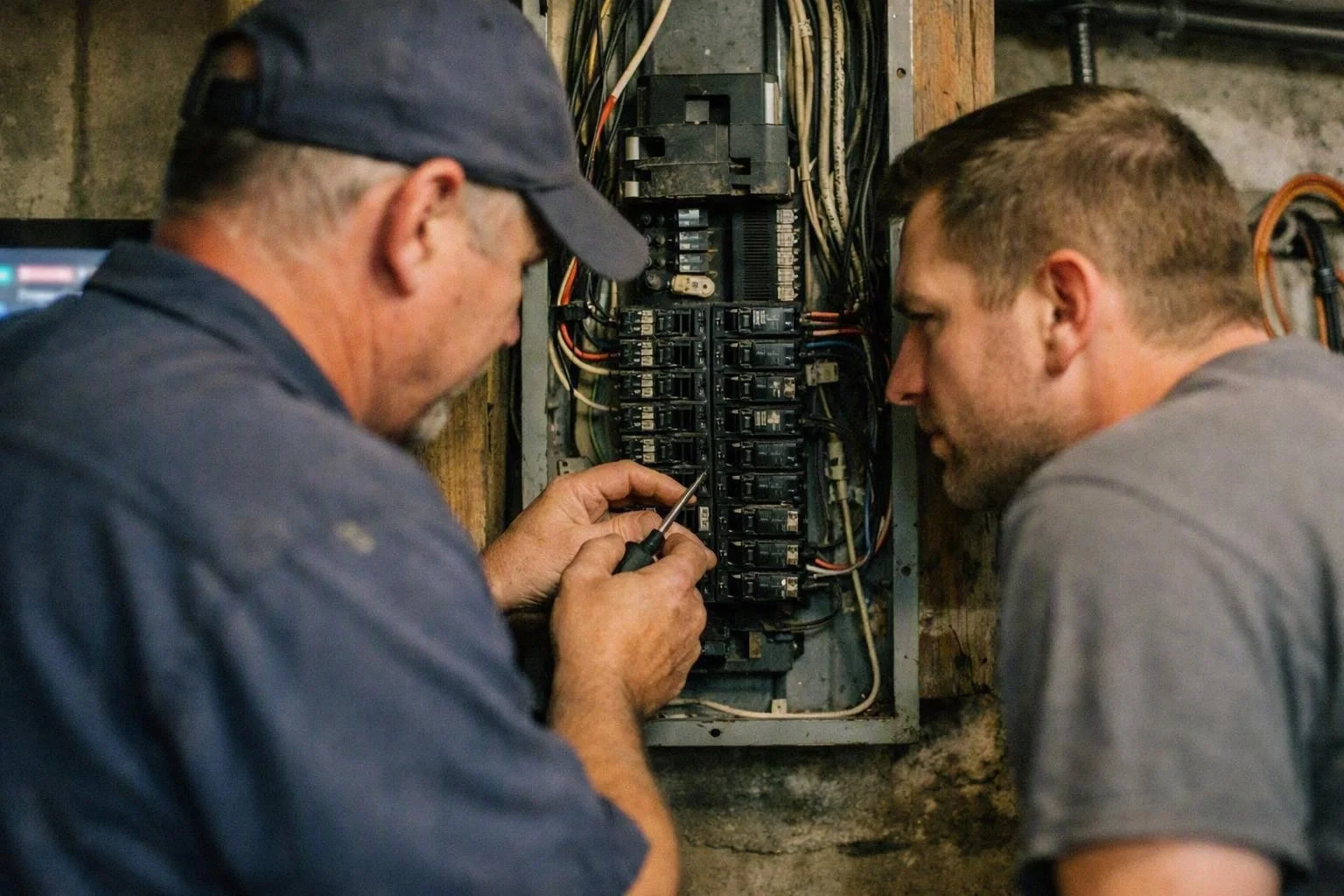
Why Does My Circuit Breaker Keep Tripping?
A circuit breaker trips when current goes above the circuit’s safe limit. It can also react to a short circuit, ground fault, or arc fault. Common causes include too many devices, damaged wires, moisture, and bad appliances. Repeated trips point to a problem that needs testing.
A circuit breaker protects your home from unsafe electrical current. It sits inside the electrical panel and protects each branch circuit. It can respond to overloads, short circuits, ground faults, and other unsafe conditions.
An overload happens when a circuit carries too much demand. Portable heaters, kitchen appliances, dryers, water heaters, and HVAC equipment use lots of power. Older homes may have circuits that cannot handle modern appliance loads.
A short circuit lets too much current flow through a low-resistance path. Damaged insulation, loose wires, and failed parts can cause one. A ground fault sends current along the wrong path. It can cause a serious shock, especially near water.
A bad appliance may trip the breaker each time it starts or heats. Watch for odd sounds, damaged cords, water, or a burning smell. Some homes use ground-fault circuit interrupters or arc-fault circuit interrupters. These safety devices detect leaks or sparks that standard breakers may miss.
At ElectricianCincinnatiOH.com, we first find the source of the problem. Circuit Breaker Repair in Cincinnati may include testing the breaker, wires, connections, and appliances. Replacing the breaker alone may not fix the cause.
How to Tell an Overload from a Short Circuit?
An overload often starts after several devices run together. A short circuit often trips the breaker right away. The timing offers a clue. Testing confirms the cause.
Compare the total appliance demand with the circuit’s amp rating. If fewer devices stop the trips, an overload may be the cause. Never install a larger breaker to solve this issue. The wiring may not safely carry more current.
A trip from one appliance may point to a short circuit or ground fault. It may also show a bad appliance. Unplug the device and stop using it. If trips continue with everything unplugged, the wiring may have a fault.
Try only one reset after turning off all loads. Repeated resets can hide damage. They may also raise the risk of fire.
What a Tripping Pattern Can Reveal?
The timing can help show the type of fault. Write down what was running and what was plugged in. Also note heat, water, or moisture near the circuit.
| Pattern | Possible cause | Safe next step |
|---|---|---|
| Trips after several devices run | Overloaded circuit or appliance load | Turn off extra equipment and lower the load |
| Trips immediately when one item starts | Faulty appliance, short circuit, or ground fault | Unplug the item and stop using it |
| Trips at random times | Intermittent fault, moisture, loose wiring, or breaker wear | Arrange electrical troubleshooting |
| Trips with every load removed | Electrical wiring fault or breaker failure | Leave it off and request inspection |
These patterns offer clues, but they cannot confirm the cause. A qualified electrician can check the panel, outlets, and wires.
What if a Breaker Will Not Reset?
A breaker that will not reset may still detect an active fault. The fault may involve an overload, short circuit, ground fault, or failed breaker. Move the handle fully to OFF. Unplug loads and try one reset. If it trips, feels hot, or will not stay on, leave it off.
A basic check may take 10 to 20 minutes when an overload is clear. Hidden wiring faults can take longer. Never force the handle or tape it in place. Never use a breaker with a higher rating.
Is a Tripping Breaker an Electrical Emergency?
A tripping breaker is an electrical emergency with smoke, burning odors, buzzing, sparks, heat, melted parts, water, or repeated instant trips. Stop using the circuit and stay away from damaged equipment. Call a qualified electrician when safety is at risk.
One trip after too many devices run may not need emergency service. Still, turn off or unplug the devices. Reset the breaker only once. Never bypass a breaker because it keeps cutting power.
Leave the area and call emergency services for smoke or fire. Never spray water on electrical equipment. Keep people away from a hot, wet, buzzing, or sparking panel.
Heat can damage wire insulation before flames appear. Sparks can start a fire inside a wall or panel. Damaged cords and loose outlets can cause shocks.
A 24 Hour Electrician may help when an urgent fault happens after normal hours. We can help decide if the circuit should stay off.
How Can Circuit Breaker Repair and Electrical Troubleshooting Help?
Circuit breaker repaircan show if the breaker, wiring, circuit, or appliance caused the problem. An electrician can test the circuit and repair the fault. They may suggest.new circuit or panel upgrade when power needs exceed the system.
Our team starts with electrical troubleshooting. We check the panel, breaker, outlets, wires, connections, and likely loads. Repairs may include replacing a worn device, fixing a connection, or removing damaged wire.
Not every trip needs a new panel. A dedicated circuit may fix one high-demand appliance.electrical panel upgrade may help when the system lacks space or capacity.
Restore Reliable Protection with a Correctly Sized Breaker
The breaker rating must match the wire and the load. A larger breaker is not a safe fix. It may let wires overheat before the breaker trips.
Older homes may have wiring from several remodels. A panel check can show if the breaker, wires, and equipment still work safely together.
Reduce Overloads with a Dedicated Circuit
A dedicated circuit gives one large appliance its own power path. It does not share power with nearby outlets and devices. This can reduce trips from heaters, kitchen tools, dryers, pumps, and other large loads.
For new circuit installationwe review the appliance guide and power needs. We also check wire size, breaker type, startup demand, and the wire route. A load check shows if the system can support the appliance.
Moving a plug to a nearby outlet may not solve the problem. Both outlets may share one circuit. The goal is to separate the appliance from other devices.
We also check HVAC systems and electric water heaters. Their power needs can rise during startup or heating. The best fix depends on the equipment and service capacity.
Improve Panel Capacity for Modern Electrical Loads
An electrical panel upgrade may help when the panel lacks safe space or service power. The panel must be checked with the full electrical service. Open breaker spaces alone do not show capacity.
Remodeled homes may have new kitchens, rooms, HVAC systems, water heaters, dryers, or charging equipment. Older wiring can make new circuits harder to add.
Our team checks the service entrance, main disconnect, panel, grounding, bonding, wire sizes, and power demand. If capacity is enough, a smaller repair may be safer and less costly.
When an upgrade is needed, good planning can prevent future overloads. The work should meet local code and inspection rules.
Measure Typical Results Before and After Troubleshooting
Good testing compares the circuit before and after the fault is found. The ranges below are examples, not promises. Results depend on access, wiring, equipment, and damage.
| Measure | Before troubleshooting | After a suitable repair |
|---|---|---|
| Circuit trips | May happen daily, at random, or when a load starts | Should stop during normal use |
| Fault isolation | The cause may be unknown | The bad load, wire section, or breaker is found |
| Diagnostic testing | Visual clues and trip history | Tests guide the repair choice |
| Electrical safety | Possible heat, sparks, leaks, or overload | Circuit use matches the system design |
Simple appliance checks often take less than an hour. Hidden wire damage, moisture, or panel work may take longer. A lasting repair fixes the cause, not just the power loss.
Know When Professional Testing Is Safer Than DIY Resetting
Professional testing is safer when the breaker trips right away or the cause is unclear. Call for help with heat, odors, water, sparks, or damaged insulation. A qualified electrician can test safely and reduce shock risk.
Voltage testing can find missing power or unusual voltage. It can also show a problem before the outlet. Continuity testing can find an open wire or connection. The circuit must be off during that test.
Hidden insulation damage can cause trips when wires move, heat up, or get wet. Testing may also help when a breaker feels loose or will not latch.
Do not remove the panel cover or test live parts. Do not bypass safety devices or install a larger breaker. We can explain the fault and recommend the needed repair.
Questions About 24 Hour Electrician
Why Does My Circuit Breaker Keep Tripping?
Common causes include overloads, short circuits, ground faults, arc faults, bad appliances, moisture, and failed breakers. Turn off loads and reset it once. If it trips again, leave it off and arrange testing.
What if a Breaker Will Not Reset?
Move the handle fully OFF and unplug connected appliances. Try one reset. If it trips right away or will not latch, leave it off. The circuit or breaker may have a fault.
Is a Tripping Breaker an Electrical Emergency?
It is urgent with smoke, burning smells, heat, buzzing, sparks, melted parts, water, or repeated instant trips. Stop using the circuit and contact a qualified electrician. Call emergency services for fire or immediate danger.
Can an Electrician Repair a Bad Circuit Breaker?
Yes. An electrician can test the breaker, wiring, load, and appliance. If the breaker failed, they can replace it with the correct type and rating.
How Many Times Can I Reset a Tripped Breaker?
Reset it once after turning off loads and checking for danger signs. If it trips again, stop resetting it. Repeated trips need testing.
Why Does My Breaker Trip When I Plug Something In?
The appliance, cord, or outlet may be damaged. The circuit may also be overloaded. Unplug the item and stop using it. If trips continue, the circuit needs testing.
Related Resources
How Much Does a 24-Hour Emergency Electrician Cost in Cincinnati?
24 hour emergency electrician cost Cincinnati
What It CostsElectrical Troubleshooting and Circuit Breaker Repair: Cost and Process
electrical troubleshooting and circuit breaker repair cost
What It CostsHow Much Does It Cost and How Long Does It Take to Rewire a House?
home rewiring cost and timeline Cincinnati
What It CostsHow Much Does Level 2 EV Charger Installation Cost in Cincinnati?
residential Level 2 EV charger installation cost Cincinnati