Why do my lights flicker or dim?
A loose neutral can make several lights flicker or dim together. Cincelux Electric checks the panel, circuit connections, and affected fixtures to confirm the cause. An overloaded circuit, aging ballast, or voltage drop can create similar symptoms. Turn off equipment that smells hot or sparks, then request an assessment.
What does the crew look at first during troubleshooting?
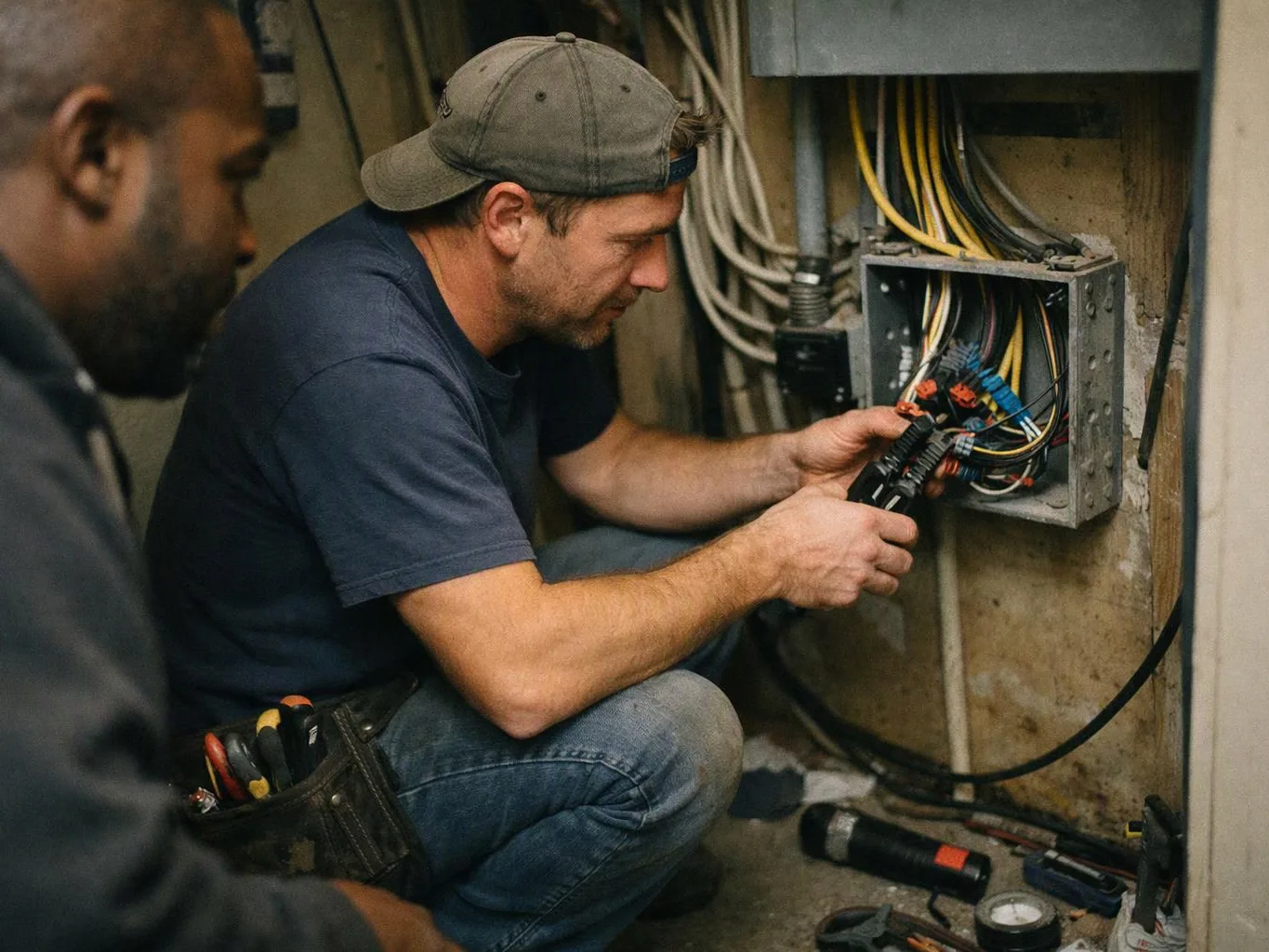
The reported symptom guides the first inspection. We identify the affected circuit, check the breaker and panel connections, then inspect accessible switches, outlets, fixtures, and wiring. The sequence changes when you report heat, sparks, or a burning smell because those signs need immediate safety attention.
What should be checked before troubleshooting is scheduled?
The affected areas, recent breaker activity, and visible warning signs should be noted before scheduling. Record whether one light, several rooms, or connected equipment changes together. Do not remove panel covers or handle damaged wiring. Share those details so we can plan the assessment around the reported fault.
Who is a good fit for electrical troubleshooting, and who needs a different service?
Homeowners, business owners, and property managers with unexplained electrical symptoms are good fits for troubleshooting. Planned lighting installations, panel replacements without a reported fault, and utility-side outages need a different service or responsible party. We explain that distinction after reviewing the problem.
Which warning signs make an electrical problem urgent?
Burning smells, sparking outlets, warm switch plates, buzzing panels, and repeated breaker trips make an electrical problem urgent. Stop using the affected device or circuit when it is safe to do so. Emergency electrical response is available, and calls are answered anytime.
How does an overloaded circuit differ from voltage drop?
An overloaded circuit carries more connected demand than its wiring or breaker should support, while voltage drop reduces voltage along the circuit path. We review connected equipment and test the circuit to separate these conditions. The repair may involve load changes, wiring work, or a larger electrical upgrade.
What information helps explain flickering lights?
The number of affected lights, the timing of the flicker, and nearby equipment use provide useful clues. Note whether the issue follows one room, one breaker, or several circuits. Photos of the fixture or panel label can help, but do not open electrical equipment or touch exposed conductors.