
What is a Busbar?
Busbar is a rigid metal conductor that distributes electrical power to multiple circuits within equipment such as switchboards, panelboards, and switchgear. Usually made from copper or aluminum, a busbar carries current with less wiring than separate conductors. Its size, material, insulation, spacing, and temperature rating determine its safe ampacity.
Quick Facts About Busbar
Category
Electrical power distribution component
Used for
Sharing power among breakers and circuits
Common materials
Copper or aluminum
Common confusion
A busbar is not automatically a neutral or grounding bar
Also called
Bus bar, Distribution bar
Often discussed with
Electrical Panel Upgrade, Electrical Inspection
Key Takeaways About Busbar
- Busbars send power between incoming supplies, circuit breakers, and outgoing circuits.
- Copper and aluminum are the two most common busbar materials.
- Ampacity depends on busbar size, material, temperature, enclosure, and airflow.
- A busbar is not the same as a neutral wire or grounding conductor.
- Loose connections, corrosion, and overloads can cause dangerous heating and arcing.
Understanding Busbar

Busbar is a solid or formed metal conductor. It carries electrical power inside equipment. A busbar may connect an incoming service conductor to multiple circuit breakers. It may also link several switchgear sections. Copper and aluminum are common materials. Both metals conduct electricity well when sized and installed properly.
Related glossary terms: Ampacity, Load Center, Overcurrent Protection.
Unlike individual insulated wires, a busbar provides a shared power path. Many circuits can use this path. A panelboard may contain separate bars for ungrounded conductors. It may also contain bars for neutral conductors and equipment grounding conductors. The equipment design controls the exact arrangement. Insulating barriers and covers help prevent accidental contact. Correct clearances help prevent phase-to-phase faults.
How Busbar Works, Is Measured, or Is Used?
Electrical current enters a busbar through a service connection. It may enter through a feeder or transformer connection. It may also enter through another supply point. Breakers or fused disconnects attach to the bar. They send power to branch circuits. In a three-phase system, separate bars usually serve each phase. The equipment must keep the phases separated. Required insulation and air distance provide this separation.
Engineers and manufacturers select a busbar by reviewing ampacity. They also review voltage, short-circuit withstand, temperature rise, and physical size. Ampacity describes the current the bar can carry. This rating applies under stated conditions. Resistance produces heat. A larger cross-sectional area usually lowers resistance and temperature rise. The enclosure and surrounding temperature also affect performance. Ventilation, joint design, and connection torque affect performance too.
A technician evaluates a busbar by checking its material, thickness, and width. The technician also checks insulation and connection points. A thermal imaging inspection may reveal an overheated lug or breaker connection. This inspection happens while the equipment carries load. A de-energized inspection can find discoloration, pitting, and corrosion. It can also find loose hardware or damaged barriers. Measurements and repairs must follow the equipment manufacturer's instructions. They must also follow applicable electrical safety procedures.
Why Busbar Matters?
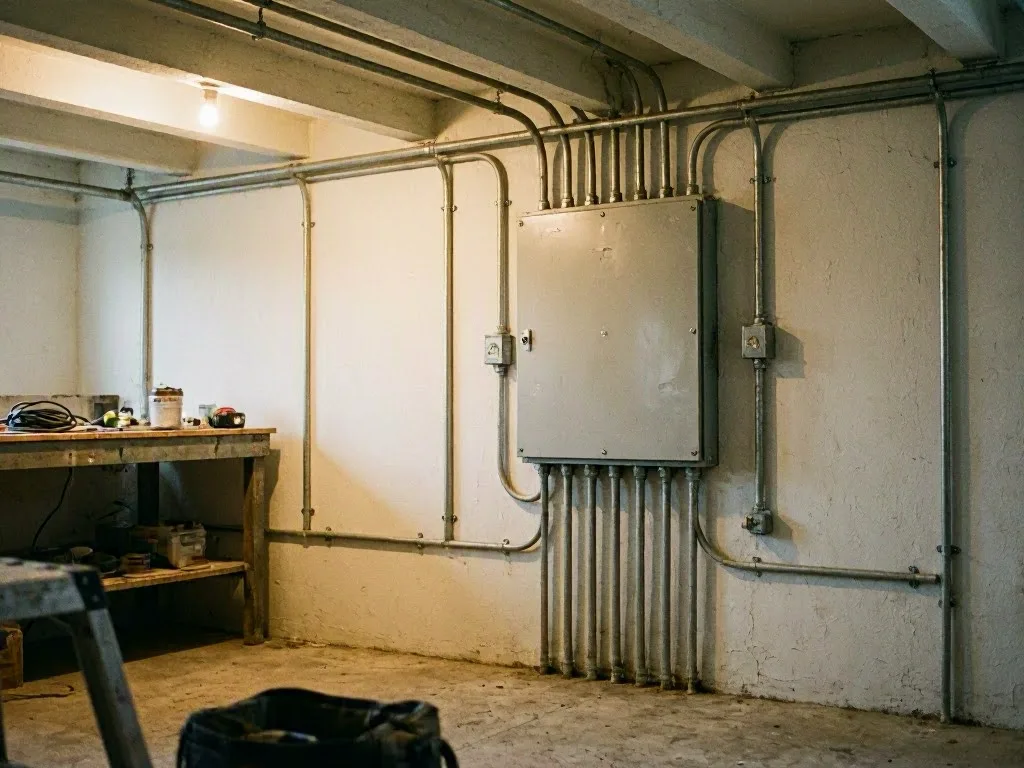
A properly selected busbar reduces internal wiring. It supports orderly power distribution. Its compact design can save space inside a panelboard or switchgear assembly. The bar also helps manufacturers create repeatable connections. Breakers and feeders can use these connections. This design makes the system easier to organize and maintain.
A damaged or overloaded busbar can create serious heat and fault risks. A loose connection increases electrical resistance at the joint. This resistance can produce local heating and carbon damage. An arcing fault may damage the enclosure. It may interrupt power or start a fire. Correct ratings and secure terminations reduce these risks. Adequate clearances and suitable overcurrent protection also help.
When Busbar Matters Most?
Busbar condition deserves attention during a panel upgrade. It also matters during service replacement or commercial equipment installation. Repeated breaker failure also requires attention. A new breaker must match the panel's listed design. It must also match the busbar configuration. Installing a breaker that doesn't fit can create poor contact pressure. An unapproved breaker can also cause overheating or an unsafe connection.
Busbars also matter after flooding, fire, or major surges. They matter after signs of overheating too. Water and contaminants can corrode joints. They can also reduce insulation performance. Look for burning smells, buzzing, and visible discoloration. Check for melted plastic or breakers that feel unusually hot. Electrical equipment with these symptoms should remain de-energized. A qualified inspection must decide what needs replacement. This may include the bar, breakers, enclosure, or connected conductors.
How to Evaluate Busbar?
- Verify the busbar material, dimensions, ampacity, voltage rating, and short-circuit rating.
- Check that every breaker is listed or approved for the specific panelboard and busbar assembly.
- Look for discoloration, pitting, corrosion, melted insulation, loose hardware, or damaged barriers.
- Compare connection torque with the equipment manufacturer's stated torque values.
- Confirm that neutral and grounding bars are separated or bonded in the correct location.
Related Concepts Compared
Busbar vs. Neutral Bar
A neutral bar connects grounded circuit conductors in systems that use a neutral. A busbar is a broader term for a power distribution bar, and a neutral bar is only one possible type.
Busbar vs. Grounding Bar
A grounding bar connects equipment grounding conductors and bonding paths. It is designed for fault-current return paths, not ordinary circuit load current.
Busbar vs. Wire
A wire is usually a flexible conductor with insulation and an individual route. A busbar is commonly a rigid, exposed or enclosed conductor that serves several connections.
Busbar vs. Panelboard
A panelboard is the complete enclosure and assembly containing breakers, busbars, wiring terminals, and related parts. The busbar is one component inside that assembly.
Expert Note
Busbar heating often begins at a connection rather than along the entire bar. A clean visual surface does not prove a sound joint. Load current, torque, contact pressure, corrosion, and breaker compatibility should be evaluated together.
Common Mistakes or Myths About Busbar
- Assuming every breaker fits every panel because the breaker appears to attach physically.
- Treating a neutral bar and grounding bar as interchangeable in every panel location.
- Ignoring discoloration or a burning odor near a breaker connection.
- Replacing a damaged busbar without identifying the overload, loose joint, or fault that caused the damage.
Busbar in Practice: A Real-World Example
A 200-amp residential panel uses a factory-installed busbar to feed branch-circuit breakers. A loose breaker connection may heat and mark the busbar near it below 200 amps.
Sources & Further Reading on Busbar
Related Services
Related Terms
Ampacity
Ampacity is the maximum current, measured in amperes, that a conductor can carry continuously under stated…
Load Center
Load Center is an electrical enclosure that distributes power from a service or feeder to individual…
Overcurrent Protection
Overcurrent Protection is a safety method that limits or interrupts electrical current when it exceeds a…
National Electrical Code
National Electrical Code is the United States standard for safe electrical design, installation, and inspection. The…
ElectricianCincinnatiOH.com
Have Questions About Busbar?
Contact ElectricianCincinnatiOH.com for practical guidance on Busbar and related 24 hour electrician work in Cincinnati.