
What is Neutral Wire?
Neutral Wire is the grounded conductor that normally carries current back to the electrical source in an alternating-current circuit. It connects the load to the service neutral point and completes the circuit with a hot wire. Neutral wires are usually white or gray. But color alone never proves a conductor is safe.
Quick Facts About Neutral Wire
Category
Electrical conductor
Used for
Returning current to the source
Common confusion
Neutral is not the same as ground
Typical tool
Two-pole voltage tester
Also called
Grounded conductor, Neutral conductor
Often discussed with
Electrical Troubleshooting, Electrical Wiring
Key Takeaways About Neutral Wire
- A neutral wire normally carries current back to the electrical service after a load uses power.
- White or gray insulation commonly identifies neutral conductors. But testing remains necessary.
- Neutral and ground wires serve different purposes and must not be interchanged.
- A loose neutral can create unstable voltage and damage sensitive equipment.
- Some switches and older circuits may not include a neutral wire.
Understanding Neutral Wire
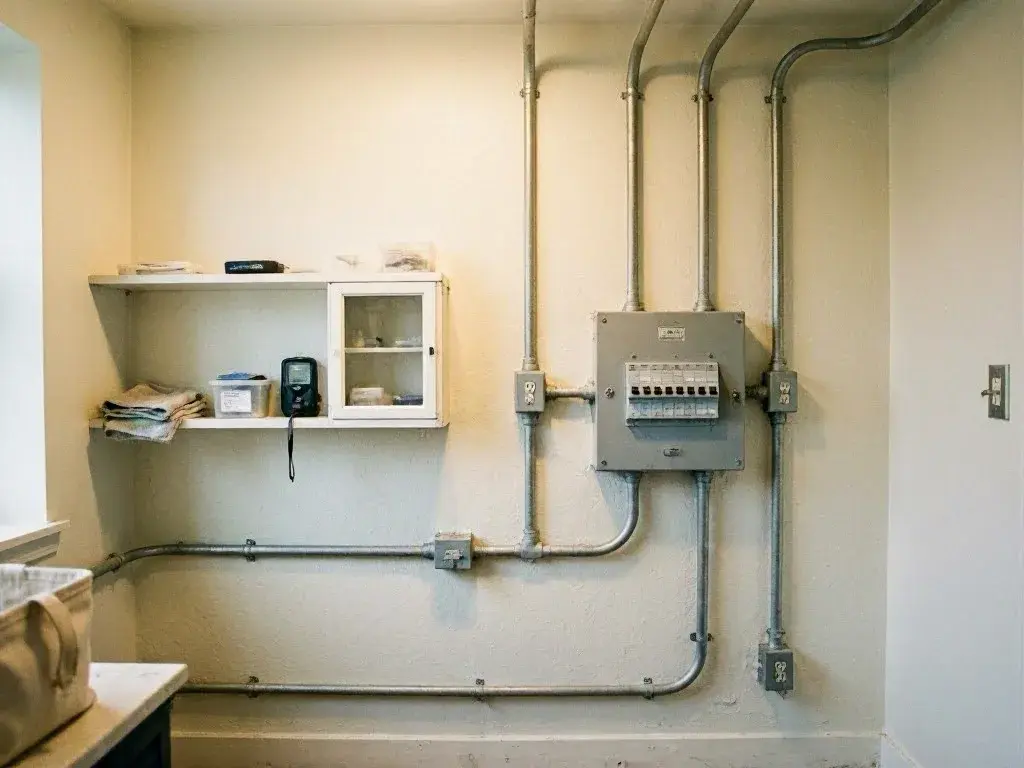
Neutral Wire is the grounded conductor in a typical AC electrical system. It provides the return path from a powered device, such as a lamp or receptacle, back to the source. The hot conductor supplies voltage to the load. The neutral conductor normally carries current away from the load and back to the service equipment.
Related glossary terms: American Wire Gauge, Branch Circuit, Electrical Grounding.
In residential wiring, neutral insulation is usually white or gray. That color is an identification rule, not proof that the conductor is de-energized. A neutral wire can carry current during normal operation. Touching it can still cause shock. The neutral connects to the grounded point at the service equipment. Downstream panels generally keep neutral and ground paths separate.
How Neutral Wire Works, Is Measured, or Is Used?
A complete branch circuit normally includes a hot conductor, a load, and a neutral conductor. Current leaves the source on the hot conductor. It passes through the load, then returns on the neutral. In a simple 120-volt circuit, voltage between hot and neutral should be near the circuit voltage. Voltage between neutral and ground should normally be close to zero under ordinary conditions.
Electricians check a neutral wire with a listed voltage tester, a multimeter, or circuit-analysis equipment. The test should compare hot-to-neutral, hot-to-ground, and neutral-to-ground readings under safe conditions. A continuity test can help confirm a disconnected path. Continuity alone doesn't prove a conductor is safe or properly connected. Power must be isolated before resistance or continuity testing.
Many 120-volt loads need a neutral, but not every circuit does. A 240-volt load may use two hot conductors and no neutral. This applies when the equipment does not need 120-volt power. Smart switches, control systems, and older switch loops also differ in their neutral needs. The equipment instructions and the applicable National Electrical Code rules determine the correct wiring method.
Why Neutral Wire Matters?

A sound neutral wire keeps circuit voltage stable. It also gives current a predictable return path. A loose terminal, damaged conductor, or overloaded shared neutral can cause flickering lights, buzzing, heat, or unusual voltage readings. Sensitive electronics may reset or fail when the neutral connection becomes intermittent.
Neutral problems also affect safety. An incorrect connection can place current on metal parts or other unintended paths.grounding conductor and bonding connections provide a separate safety function during faults. A neutral shouldn't connect to ground at random outlets or subpanels. That can send normal operating current through grounding paths.
When Neutral Wire Matters Most?
Neutral Wire identification matters during panel work, outlet replacement, switch installation, and troubleshooting. The need becomes especially clear when a circuit has flickering lights, devices that work only sometimes, or voltage that changes when another load turns on. These signs can point to a loose neutral, an open neutral, or a shared circuit problem.
Neutral wiring also matters during remodeling and equipment upgrades. A new appliance, generator connection, electric vehicle charger, or smart control may need a specific neutral setup. Before changing a connection, verify the circuit type, conductor size, overcurrent protection, terminal condition, and equipment instructions. Turn off power at the correct disconnect. Confirm that the circuit's de-energized with an appropriate tester.
How to Evaluate Neutral Wire?
- Check whether the neutral conductor is correctly identified with white or gray insulation or approved marking.
- Compare hot-to-neutral and hot-to-ground voltage readings with a properly rated tester.
- Look for loose terminals, discoloration, heat damage, buzzing, flickering, or unstable voltage.
- Confirm that neutral and grounding conductors are separated in downstream panels.
- Verify conductor size, circuit breaker rating, and equipment instructions before adding a load.
Related Concepts Compared
Neutral Wire vs. Grounding Conductor
A grounding conductor normally carries fault current only, while a neutral wire carries normal load current. Both may connect to the service grounding system, but they serve different purposes.
Neutral Wire vs. Hot Wire
A hot wire delivers electrical potential from the source to a load. A neutral wire normally provides the return path after the load uses the power.
Neutral Wire vs. Grounded Conductor
Grounded conductor is the formal electrical term commonly used for the neutral conductor. Grounding conductor refers to the separate safety conductor connected to equipment and grounding paths.
Neutral Wire vs. Open Neutral
An open neutral is a fault condition caused by a broken or disconnected neutral path. Neutral wire describes the conductor itself, whether the conductor is functioning or faulty.
Expert Note
A neutral may read near zero volts to ground and still carry substantial current. Check all relevant conductors under the actual load, because a loose neutral can produce misleading readings when the circuit is idle.
Common Mistakes or Myths About Neutral Wire
- Treating a neutral wire as safe to touch because it is connected to ground.
- Connecting a neutral and grounding wire together at a downstream outlet or subpanel.
- Relying on insulation color without testing the circuit.
- Assuming every 240-volt circuit requires a neutral.
- Using a continuity test as proof that a conductor is de-energized.
Neutral Wire in Practice: A Real-World Example
A kitchen receptacle circuit has working lights, but the lights flicker whenever the refrigerator starts. Testing shows an unstable hot-to-neutral reading and a loose neutral terminal in a junction box. Tightening the connection and checking the circuit under load restores a steady return path.
Sources & Further Reading on Neutral Wire
Related Services
Related Terms
American Wire Gauge
American Wire Gauge is a standardized numbering system that identifies the diameter and cross-sectional area of…
Branch Circuit
Branch Circuit is the portion of an electrical system that carries power from a final overcurrent…
Electrical Grounding
Electrical Grounding is a safety system that connects electrical equipment and circuits to the earth or…
Ground-Fault Circuit Interrupter
Ground-Fault Circuit Interrupter is a protective device that monitors current flowing through a circuit and quickly…
ElectricianCincinnatiOH.com
Have Questions About Neutral Wire?
Contact ElectricianCincinnatiOH.com for practical guidance on Neutral Wire and related 24 hour electrician work in Cincinnati.