
What is National Electrical Code?
National Electrical Code is the United States standard for safe electrical design, installation, and inspection. The National Fire Protection Association publishes the code as NFPA 70. The code covers wiring methods, equipment, grounding, overcurrent protection, and related safety rules. Local and state authorities adopt an edition and may add or change requirements.
Quick Facts About National Electrical Code
Category
Electrical safety standard
Used for
Designing and inspecting electrical installations
Relevant standard
NFPA 70
Common confusion
The NEC is not automatically law everywhere
Also called
NEC, NFPA 70
Often discussed with
Electrical Inspection, Electrical Wiring
Key Takeaways About National Electrical Code
- NFPA 70 sets minimum safety rules for electrical installations across the United States.
- Local areas adopt an edition and may add rules through laws, amendments, or permits.
- The code covers wiring, grounding, circuit protection, equipment placement, and installation methods.
- A code-compliant installation must match the adopted edition and pass the required inspection.
Understanding National Electrical Code
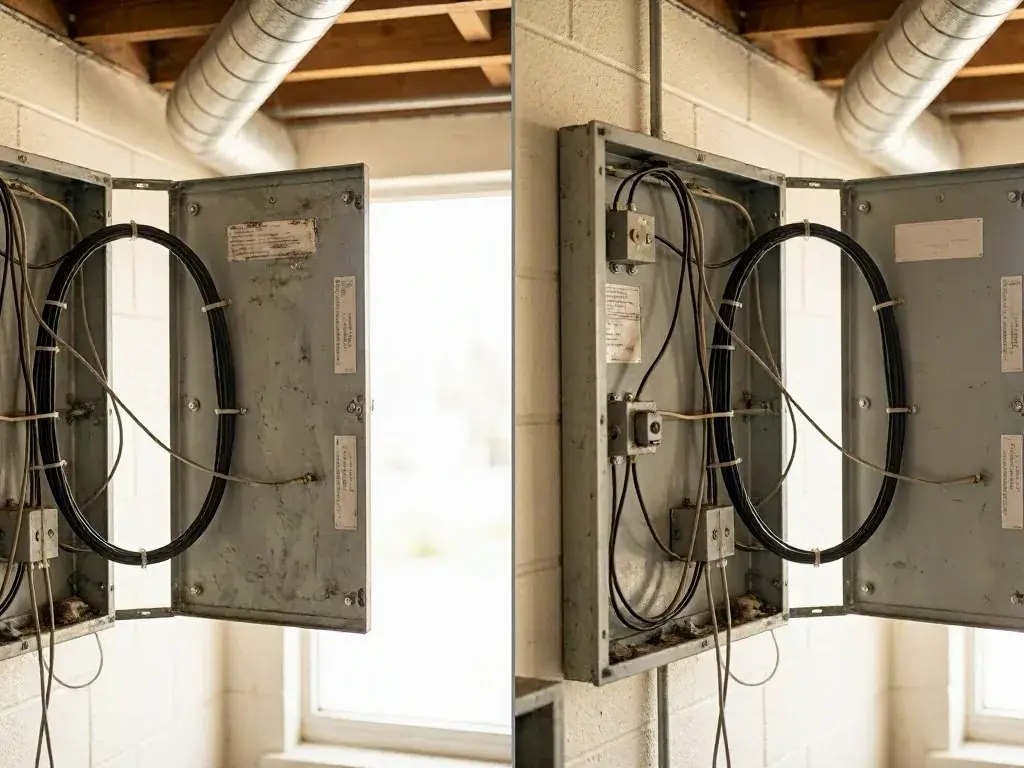
National Electrical Code, commonly called the NEC or NFPA 70, is a set of technical rules for electrical installations. The National Fire Protection Association publishes it in numbered editions. The rules address conductors, cables, raceways, panelboards, receptacles, switches, motors, and many other electrical components. The code focuses on reducing shock, fire, and equipment damage risks.
Related glossary terms: Electrical Code, Electrical Grounding, Ground-Fault Circuit Interrupter.
The NEC is a model code rather than a federal law. A state, county, city, or other authority must adopt an edition. Its requirements then become enforceable in that jurisdiction. An adopting authority may also publish amendments or local procedures. The edition and amendments can affect the required work. This applies in Cincinnati and other Ohio locations. They can also affect permit and inspection needs.
How National Electrical Code Works, Is Measured, or Is Used?
Electrical design starts with the building use, available power, connected loads, and circuit layout. The designer then selects conductor sizes, insulation ratings, raceways, boxes, disconnects, and overcurrent protection. These choices must meet the applicable rules. Calculations may account for continuous loads, voltage drop, ambient temperature, conductor grouping, and equipment ratings.
Installation work follows the approved design and the local permit process. An inspector may check grounding, bondingconductor identification, box fill, working clearances, and protection from physical damage. Special sections apply to bathrooms, garages, unfinished areas, pools, and outdoor spaces. They also apply to places with moisture or flammable materials. The NEC doesn't replace the manufacturer's instructions. Listed equipment must also follow its labeling.
- Confirm the code edition adopted by the authority having jurisdiction.
- Complete load calculations before selecting conductors and breakers.
- Match circuit protection to the conductor and equipment ratings.
- Verify required ground-fault circuit interrupter and arc-fault circuit interrupter protection.
Why National Electrical Code Matters?

Following the NEC gives electrical work a consistent safety baseline. Correct conductor sizing helps limit overheating. Proper grounding electrode connections and bonding help control fault current. Required protective devices can disconnect power during certain ground faults or arc-fault conditions.
Code compliance also affects project approval, insurance questions, resale inspections, and future repairs. A hidden shortcut can create heat and inspection problems. One example involves placing too many conductors in a box. Another involves using a breaker that doesn't protect the wire. Compliance doesn't guarantee that an installation will never fail. It reduces known hazards when the rules are applied correctly.
When National Electrical Code Matters Most?
The NEC becomes especially important during new construction, remodeling, service changes, panel replacements, and high-demand equipment installation. Electric vehicle chargers, generators, heat pumps, hot tubs, kitchen circuits, and backup power systems can change load calculations. They can also change disconnect needs. Older properties may contain wiring methods or equipment that don't meet current rules.
Existing installations don't always need to meet every current provision. This is true when a newer edition has been published. Requirements often depend on the work scope, the adopted local code, and unsafe conditions. Before altering a circuit, verify the permit rules and inspection needs. Also check the equipment listing and available capacity. In Cincinnati, OH, local and state authorities determine the electrical requirements. These requirements apply to each specific project.
How to Evaluate National Electrical Code?
- Identify the code edition and local amendments adopted by the authority having jurisdiction.
- Check whether a permit and inspection are required for the planned electrical work.
- Verify conductor ampacity, breaker rating, load calculation, and equipment listing.
- Look for required GFCI, AFCI, disconnect, grounding, bonding, and working-clearance provisions.
- Compare the completed installation with approved plans and inspection findings.
Related Concepts Compared
National Electrical Code vs. Electrical Code
Electrical code is a broad term for enforceable electrical rules. The National Electrical Code is the NFPA publication that many authorities adopt as the technical basis for those rules.
National Electrical Code vs. Local Electrical Code
A local electrical code consists of the NEC edition and amendments adopted by a state or local authority. Local rules decide which NEC provisions are legally enforceable at a project location.
National Electrical Code vs. National Fire Protection Association
The National Fire Protection Association publishes NFPA 70, the National Electrical Code. The association writes and updates the standard, but a government authority must adopt it for enforcement.
Expert Note
A code listing alone does not settle every installation question. Check the adopted edition, local amendments, equipment listing, and authority having jurisdiction. Manufacturer instructions can impose installation limits that apply alongside NEC requirements.
Common Mistakes or Myths About National Electrical Code
- Assuming the newest NEC edition automatically applies in every city or state.
- Treating NEC guidance as federal law without checking local adoption.
- Sizing a breaker without confirming conductor ampacity and the calculated load.
- Ignoring manufacturer instructions because the installation appears to meet a general NEC rule.
- Assuming an existing installation must be fully upgraded during every minor repair.
National Electrical Code in Practice: A Real-World Example
A homeowner adds a 50-amp circuit for an electric vehicle charger. The local authority then uses the adopted code edition during permitting and inspection.
Sources & Further Reading on National Electrical Code
Related Services
Related Terms
Electrical Code
Electrical Code is a set of safety rules for designing, installing, inspecting, and maintaining electrical systems…
Electrical Grounding
Electrical Grounding is a safety system that connects electrical equipment and circuits to the earth or…
Ground-Fault Circuit Interrupter
Ground-Fault Circuit Interrupter is a protective device that monitors current flowing through a circuit and quickly…
Arc-Fault Circuit Interrupter
Arc-Fault Circuit Interrupter is a protective device that detects dangerous electrical arcing and disconnects power before…
ElectricianCincinnatiOH.com
Have Questions About National Electrical Code?
Contact ElectricianCincinnatiOH.com for practical guidance on National Electrical Code and related 24 hour electrician work in Cincinnati.