
What is Polarity Test?
Polarity Test is a check that confirms electrical connections place the hot, neutral, and grounding conductors on their correct terminals. The test helps identify reversed wires at outlets, switches, fixtures, and other devices. Correct polarity supports normal operation and reduces shock risk. But it doesn't prove that an installation is fully safe.
Quick Facts About Polarity Test
Category
Electrical testing
Used for
Checking conductor and terminal orientation
Typical tool
Two-pole voltage tester or receptacle tester
Common confusion
Polarity is not the same as grounding
Also called
Polarity check, Outlet polarity test
Often discussed with
Electrical Troubleshooting, Electrical Inspection
Key Takeaways About Polarity Test
- A polarity test checks whether hot, neutral, and ground conductors reach the correct terminals.
- Reversed polarity can leave a device energized even when its switch appears off.
- A receptacle tester provides a quick indication. But it cannot detect every wiring defect.
- Power must be de-energized before opening an outlet, switch, or junction box.
- Polarity testing does not replace grounding, continuity, or insulation checks.
Understanding Polarity Test
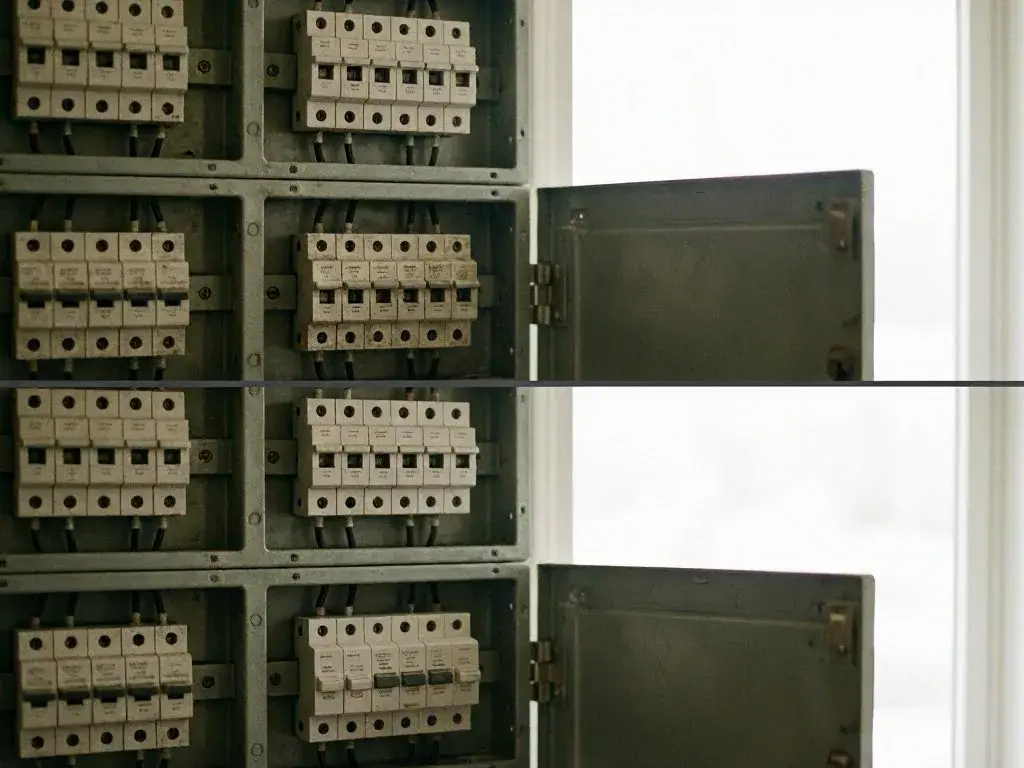
Polarity Test is an electrical check. It verifies the position of the hot conductor, neutral conductor, and grounding conductor. In a typical North American receptacle, the hot wire connects to the brass-colored terminal. The neutral wire connects to the silver-colored terminal. The equipment grounding conductor connects to the green terminal. A polarity problem occurs when conductors reach the wrong terminal.
Related glossary terms: Continuity Test, Electrical Grounding, Ground-Fault Circuit Interrupter.
Correct polarity lets switches and safety devices stop the right conductor. Reversed polarity can leave parts energized after a switch turns off. This raises shock risk during maintenance. A polarity test gives useful information about conductor placement. It doesn't confirm proper grounding, secure connections, or insulation condition. It also doesn't confirm every National Electrical Code requirement.
How Polarity Test Works, Is Measured, or Is Used?
A technician begins by identifying the circuit. The technician then applies a suitable voltage tester. At a receptacle, the tester checks voltage between hot and neutral. It also checks voltage between hot and ground. The tester checks voltage between neutral and ground, too. A correct 120-volt branch circuit commonly shows voltage from hot to neutral. It also shows voltage from hot to ground. Neutral to ground should show little or no voltage normally.
Receptacle analyzers often display patterns for open neutral and open ground. They can also show reversed hot and neutral. These plug-in tools provide a fast screening result. However, they have limits. They may not detect a bootleg ground or shared neutral problem. They may also miss a loose terminal or load-related defect. A two-pole tester and direct inspection provide stronger evidence when results seem unclear.
Testing doesn't end with plugging in an analyzer. The tester must be checked on a known live source before use. Follow the test instrument's instructions. Check the tester again afterward. If a box must be opened, switch off the circuit. Lock it or prevent it from turning on again. Verify that it has no power with an approved tester. Only qualified persons should work inside energized equipment.
Why Polarity Test Matters?
Polarity affects how current flows through a device. It also affects which parts stay energized when a switch operates. A reversed hot and neutral connection may let lights or receptacles work normally. It may place the wrong side of the circuit at the switched position. It may also place it at the unswitched position. This hidden defect can create danger during lamp replacement. It can also create danger during appliance service or troubleshooting.
The test also improves fault finding. A correct result helps narrow a problem to other areas. These areas include a failed ground-fault circuit interrupter, loose connection, damaged cable, or open conductor. A failed result calls for tracing the circuit. Don't repeatedly replace outlets. Testing one receptacle can't prove correct polarity everywhere downstream.
When Polarity Test Matters Most?
Polarity testing helps after electrical wiring work and outlet replacement. It also helps after remodeling or a reported shock from a metal device. It matters in older properties, too. Past repairs may have mixed conductor colors. They may have placed wires on incorrect terminals. A test can find a wiring concern before new equipment connects.
Use extra care when an outlet shows an open ground or reversed polarity. Use care with unusual voltage, heat, buzzing, or signs of arcing. Stop using the affected circuit if a device feels hot. Stop using it if it smells burned or produces sparks. In Cincinnati, older homes and repeated renovations can create many wiring layers. The visible receptacle may not show the original circuit condition.
How to Evaluate Polarity Test?
- Does the tester show voltage from hot to neutral and hot to ground on a 120-volt receptacle.
- Does neutral to ground show little or no voltage under normal circuit conditions.
- Does the result identify open neutral, open ground, or reversed hot and neutral.
- Was the tester verified on a known live source before and after the measurement.
- Has the circuit been checked for grounding and continuity separately.
Related Concepts Compared
Polarity Test vs. Continuity Test
A continuity test checks whether a complete low-resistance path exists between two points. A polarity test checks whether conductors connect to the correct terminals.
Polarity Test vs. Electrical Grounding
Electrical grounding provides a path for fault current and helps stabilize the system. Polarity testing checks conductor orientation and does not prove that grounding is effective.
Polarity Test vs. GFCI Test
A GFCI test checks whether a ground-fault device trips when it detects an imbalance. A polarity test checks wiring position and cannot confirm GFCI operation.
Expert Note
A plug-in receptacle tester is a screening tool, not a complete diagnosis. A correct light pattern can still exist with a loose terminal, poor grounding electrode connection, or shared-neutral defect. Treat an unexpected result as a reason to trace the circuit and verify it with appropriate test equipment.
Common Mistakes or Myths About Polarity Test
- Assuming a working outlet has correct polarity.
- Treating an open ground as the same problem as reversed polarity.
- Relying on a three-light tester to find every wiring defect.
- Opening a receptacle before verifying that the circuit is de-energized.
- Ignoring a polarity warning because lights and appliances still operate.
Polarity Test in Practice: A Real-World Example
A homeowner replaces a living room receptacle and the outlet still powers a lamp. A polarity tester then indicates reversed hot and neutral. The circuit needs correction because normal operation does not prove that the switch and terminals interrupt the intended conductor.
Sources & Further Reading on Polarity Test
Related Services
Related Terms
Continuity Test
Continuity Test is an electrical check that determines whether a complete conductive path exists between two…
Electrical Grounding
Electrical Grounding is a safety system that connects electrical equipment and circuits to the earth or…
Ground-Fault Circuit Interrupter
Ground-Fault Circuit Interrupter is a protective device that monitors current flowing through a circuit and quickly…
Neutral Wire
Neutral Wire is the grounded conductor that normally carries current back to the electrical source in…
ElectricianCincinnatiOH.com
Have Questions About Polarity Test?
Contact ElectricianCincinnatiOH.com for practical guidance on Polarity Test and related 24 hour electrician work in Cincinnati.