Electrical Panel Problems to Check Before EV Charger Installation in Cincinnati, OH
EV charger installation Electrical panel problems often show up when the panel lacks capacity or has poor wiring. To see if your Electrical panel supports an EV charger. Check its amperage rating, breaker compatibility, and wiring condition. Fixing these issues with a expert electrician in Cincinnati helps keep the installation safe and prevents breaker trips or overloads.
Common EV Charger Installation Electrical Panel Problems in Cincinnati
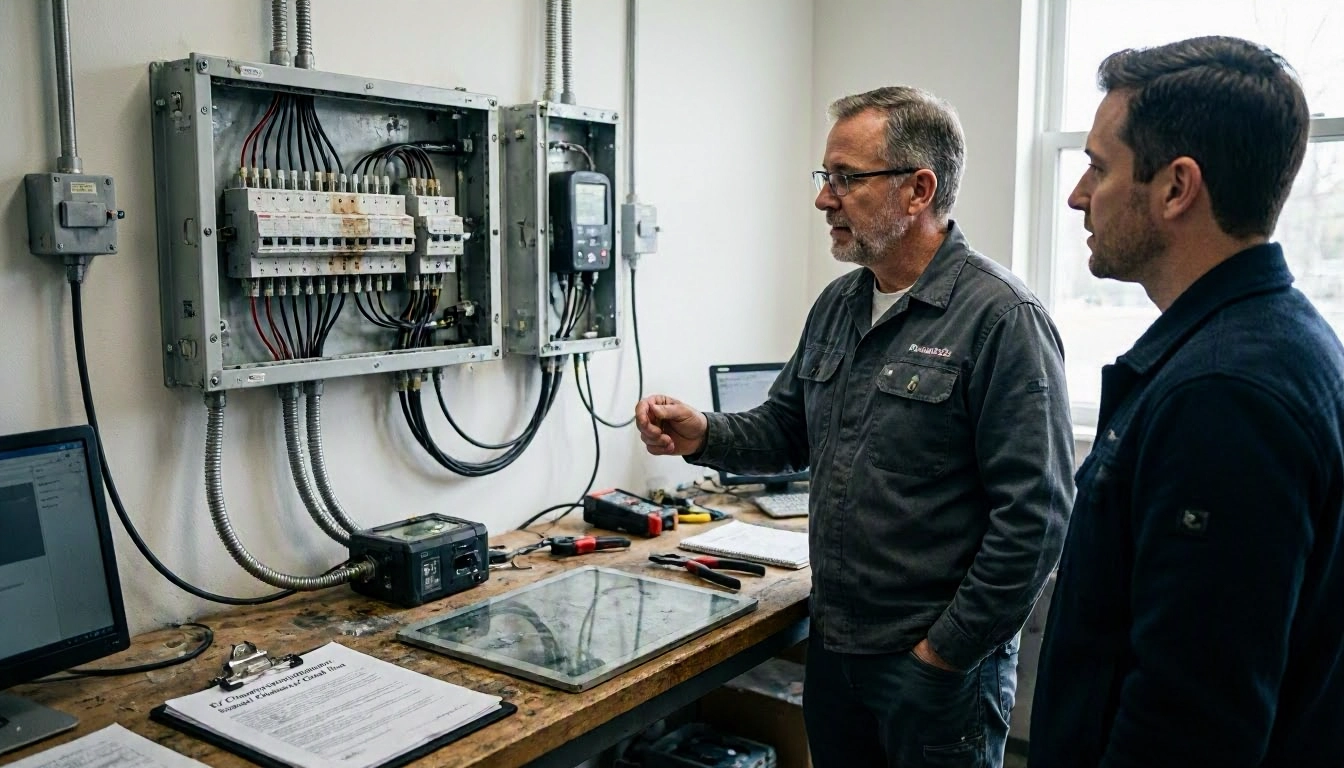
EV charger installation problems often start at the panel, not at the charger. The usual issues are low amperage, old breakers, bad wiring, and overcrowded panels. Those problems can create safety risks, cause uneven charging, and keep a home from handling a new charger safely.
One common EV charger installation problem is low amperage capacity. Many older homes were built for smaller power needs still have 60-amp or 100-amp service. That may not be enough once a Level 2 charger is added to air conditioning, kitchen loads, laundry equipment, and daily use. A proper load calculation shows if the home’s Electrical load leaves enough room for charging.
Another common Electrical panel problem is old or mismatched equipment. Older breaker designs may not have the breaker compatibility needed for modern EVSE installation. If the panel uses obsolete parts, replacement breakers can be hard to find. May not be listed for that panel. We also see electric car charger wiring plans delayed by double-tapped breakers. Damaged bus bars, or no open spaces for a dedicated circuit.
Panel overcrowding is common in Cincinnati’s older homes. Additions, finished basements, and kitchen updates were often wired over time without a full service review. In those homes, tandem breakers or packed conductors can mean the Electrical panel box is already pushed too far. Seasonal humidity can also make corrosion worse inside enclosures. Which affects terminals and grounding paths.
Improper wiring installation is another major concern. Loose lugs, undersized conductors, weak grounding, and mixed wire types can lead to heat buildup or nuisance trips. Before any home charging station is added, our team checks the panel, breaker layout, and feeder wiring. That helps confirm the charger can run under normal and peak demand.
How to Determine if Your Electrical Panel Supports an EV Charger?
Electrical panel support for an EV charger depends on amperage capacity, breaker availability, and wiring condition. Panels rated 100 amps or higher often can support a charger, that is not automatic. A expert inspection is the safest way to confirm if your system can handle the added demand.
If you are asking, “does my Electrical panel support an EV charger,” start with the main service rating. The label on the main disconnect. Panel door usually shows the panel size. That number alone does not answer everything. A 100-amp panel may work in one home but fail in another. Heating equipment, water heater type, range load, dryer use, and peak demand all matter.
Next, check for physical room and breaker compatibility. A charger usually needs a dedicated circuit sized to the charger output and conductor rating. If the Electrical panel box has no spare spaces. It only accepts obsolete breaker models, you may need a subpanel an Electrical Panel Upgrade. This is a common answer to the related question. “how to know if my house can handle an EV charger.”.
Wiring condition matters as much as panel size. We look for heat marks, corrosion, loose connections, poor grounding, and conductor damage. In Cincinnati, seasonal humidity can add to oxidation in basements garages, especially with older service equipment. That wear can affect code compliance and long-term charging reliability.
Permit and inspection rules also matter. Local permit requirements require Electrical inspections for charger installations in Cincinnati, so even a panel that looks adequate must still meet current standards. During EV Charger Installation in Cincinnati, we verify service capacity, breaker type, conductor sizing, and grounding. That helps the charger work safely from day one.
Electrical Work Needed for EV Charger Installation: A Checklist
Electrical work for EV charger installation usually includes panel review, dedicated breakers, new wiring, grounding checks, and final testing. This checklist helps homeowners understand what Electrical services are often needed. The goal is safe, reliable charging that meets local code requirements.
Before Installation: Electrical Panel Assessment
During Installation: Wiring and Breaker Setup
After Installation: Electrical Inspection and Testing
Why Does My EV Charger Keep Tripping the Breaker at Home?
Breaker tripping during charging usually points to panel overload, a weak breaker, incorrect wiring, or charger settings that do not match the circuit. Finding the exact cause matters because repeated trips warn that the home charging setup needs correction. Without that fix, damage or unsafe heat buildup can follow.
If your EV charger keeps tripping the breaker at home. First check if the circuit is dedicated only to the charger. A shared line can overload fast when other equipment turns on. The next issue is breaker sizing. If the charger draws more current than the breaker. Conductors can handle, the breaker is doing its job.
Older breakers can also become unreliable over time. Some nuisance tripping comes from heat-weakened breakers that no longer carry load well. Other cases involve the wrong breaker type for the panel. Incorrect wiring, loose terminations, or poor grounding may cause faults that show up after charging runs for a while.
In local homes with older service equipment. We also see hidden load problems. Air conditioning, electric dryers, and water heaters may push demand too high once charging starts. If that happens, the fix may be load work, circuit adjustment, or an Electrical Panel Upgrade instead of replacing the charger. A full Electrical inspection helps separate charger issues from larger home Electrical systems problems.
Red Flags Indicating Electrical Panel Problems Before EV Charger Installation
Red flags before charger work include frequent trips, buzzing, visible corrosion, and outdated panel models. These warning signs suggest Electrical panel problems that should be corrected before a new charging circuit is added.
Frequently Asked Questions
Related Resources
How an Electrical Inspection Works
how does an Electrical inspection work
How It WorksWhat to Expect During an Electrical Panel Upgrade
How It WorksHow EV Charger Installation Works at Home
how does ev charger installation work
What to AvoidCircuit Breaker Tripping Mistakes Homeowners Make
circuit breaker tripping mistakes