
What is Line Voltage?
Line Voltage is the electrical potential supplied by a utility or power system to a circuit, device, or building. Line voltage pushes current through connected equipment and is measured in volts. In North American homes, common line-voltage systems provide about 120 volts or 240 volts, depending on the circuit and equipment.
Quick Facts About Line Voltage
Category
Electrical measurement and power distribution
Measured by
Voltmeter or multimeter
Used for
Powering appliances, lighting, motors, and receptacles
Common confusion
Line voltage is not the same as low voltage
Also called
Mains voltage, Supply voltage
Often discussed with
Electrical Troubleshooting, Electrical Inspection
Key Takeaways About Line Voltage
- Line voltage sends electrical power from a utility, transformer, or building distribution system.
- Residential circuits in North America commonly provide about 120 volts or 240 volts.
- A voltage tester or multimeter measures line voltage at outlets, terminals, and circuit conductors.
- Line voltage differs from low voltage, which usually powers controls, signals, and communication equipment.
- Wrong line-voltage work can cause shock, burns, equipment damage, or fire.
Understanding Line Voltage
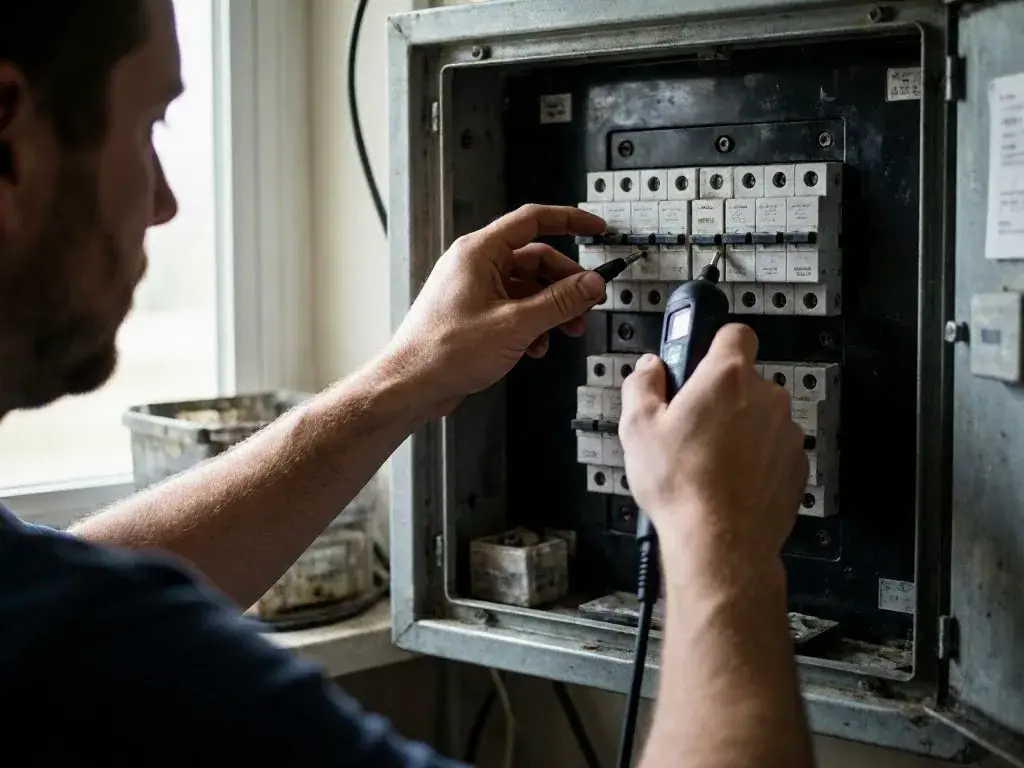
Line voltage is the voltage on a power circuit. It supplies electrical energy to equipment. The source may be a utility transformer, service panel, generator, or another power system. Voltage shows electrical pressure. Current shows electric charge moving through a conductor.
Related glossary terms: Voltage, Electrical Load, Branch Circuit.
In a typical North American home, a single-pole branch circuit supplies about 120 volts. It powers lights and receptacles. A two-pole circuit can supply about 240 volts to equipment. This includes electric ranges, water heaters, heat pumps, and some clothes dryers. The actual reading can vary with the utility supply, circuit load, and test location.
How Line Voltage Works, Is Measured, or Is Used?
Line voltage appears between energized conductors. It also appears between an energized conductor and ground. In a common 120-volt circuit, a meter measures voltage between hot and neutral. In a 240-volt circuit, the meter usually measures voltage between two hot conductors. Each conductor carries an opposite leg of the service.
A qualified person measures voltage with a rated multimeter or voltage tester. The tool must match the system voltage and test category. A basic check may test hot-to-neutral, hot-to-ground, and neutral-to-ground. A reading near the expected value shows voltage is present. It doesn't prove that the circuit's safe to touch. It also doesn't prove that the wiring can carry the intended load.
Line voltage also affects how equipment connects to a circuit. A nameplate may list 120 volts, 208 volts, 240 volts, or another value. It may also list the needed amperage. The circuit breaker, wire size, disconnect, and receptacle must match the equipment. They must also meet installation rules. Connecting a 120-volt device to a 240-volt source can damage it. It can also cause a serious fire or shock hazard.
Why Line Voltage Matters?
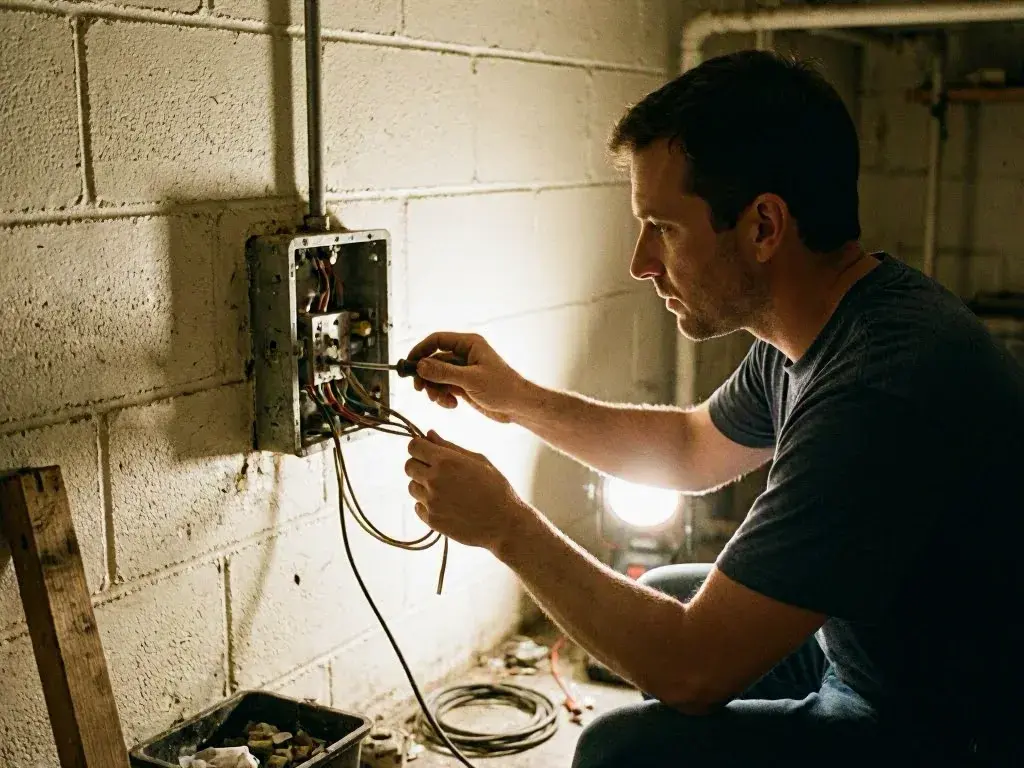
Line voltage affects equipment use, energy delivery, and electrical safety. A motor made for 240 volts may run poorly under load. It may also fail to start if supply voltage drops too far. A device exposed to too much voltage may overheat or fail fast. It may also damage its inner parts.
Voltage also works with current and resistance under Ohm's Law, shown as V = I × R. For a fixed resistance, higher voltage raises current. For a fixed power need, higher voltage can lower current. This helps explain why large equipment often uses 240 volts. Circuit design still depends on load math, wire capacity, overcurrent protection, and the right electrical code.
When Line Voltage Matters Most?
Line voltage matters during testing, new equipment setup, panel work, and power return. A dead receptacle may result from a tripped breaker or an open connection. It may also result from a failed device or a lost supply wire. Testing at several points helps find where voltage stops reaching the load.
Voltage checks matter before replacing a device or changing wiring. A circuit can stay live even when a switch is off. Lockout and tagout, circuit checks, and a rated tester lower the risk of surprise power. In Cincinnati, older homes, remodels, and mixed-use buildings may use different wiring methods. The measured voltage and circuit setup should guide the repair. Don't rely only on the device label.
How to Evaluate Line Voltage?
- Compare the measured voltage with the equipment nameplate and the circuit rating.
- Check hot-to-neutral, hot-to-ground, and neutral-to-ground readings when troubleshooting a 120-volt circuit.
- Confirm that the breaker, conductor ampacity, disconnect, and receptacle match the equipment load.
- Look for voltage drop when a motor or high-demand appliance starts and operates.
- Verify that the tester is rated for the system voltage and electrical measurement category.
Related Concepts Compared
Line Voltage vs. Low Voltage
Low voltage usually powers controls, alarms, communications, and signaling systems rather than heating elements or large motors. Line voltage directly supplies building power circuits.
Line Voltage vs. Voltage
Voltage is the general measure of electrical potential between two points. Line voltage describes voltage supplied to a power circuit or equipment connection.
Line Voltage vs. Control Voltage
Control voltage operates relays, thermostats, contactors, and other control devices. It may be derived from line voltage through a transformer and is often much lower.
Line Voltage vs. Service Voltage
Service voltage describes the voltage delivered to a building's electrical service. Line voltage is a broader term that can describe voltage at branch circuits and equipment.
Expert Note
A voltage reading alone does not establish circuit capacity or safety. A circuit may show normal voltage with no load but develop excessive voltage drop when equipment operates. Check the source, load, connections, conductor size, and overcurrent protection together.
Common Mistakes or Myths About Line Voltage
- Assuming every household circuit supplies the same voltage.
- Treating a noncontact tester as proof that a circuit is de-energized.
- Installing equipment without matching its voltage and amperage requirements.
- Confusing line voltage with low-voltage thermostat or communication wiring.
- Ignoring voltage drop on long circuits or high-current equipment.
Line Voltage in Practice: A Real-World Example
A homeowner measures about 120 volts at a bedroom receptacle. A lamp then works as expected. An electric range on a separate circuit needs about 240 volts between two hot conductors. Putting the range on a 120-volt circuit would not supply enough power. It could also create unsafe wiring conditions.
Sources & Further Reading on Line Voltage
Related Services
Related Terms
Voltage
Voltage is the electrical pressure that drives current through a circuit. Measured in volts, voltage represents…
Electrical Load
Electrical Load is the amount of electrical power that devices, equipment, or circuits draw from a…
Branch Circuit
Branch Circuit is the portion of an electrical system that carries power from a final overcurrent…
Transformer
Transformer is an electrical device that transfers alternating-current energy between circuits while raising or lowering voltage…
ElectricianCincinnatiOH.com
Have Questions About Line Voltage?
Contact ElectricianCincinnatiOH.com for practical guidance on Line Voltage and related 24 hour electrician work in Cincinnati.